Founder field note
Product Advertisement Template: 7 Tools for a Startup Launch in 2026
Use a product advertisement template to plan, design, and distribute a startup launch ad with the right tool for your budget and buyer.
A product advertisement template is useful when you need to turn a vague launch idea into a message, visual, audience, and next step that another person can understand quickly. This comparison is for bootstrapped founders, pre-seed teams, indie hackers, and early adopters evaluating software launches—not for large brand departments buying a full agency engagement.
The seven options below do different jobs, so the ranking is not a claim that one tool replaces all the others. Creative builders help you make the asset; paid ad platforms help you buy distribution; and launch discovery platforms help you put a product in front of people who may already be interested in new software. Treat those categories separately before spending money.
I evaluate each option on five practical criteria:
- Job fit: does it create the ad, distribute it, or surface the launch?
- Implementation burden: how much setup, design skill, targeting, tracking, or moderation does a small team need?
- Commercial model: is the core offer free, subscription-based, auction-based, or dependent on paid placement?
- Message control: can you adapt the asset for different buyers and channels without losing clarity?
- Poor-fit risk: when will this option consume time or money without solving your immediate launch problem?
As a starting policy—not a universal benchmark—create one clear promise, one proof point, and one call to action before opening an ad account. If you cannot explain the product to a narrow buyer in one sentence, more templates will not fix the positioning.
1. Canva
Best use for a product advertisement
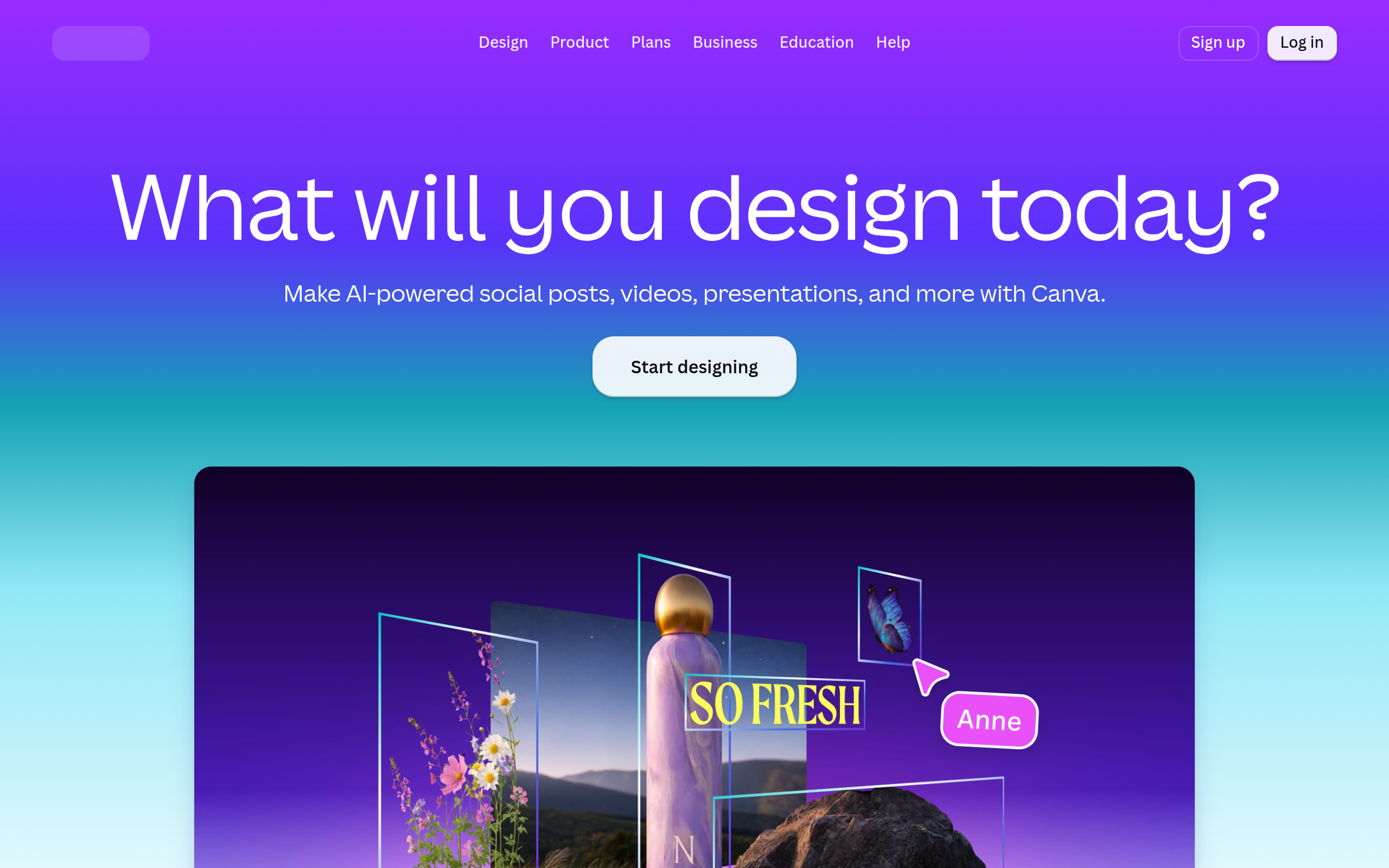
Canva is the most approachable choice for a founder who needs launch graphics without becoming a full-time designer. Its practical job is rapid visual production: social images, simple display concepts, announcement cards, presentation-style product explainers, and resized variations.
For a bootstrapped SaaS launch, start with a single square or vertical concept: product name, buyer problem, short promise, screenshot, and one action. Then make a second version that changes only the headline. Keeping the visual system stable makes the message test more useful than producing seven unrelated designs.
Trade-offs, burden, and commercial model
- Best for: founders who need polished-looking launch assets quickly and do not have a dedicated designer.
- Does not suit: teams that need pixel-level interface control, complex motion, or a rigorous design-system workflow.
- Standout: a broad template-led workflow that lowers the cost of making multiple formats.
Implementation burden is low: choose a layout, replace the copy and imagery, check the export dimensions, and ask someone unfamiliar with the product what they think the ad promises. The commercial model combines free access with optional paid plans and assets; current inclusions and limits can change, so check Canva’s official pricing page before assigning it to a team.
Canva does not suit a founder whose advantage depends on a distinctive visual interaction rather than a static explanation. It also cannot decide whether your claim is credible. You still need a real screenshot, a specific audience, and a destination that fulfills the promise.
2. Adobe Express
Best use for a product advertisement
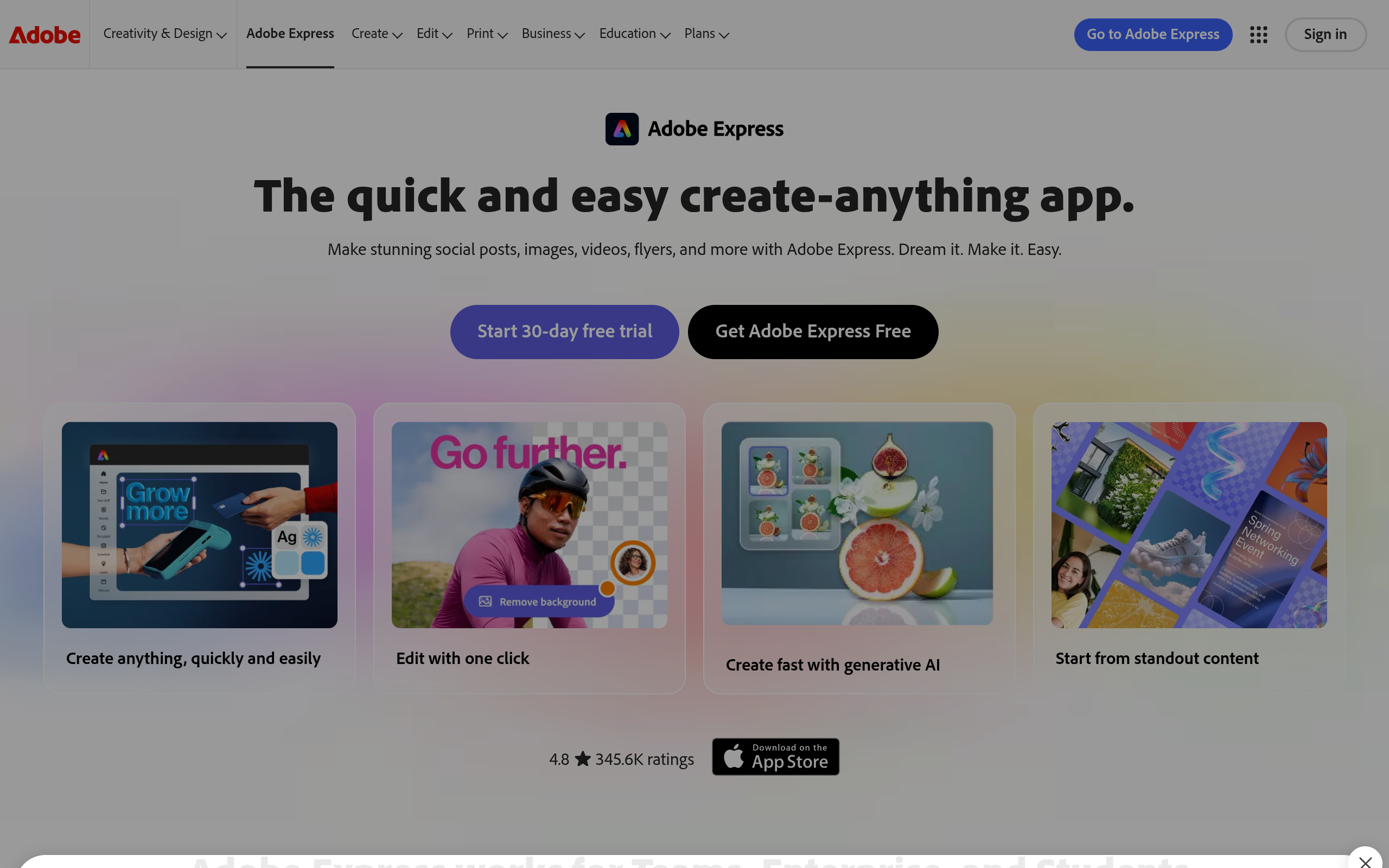
Adobe Express is a strong fit when the job is quick branded content production and the founder wants a straightforward workflow connected to the wider Adobe ecosystem. It can be used for launch posts, short promotional graphics, simple videos, flyers, and variations of an announcement.
Its value is less about inventing your positioning and more about helping you package a defined message. For example, an AI meeting-notes startup could create one ad for remote engineering teams and another for agency owners, changing the first line and screenshot while preserving the product name and call to action.
Trade-offs, burden, and commercial model
- Best for: small teams that want template assistance with a recognizable creative-tool workflow.
- Does not suit: founders looking for a demand-generation system, detailed ad bidding, or research into which buyer segment is most promising.
- Standout: useful middle ground between a basic template editor and a more specialized design application.
Implementation burden is low to moderate. A competent operator can make the first asset quickly, but brand consistency still requires a small library of approved colors, logos, screenshots, and claims. The commercial model includes free and paid access tiers; review the current Adobe Express pricing page for feature and export differences in 2026.
Adobe Express is not a substitute for a media plan. It may help you create a video or graphic, but it does not automatically tell you whether to buy search, social, community, or newsletter distribution. If your bottleneck is qualified traffic rather than creative production, move to a distribution platform after the asset is ready.
3. Figma
Best use for a product advertisement
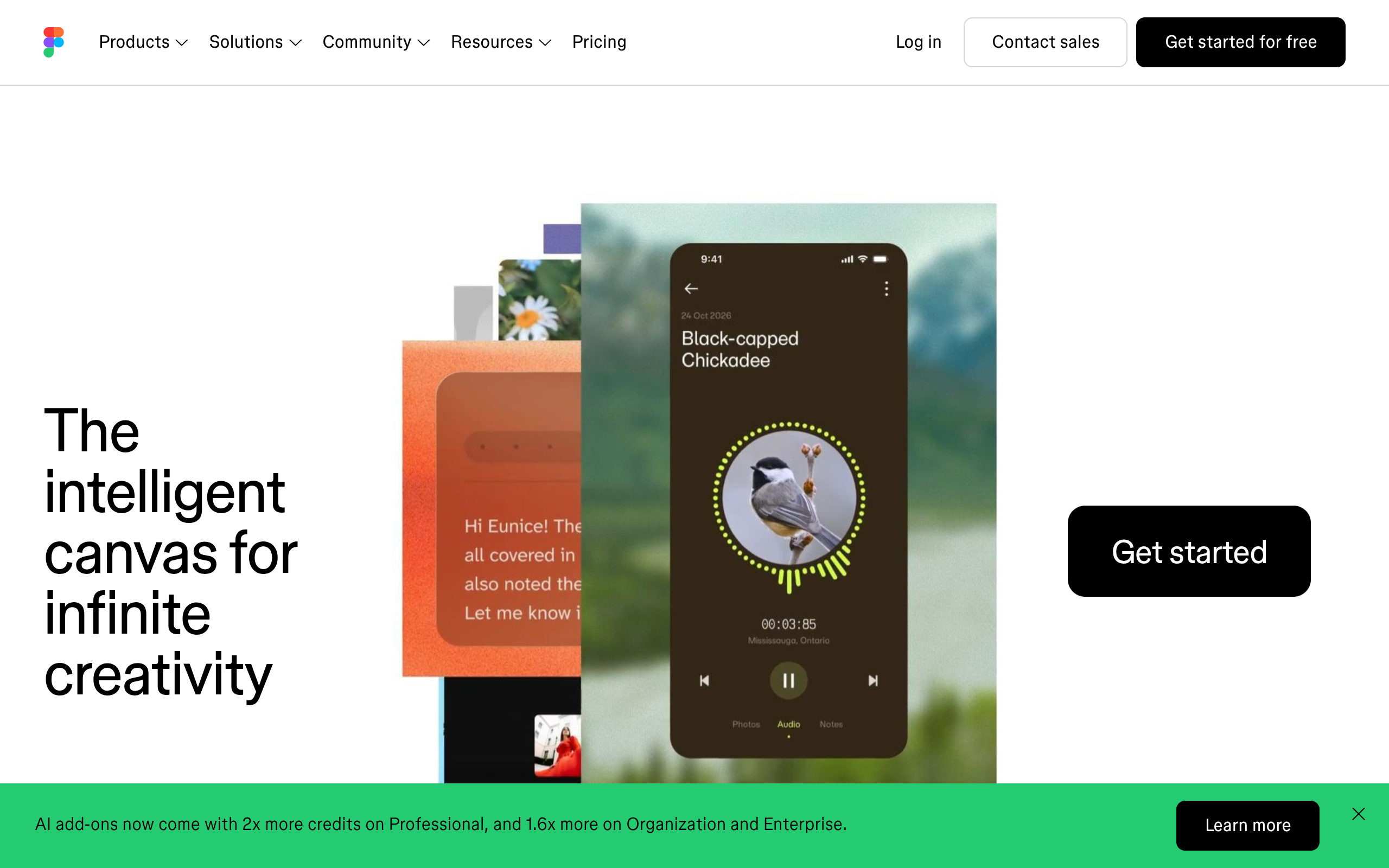
Figma is best when the advertisement must be built from the product’s actual interface and reviewed collaboratively by founders, designers, engineers, or investors. Its job is precise collaborative design, not one-click campaign management.
A useful Figma ad file might contain a frame for each audience: “reduce support backlog,” “turn sales calls into follow-up,” and “give founders searchable customer evidence.” Each frame can include the same product screenshot but a different headline, proof point, and destination. This makes the messaging architecture visible before anything is published.
Trade-offs, burden, and commercial model
- Best for: product-led startups with a designer, a strong interface, or several people reviewing launch assets.
- Does not suit: a founder who needs a finished promotional graphic in five minutes and has no interest in learning a design workspace.
- Standout: control over layout, reusable components, comments, and source files.
Implementation burden is moderate. You need to establish frames, components, export settings, and ownership rules; otherwise the file becomes a collection of conflicting drafts. Figma uses a free-and-paid subscription model with plan differences that can affect collaboration and team administration. Consult the current official Figma pricing page rather than relying on an old comparison.
Figma does not suit a launch where the main problem is distribution. A beautiful prototype frame will not create demand by itself. It is also excessive for a simple text announcement unless the asset will be reused across a campaign, landing page, investor update, and sales deck.
4. Google Ads
Best use for a product advertisement
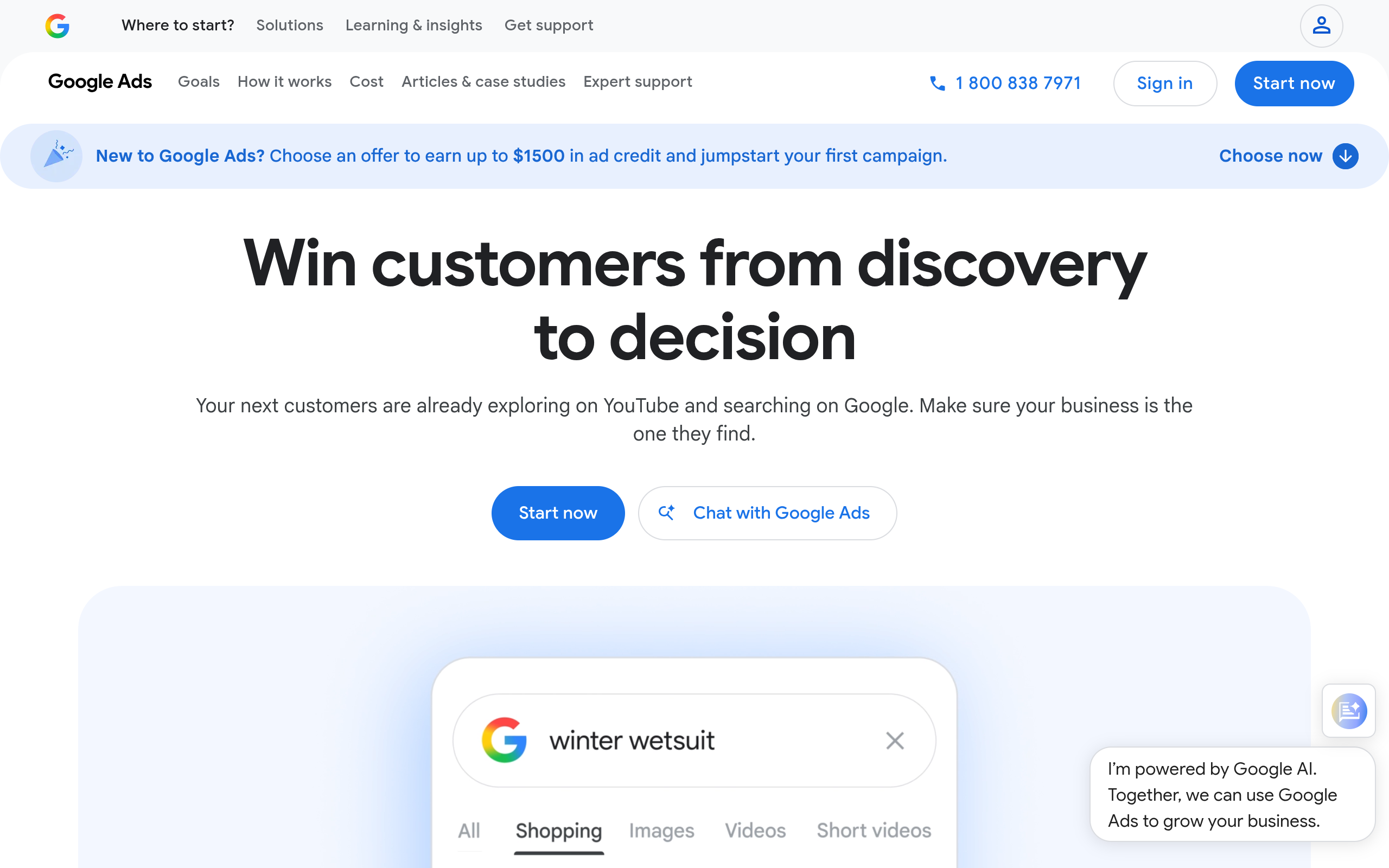
Google Ads is a paid distribution system for reaching people through search and other Google inventory. Its job is capturing existing intent, not designing the whole product story. It can make sense when buyers already search for the problem your software solves.
Suppose your product automatically converts support tickets into a searchable knowledge base. Search-oriented copy might focus on “customer support knowledge base software,” while a social announcement might focus on the frustration of answering the same question repeatedly. The search version needs a landing page that quickly confirms relevance, pricing direction, and a next step.
Trade-offs, burden, and commercial model
- Best for: products with recognizable problem-language and a destination page that can convert qualified visitors.
- Does not suit: genuinely new categories where buyers do not yet know what to search for, or teams that cannot monitor spend and lead quality.
- Standout: the ad can meet a prospect close to an explicitly expressed need.
Implementation burden is moderate to high. You must define conversion events, research search language, write variants, choose geography and budget controls, exclude irrelevant queries where applicable, and inspect whether clicks become meaningful actions. Google describes campaign mechanics and available formats in its official “How Google Ads works” guide; capabilities and interfaces should be verified in the account in 2026.
The commercial model is auction-based advertising: you set budgets and bids or bidding controls, while actual costs depend on the auction and settings. Do not treat an illustrative starting budget as a forecast of leads. Google Ads is not a creative template library, and it does not suit founders who have not yet identified a repeatable buyer problem.
5. Meta Ads
Best use for a product advertisement
Meta Ads is a paid distribution option for visual and social campaigns across Meta’s advertising environment. Its job is audience-based discovery: introduce a product to a defined group using a visual, a short promise, and a measurable action.
This can be useful for a consumer app, creator tool, or founder product with a clear visual demonstration. A screen recording showing “turn three raw clips into one captioned short” may communicate faster than a paragraph. For B2B software, the audience hypothesis needs more care; broad professional labels are not proof that the person has the problem or buying authority.
Trade-offs, burden, and commercial model
- Best for: products that can demonstrate value visually and teams willing to produce several creative angles.
- Does not suit: founders expecting targeting alone to rescue a weak offer, unclear landing page, or unconvincing proof.
- Standout: a format suited to showing product behavior rather than only naming a feature.
Implementation burden is moderate to high. Plan multiple hooks, create platform-appropriate assets, configure the destination and measurement, and review comments and lead quality. Meta’s official advertising overview explains the broad structure of its ad offering, but current placements, controls, and requirements should be checked before launch.
The commercial model is auction-based paid media, with costs influenced by campaign settings, audience, creative, and competition. The platform does not suit a team without enough time to refresh creative or answer prospects. It is also a poor first choice if the product’s value cannot be understood from a short visual or a sharply written promise.
6. Reddit Ads
Best use for a product advertisement
Reddit Ads is designed for paid promotion in a community-oriented environment. Its job is interest- and conversation-adjacent discovery, which can fit technical products, hobby tools, developer utilities, and products with a clearly identifiable discussion context.
The creative should respect the audience’s likely skepticism. Instead of “Revolutionary AI for everyone,” a better starting point might be: “A local-first way to search 4,000 internal notes—built for small support teams.” The landing page should explain what the product does, what it does not do, and why the team built it.
Trade-offs, burden, and commercial model
- Best for: products with a specific community, technical use case, or problem people already discuss in detail.
- Does not suit: generic brand awareness campaigns with no community relevance or teams unwilling to handle skeptical feedback.
- Standout: the possibility of matching a message to a context where the underlying problem is already being discussed.
Implementation burden is moderate. You need audience research, community-sensitive copy, creative variations, tracking, and a response plan. The commercial model is paid advertising, generally managed through campaign settings rather than a fixed sponsorship price; current formats and requirements should be verified in the official Reddit for Business advertising information.
Reddit Ads does not suit founders who want to enter a community with an obviously promotional message and no useful explanation. Paid placement can get attention, but it does not grant trust. A product with no relevant conversation or clear user language may be better served by direct outreach or a launch listing.
7. SuperPublic
Best use for a product advertisement
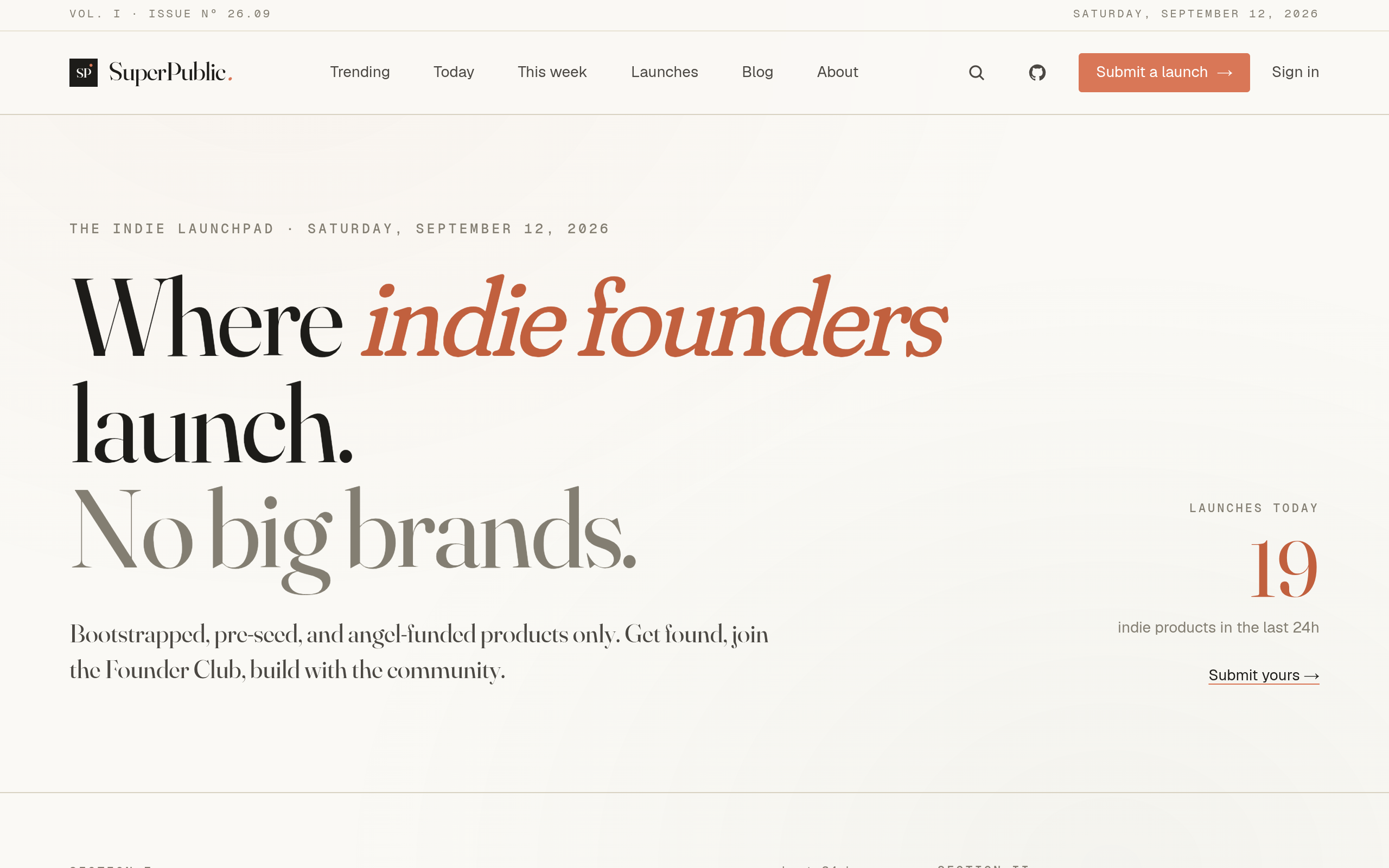
SuperPublic is a launch and discovery platform for bootstrapped, pre-seed, and angel-funded founders. Its job is founder-led product visibility: put an early-stage product in front of people interested in discovering new software, connecting with builders, and giving launch feedback.
It is not a native ad auction and not a replacement for a creative editor. A strong submission should therefore bring its own concise positioning: who the product is for, what changed, why it exists now, and where an early adopter can try it. The platform is most useful when the founder wants discovery and community context around a launch rather than anonymous impressions alone.
Trade-offs, burden, and commercial model
- Best for: indie hackers and early-stage teams seeking visibility, feedback, founder connections, and early adopters.
- Does not suit: a mature company needing guaranteed reach, automated performance bidding, or a full paid-media reporting stack.
- Standout: a product-launch context built specifically around early-stage companies and founder discovery.
Implementation burden is low to moderate: prepare a clear launch description, product link, audience explanation, and useful proof such as a demo or screenshots. The commercial model and any current submission rules should be checked on the official site before publishing; do not assume a launch listing provides guaranteed traffic or conversions.
SuperPublic does not suit a founder who has no usable product story yet. A listing cannot compensate for a confusing landing page, an untestable product, or a launch description aimed at everyone. If the immediate job is to buy search clicks or produce a polished video, use the relevant creative or advertising category instead.
Product Advertisement Template Worksheet
Copyable planning artifact
Use this worksheet before choosing a tool. It separates the message from the channel so you do not mistake a new graphic for a new strategy.
| Prompt / question | Your answer |
|---|---|
| Who is the narrow first buyer, and what situation makes them look for help? | [Describe the buyer and trigger] |
| What painful or expensive problem does the product solve? | [Describe the problem in the buyer’s language] |
| What is the clearest product promise in one sentence? | [Product helps buyer achieve outcome] |
| What proof can you show without exaggerating? | [Screenshot, workflow, testimonial, demo, or concrete example] |
| What action should the viewer take next? | [Try, join waitlist, book, submit feedback, or learn more] |
| Where will this person encounter the message? | [Search, social feed, community, launch listing, email, or other] |
| What would make the claim untrue or misleading? | [Limitation, eligibility rule, missing feature, or required setup] |
Filled example and adaptation guidance
Here is a worked example for an imaginary product called QueuePilot:
| Prompt / question | Filled answer |
|---|---|
| Who is the narrow first buyer, and what situation makes them look for help? | Small SaaS support teams whose backlog grows after a feature release. |
| What painful or expensive problem does the product solve? | Agents repeatedly answer the same setup questions and lose time searching old replies. |
| What is the clearest product promise in one sentence? | QueuePilot turns resolved support conversations into a searchable draft knowledge base. |
| What proof can you show without exaggerating? | A short screen recording of five resolved tickets becoming three draft articles for review. |
| What action should the viewer take next? | Watch the demo and request access for one support workspace. |
| Where will this person encounter the message? | Search results for support knowledge base software, a founder launch listing, and a technical community discussion. |
| What would make the claim untrue or misleading? | It drafts articles but does not publish them automatically; a human must review the output. |
Adapt the fields by changing only one major variable at a time. If you change the buyer, problem, promise, proof, and channel together, you will not know why an ad or launch message worked—or failed. Keep the limitation field public when it affects adoption; specific constraints build more useful expectations than vague superlatives.
For a static creative, compress the worksheet into a headline, a supporting line, the proof image, and the action. For paid search, prioritize the problem language and destination-page match. For a community or launch listing, add the founder context and invite a concrete kind of feedback. The same product can need three different advertisements because each environment asks a different question of the buyer.
Comparison
The table uses the same decision columns for every option. “Implementation” describes the work required before a credible launch; it is not a promise about how long the work will take.
| Option | Primary job | Implementation burden | Commercial model | Best fit |
|---|---|---|---|---|
| Canva | Create fast launch graphics and variations | Low | Free access plus optional paid plans and assets | Non-designers needing polished visual assets |
| Adobe Express | Create branded graphics, posts, and simple promotional media | Low to moderate | Free and paid access tiers | Small teams wanting template-assisted branded content |
| Figma | Design precise, collaborative product-led creative | Moderate | Free and paid subscription plans | Teams with design or interface assets to reuse |
| Google Ads | Buy distribution for expressed search intent | Moderate to high | Auction-based paid advertising | Products with recognizable problem-language |
| Meta Ads | Buy visual, audience-based discovery | Moderate to high | Auction-based paid advertising | Products that demonstrate value visually |
| Reddit Ads | Buy community-oriented interest discovery | Moderate | Paid advertising with campaign settings | Technical, hobby, or discussion-linked products |
| SuperPublic | Publish an early-stage product launch for discovery | Low to moderate | Verify current submission and platform terms | Bootstrapped founders seeking visibility and feedback |
How to choose the right product advertisement workflow
Choose the tool according to the missing step, not according to which homepage has the most templates. If the message is unclear, complete the worksheet. If the message is clear but the asset is weak, use Canva, Adobe Express, or Figma. If the asset is ready but qualified attention is missing, evaluate Google Ads, Meta Ads, or Reddit Ads based on where the buyer already spends attention.
- Start with the buyer’s behavior: choose search when the problem is already named, visual social when the result can be demonstrated, and a community or launch listing when context and conversation matter.
- Separate discovery from conversion: an impression, click, signup, demo request, and activated user are different events. Decide which one the first campaign is allowed to optimize for.
- Use one proof point: show a real workflow, limitation, customer quote with permission, or verifiable product behavior. Do not stack unsupported claims into a crowded design.
- Set a review rule: label any budget, timeline, or conversion threshold as an internal starting policy and revise it when the evidence changes. There is no universal small-startup benchmark.
- Check the destination: the landing page should repeat the ad’s promise, identify the intended buyer, explain the next step, and make the product’s current availability clear.
For most early-stage software launches, the sensible sequence is message first, asset second, distribution third. A founder with no design support can begin with Canva or Adobe Express, a product team with strong interface material may prefer Figma, and a founder seeking early visibility and feedback can add a launch listing through submit your product launch. Paid channels should come after the team can explain what a qualified action looks like.
SuperPublic is a practical fit when your immediate goal is to present an early-stage product to a founder and early-adopter audience rather than buy anonymous impressions. Explore what SuperPublic offers at SuperPublic and verify the current submission terms before publishing.
Authored with NotFair SEO