Founder field note
New Product Launch Checklist: 6 Early-Visibility Channels for Indie Founders
Use this new product launch checklist to validate readiness, assign launch-day owners, choose an early-visibility channel, and turn feedback into next steps.
A new product launch checklist should take you from a testable product and clear promise to a coordinated launch day and a specific follow-up plan. Before launch, confirm the product works, choose one measurable goal, prepare support and tracking, and select a channel that matches your likely early users; on launch day, publish, respond, and record what happens; afterward, follow up on feedback and decide what to change. The six channels below are options within that process—not a substitute for launch readiness.
How this checklist compares launch channels
This guide is for bootstrapped and early-stage software teams that need useful feedback or their first qualified users, not a campaign built around a large media budget. The channel shortlist compares audience fit, launch format, implementation effort, and commercial model. “Best for” means a plausible fit for a particular launch job, not a promise of traffic or conversion.
The six options do different jobs: SuperPublic is focused on indie product discovery; Hacker News and DEV Community are more technical; Reddit depends on the fit and rules of individual communities; LinkedIn suits professional audiences; and X is a real-time social channel. Pick one primary channel and, if you can respond properly, one supporting channel. A scattershot list of submissions is not a launch strategy.
1. Set the launch goal before setting the date
Choose the outcome that would make this launch useful to your team. A signup target, a set of conversations with a defined buyer type, and evidence that users can finish onboarding are different goals; each calls for a different call to action and follow-up.
- For feedback: ask a focused question, such as where a new user expects to find a particular workflow.
- For qualified signups: describe who the product is for and what they can do after registering.
- For activation evidence: track a meaningful first action, not only visits or account creation.
Write down the goal, audience, and measurement before choosing channels. For example, a bootstrapped invoicing tool could define success as conversations with independent consultants who currently create invoices manually. That gives the team a clearer signal than “get attention.” Treat any numeric goal as an illustrative team target, not an industry benchmark.
2. Confirm the product is ready for strangers
A launch post can send people to the product, but it cannot fix a broken first session. Before announcing, ask someone who has not built the product to complete the main task using only the page and onboarding you plan to publish.
- Test the core path: sign up, complete the primary action, and confirm the expected result appears.
- Check the edges: test password recovery, email delivery, empty states, and the path to contact support.
- Make the promise legible: state who the product helps, what problem it addresses, and what a user should do next.
- Prepare a fallback: know how you will respond if signup, payment, or a key integration fails.
Fix launch-blocking failures before polishing minor interface details. If the product is intentionally a prototype, say what is incomplete and ask for feedback on the parts that work. Honest scope helps early users decide whether their time is well spent.
3. Prepare the launch materials and measurement
Draft the launch message once, then adapt its length and tone to the channel. Keep the essentials consistent: one-sentence positioning, a concise explanation of the problem, a link to the product, and one clear request. A demo should show the product doing a real task; avoid a feature list that makes readers guess which problem matters most.
Use campaign tags on links if you need to distinguish visits from different launch posts. Google Analytics documents the use of URL campaign parameters for identifying campaign traffic; decide on a consistent naming scheme before sharing links so you can compare sources afterward (Google Analytics campaign URL guidance).
- Prepare one landing page: include the product promise, a working call to action, and a way to contact the team.
- Write reusable answers: cover pricing, data handling, limitations, and who the product is designed for.
- Assign an owner: name the person responsible for watching feedback and escalating product issues.
- Test links and events: check the destination on mobile and verify that important actions are recorded.
Do not add tracking that you will not review. A small set of dependable observations—source, signup, activation, and recurring questions—is more useful than a dashboard full of unowned metrics.
4. Choose a channel that matches the audience
Use the following comparison as a channel-selection step in the checklist, not as a ranking of guaranteed reach. A good fit has readers who can recognize the problem, a format you can contribute to naturally, and enough team capacity to respond after posting. The listed commercial models are general; confirm current terms and available features on each official site before committing time or money.
1. SuperPublic
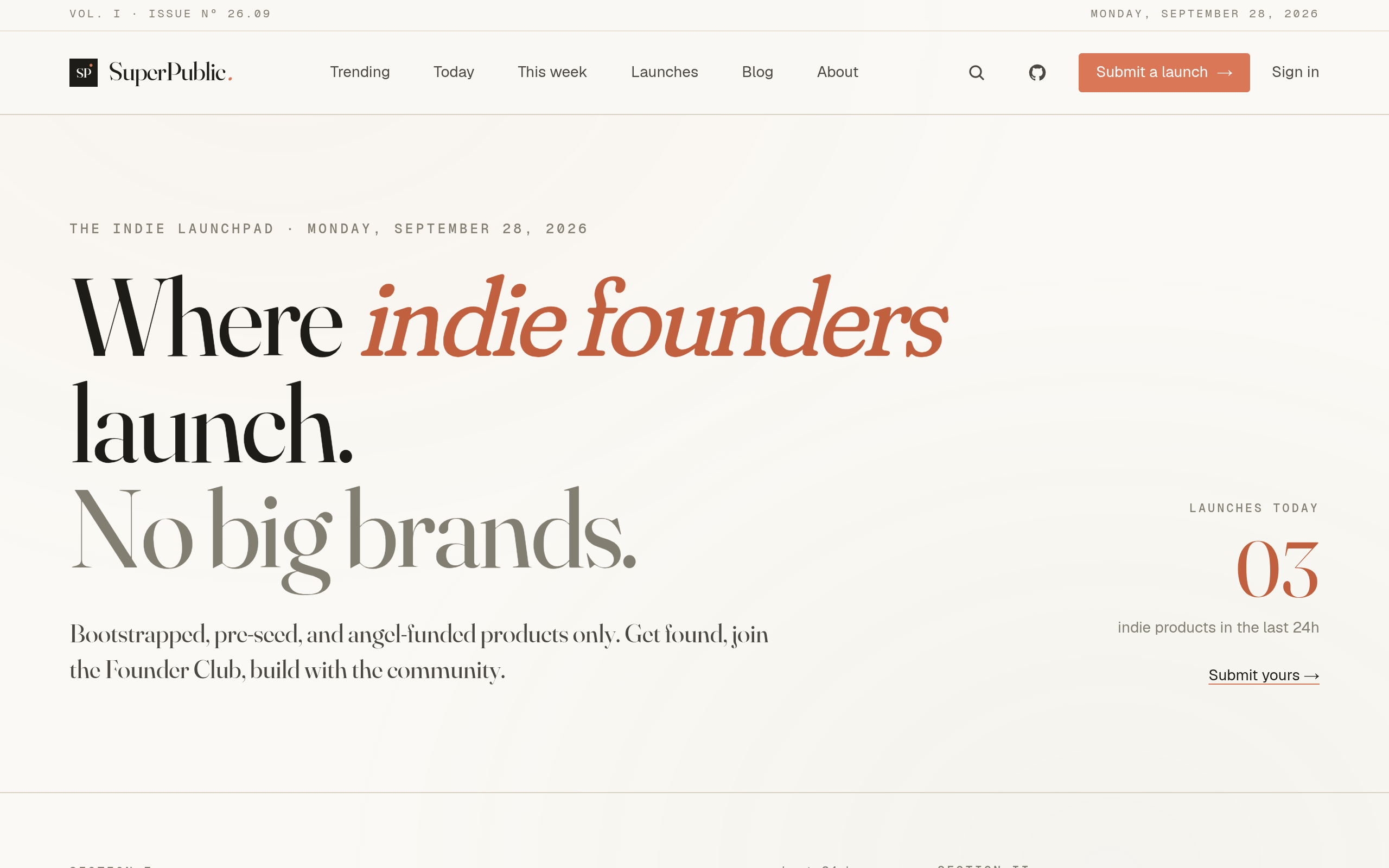
Verdict and practical fit
- Best for: indie, bootstrapped, pre-seed, and angel-funded teams seeking visibility among early-stage product builders and people discovering new products.
- Standout: a product-launch and discovery setting designed around indie products and founder community.
- Implementation burden: prepare a clear launch description, destination link, and product details; plan to respond to questions and make time to discover other launches.
- Commercial model: check the official site for current submission terms and any paid options; do not assume a particular placement or outcome.
- Does not suit: teams seeking only a broad consumer audience, or founders who cannot support a listing with useful product information and follow-up.
See SuperPublic. Its indie-only focus is useful when you want feedback and discovery among early-stage builders, but it is not a replacement for reaching a narrowly defined buyer group elsewhere. If you are ready to prepare a listing, you can submit your product launch.
2. Hacker News
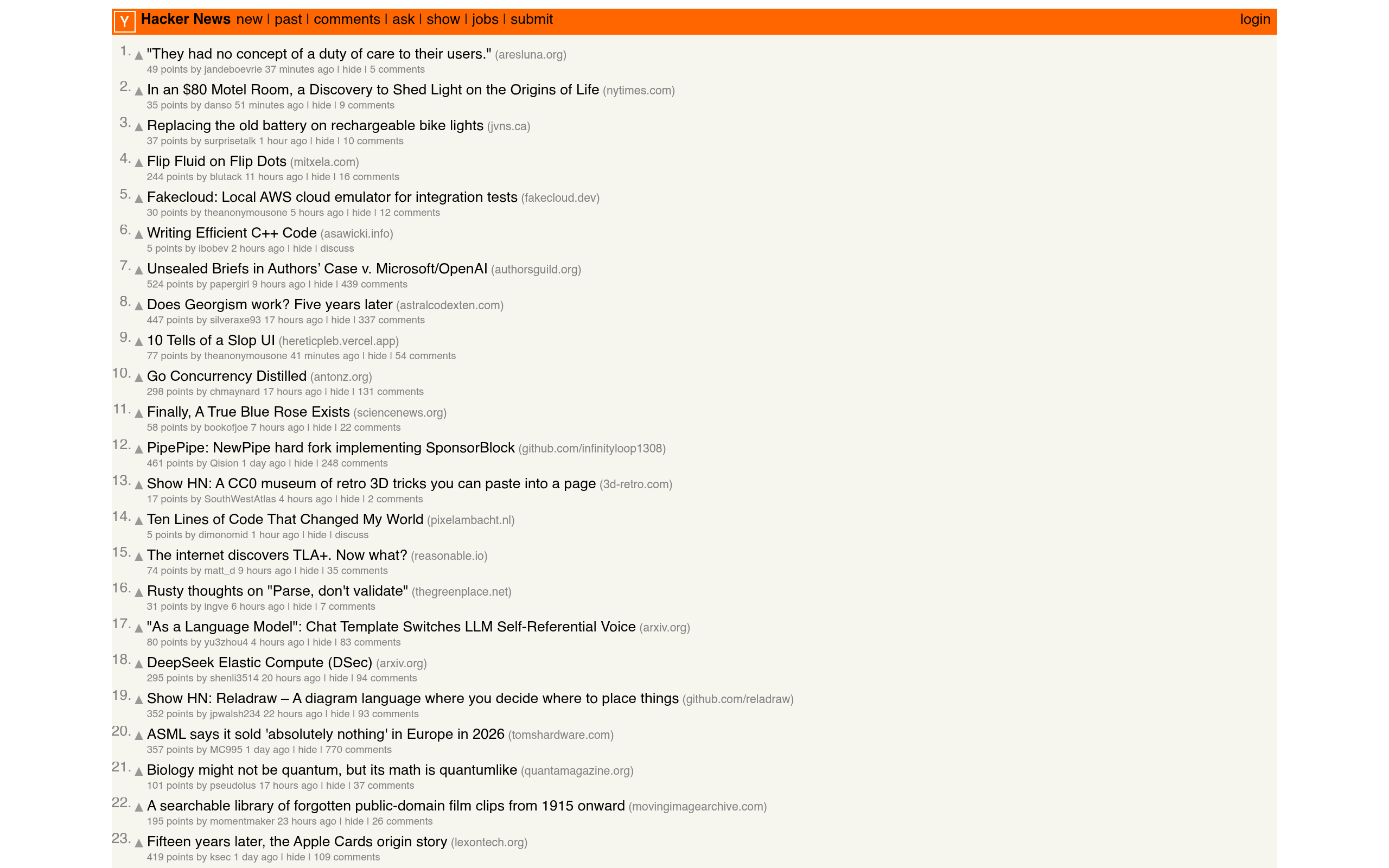
Verdict and practical fit
- Best for: technical products that can interest builders, developers, or technically curious early adopters.
- Standout: “Show HN” gives makers a way to introduce something they have built and invite discussion.
- Implementation burden: write a direct title, explain what is novel or useful, and stay available to answer substantive questions. Read the community’s submission guidance first.
- Commercial model: treat a submission as organic participation; any separate promotion should be evaluated independently.
- Does not suit: a launch whose only contribution is a sales pitch, or a product with no meaningful explanation for a technical audience.
Hacker News’ official guidelines explain expectations for submissions and discussion, including the community’s preference for substantive contributions over promotional material (Hacker News guidelines). Visit Hacker News and decide whether your product has a genuine reason to be discussed there.
3. Reddit
Verdict and practical fit
- Best for: products serving a specific interest or problem with an active, relevant community.
- Standout: the subreddit—not Reddit as a whole—sets the context, so the right community can make a focused question more useful than a generic announcement.
- Implementation burden: research community rules, participate in the format members expect, and disclose your connection to the product.
- Commercial model: community participation and paid advertising are separate routes; check current advertising terms before budgeting.
- Does not suit: founders planning to copy-paste the same promotional post into unrelated communities or ignore moderator rules.
Reddit’s sitewide content policy is only a starting point; community moderators may set additional rules, so check those rules before posting (Reddit Content Policy). Visit Reddit to research communities before deciding whether an announcement, a request for feedback, or no post is appropriate.
4. LinkedIn
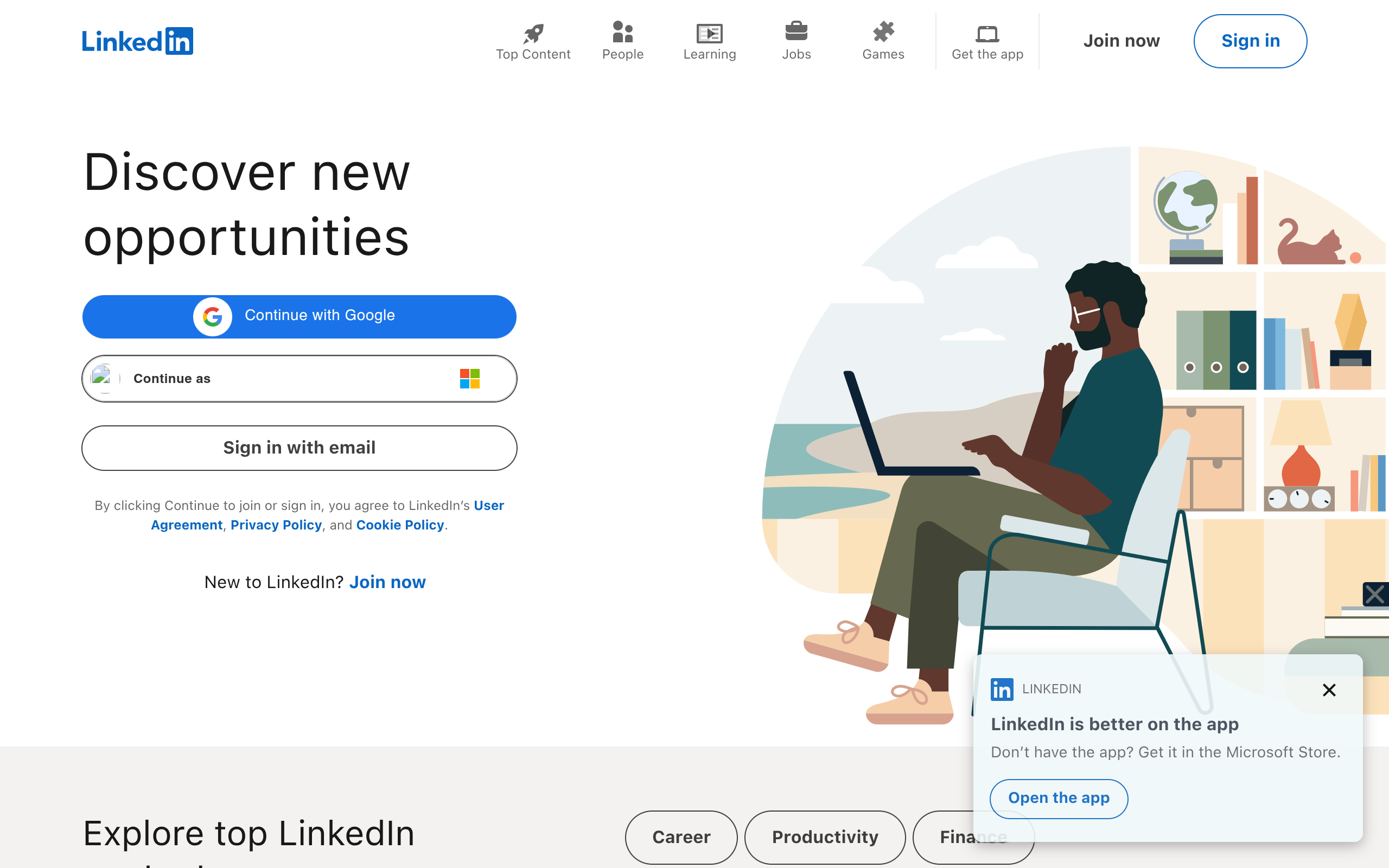
Verdict and practical fit
- Best for: B2B software, professional workflows, and founders whose potential users or partners are identifiable by role or industry.
- Standout: a founder can explain the business problem and product context in a professional feed rather than relying on a launch-directory listing.
- Implementation burden: prepare a credible product explanation, publish from an appropriate personal or company presence, and follow up with relevant replies and direct conversations.
- Commercial model: organic sharing and paid promotion are distinct; verify the current options and costs on LinkedIn before planning spend.
- Does not suit: products whose likely early adopters do not use a professional context to discover tools, or teams unable to sustain relevant conversation.
See LinkedIn. A launch post is more useful when it connects the product to a recognizable work problem; a generic “we launched” update gives professional readers little reason to act.
5. X
Verdict and practical fit
- Best for: founders who already have relevant connections or can join ongoing conversations around their product’s problem space.
- Standout: short updates can make it easy to share a demo, answer questions, and clarify a product as discussion develops.
- Implementation burden: plan a clear opening post and stay present to answer replies; do not treat one post as a complete distribution plan.
- Commercial model: organic posting and paid advertising are separate options; check the current advertising information before estimating costs.
- Does not suit: teams that cannot monitor responses or whose audience is unlikely to discover products through real-time social discussion.
Read X’s rules before planning outreach, and visit X to assess whether your team can participate in the conversations where likely users already spend time.
6. DEV Community
Verdict and practical fit
- Best for: developer tools and software with a useful technical story, tutorial, or build-in-public lesson to share.
- Standout: a practical article can explain how a product works and invite feedback through the substance of the post, not just its announcement.
- Implementation burden: write a real technical contribution, disclose the product connection, and respond to questions. This takes more preparation than pasting a launch link.
- Commercial model: distinguish community publishing from any separately offered promotion; verify current terms on the official site.
- Does not suit: products without a developer audience or teams unwilling to create content that is useful even to readers who do not sign up.
DEV Community publishes a Code of Conduct for participation; review it alongside the site’s current publishing expectations before submitting a product-related post (DEV Community Code of Conduct). Visit DEV Community and choose this route when you can teach or explain something relevant, not merely announce availability.
Comparison
Use this table to narrow the shortlist, then verify current terms directly. The effort column reflects the work required to make a relevant contribution, not a guaranteed result.
| Option | Primary launch job | Typical effort | Commercial model to check | Poor fit when |
|---|---|---|---|---|
| SuperPublic | Indie product discovery and founder visibility | Prepare listing; follow up | Current submission terms and any paid options | You need only broad consumer reach |
| Hacker News | Technical discussion and maker feedback | Write a substantive submission; engage | Organic participation; assess promotion separately | The post is only a sales pitch |
| Reach a relevant interest community | Research community rules; participate | Organic community use versus paid advertising | You plan indiscriminate cross-posting | |
| Professional and B2B visibility | Explain the work problem; follow up | Organic sharing versus paid promotion | Your audience is not professionally oriented | |
| X | Real-time discussion and product updates | Post clearly; monitor responses | Organic posting versus paid advertising | You cannot stay available to engage |
| DEV Community | Technical explanation and developer feedback | Create a useful technical post | Community publishing; verify promotion terms | You have no relevant developer story |
5. Run launch day as an owned process
Give the day a simple sequence so the team is not improvising while people arrive. Publish only after checking that the product, destination link, and support path are working. Then assign someone to monitor the chosen channel and someone—often the same person on a small team—to triage product issues.
- Before posting: open the live page, test the main call to action, and confirm the tracking link.
- At publication: share the version written for that community, not a copied message that ignores its context.
- During the response window: answer real questions, thank people for useful criticism, and note reports that need investigation.
- At day’s end: record the source of meaningful visits, signups, activation, and unanswered questions.
Do not let a busy comment thread become a substitute for product support. If someone reports a defect, acknowledge it, move sensitive account details to an appropriate support channel, and give a realistic update rather than promising an unverified fix.
6. Follow up, learn, and choose the next move
Within the next few days, sort responses into product defects, confusion in the message or onboarding, and requests for new capability. The categories lead to different actions: fix a defect, revise the explanation or first-run experience, or decide whether a feature request fits the product’s direction.
- Reply to people who offered specific feedback, even if the answer is that the idea is not on the roadmap.
- Compare the original goal with the observed behavior; visits alone do not show whether the product solved a problem.
- Pick one improvement to test before repeating the same launch message.
- Keep a short record of what channel, audience, message, and follow-up produced useful learning.
Repeat the launch only when you have a new reason to contact people—a meaningful fix, a clearer use case, or evidence that changes who should see the product. Otherwise, take the feedback into onboarding and customer conversations instead of scheduling another announcement.
How to choose your first channel
Start with the product’s likely first users, not the platform with the biggest name. If you need discovery among indie builders, consider SuperPublic; if the product invites a technical discussion, assess Hacker News or DEV Community; if a specific interest group already discusses the problem, research Reddit; if the buyer is a professional role, consider LinkedIn; and if your team can join relevant live conversations, consider X.
Choose the option where you can make a relevant contribution and respond afterward. For a small team, one well-prepared channel plus direct follow-up is a more workable starting policy than six simultaneous announcements. SuperPublic helps indie founders submit launches, discover early-stage products, and connect with a founder community; explore what it offers at SuperPublic.
Authored with NotFair SEO