Founder field note
Indie Startup Discovery Platform Comparison: 6 Places to Launch and Find Products
Compare indie startup discovery platform comparison options by audience, launch workflow, effort, fit, and pricing checks before you submit as a founder.
For founders weighing an indie startup discovery platform comparison, the right choice depends on whether you want a launch-day audience, a developer-focused product directory, or ongoing software discovery. This list compares six real options by audience fit, discovery workflow, submission effort, and what is publicly verifiable about their commercial model; it is not a promise of traffic or customers. If your goal is qualified early attention, prioritize places where the platform’s audience matches your product and where your launch page gives visitors a clear next step.
The evaluation method is deliberately practical. It asks: who is likely to browse, whether the service centers on launches or ongoing listings, how much work a founder may need to do to prepare a submission, and what is known versus unverified about fees or promotion. Platform pages establish identity and stated workflows, not audience size, conversion rates, or a guarantee of placement. Check the current submission rules and terms before committing time or budget.
- Launch platforms are organized around publishing or surfacing product launches.
- Directories are useful for browsing products by category, but may not create a concentrated launch moment.
- Developer-oriented discovery can be a stronger fit for technical products than a broad startup audience.
1. Peerlist
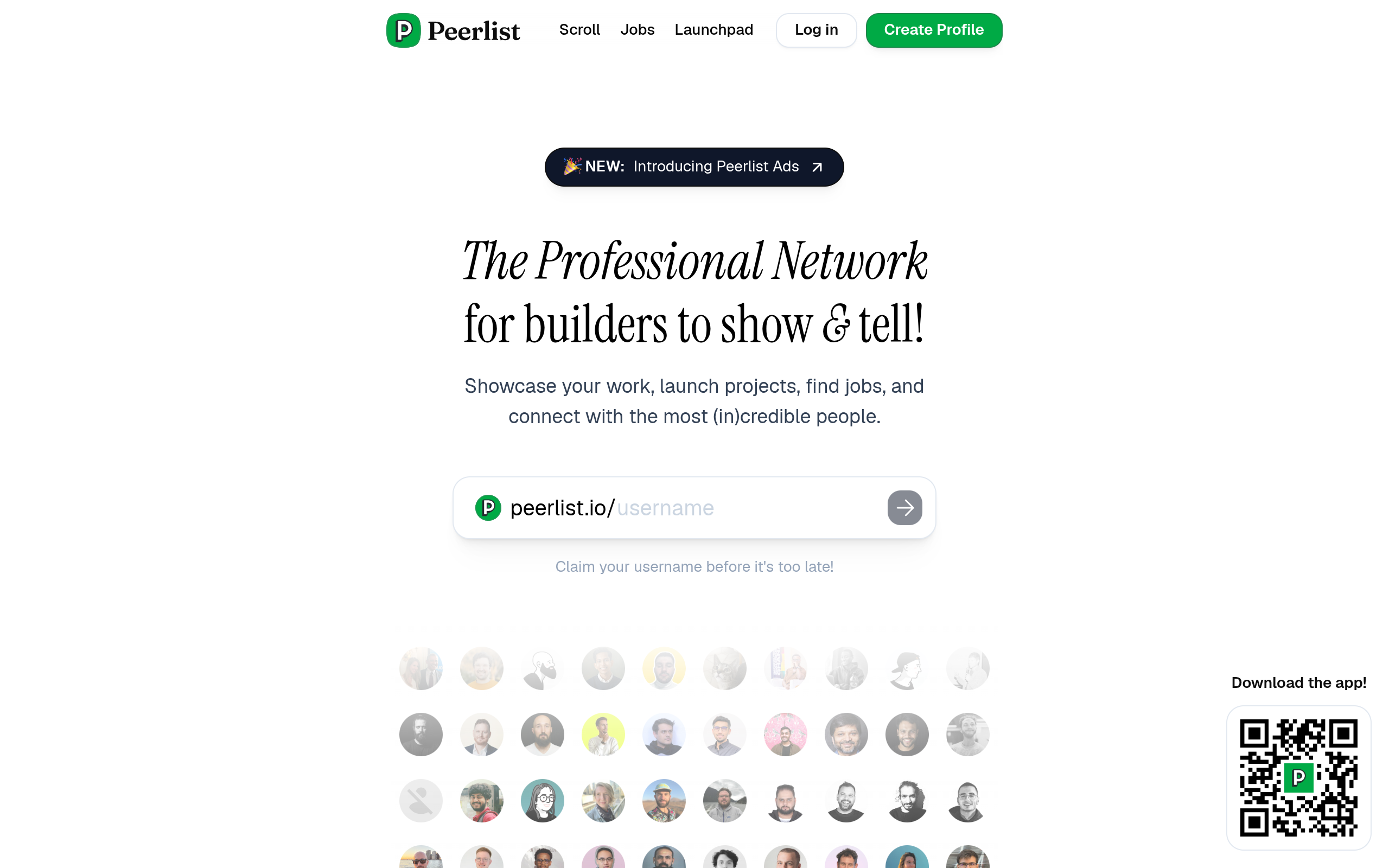
Best for launches connected to a professional community
Peerlist combines a professional network with product launch discovery. Its Launchpad is the relevant starting point for founders who want to present a product in a launch-oriented setting while also considering the people and professional interests around it. That makes it a different bet from a standalone directory: the potential value is not only a listing, but whether the surrounding community overlaps with your target users.
Implementation burden: prepare a concise product description, a working destination page, and an explanation of who should care. A launch page that reads like a pitch deck will be harder to evaluate than one that shows the use case, current stage, and a clear action. The actual submission requirements can change, so confirm them in Peerlist’s current Launchpad flow.
Verdict
- Best for: founders whose prospective users or peers are active in a professional community.
- Does not suit: teams that need a narrowly technical audience or guaranteed reach.
- Standout: launch discovery sits alongside a broader professional-network context.
Commercial model: the linked Launchpad page is the place to verify any current submission fee, paid visibility, or eligibility terms; this comparison does not assume a price. Peerlist is a weaker fit if your team cannot invest in a clear profile and follow-up conversation, or if you need a directory listing to function as a measurable acquisition channel by itself.
2. DevHunt
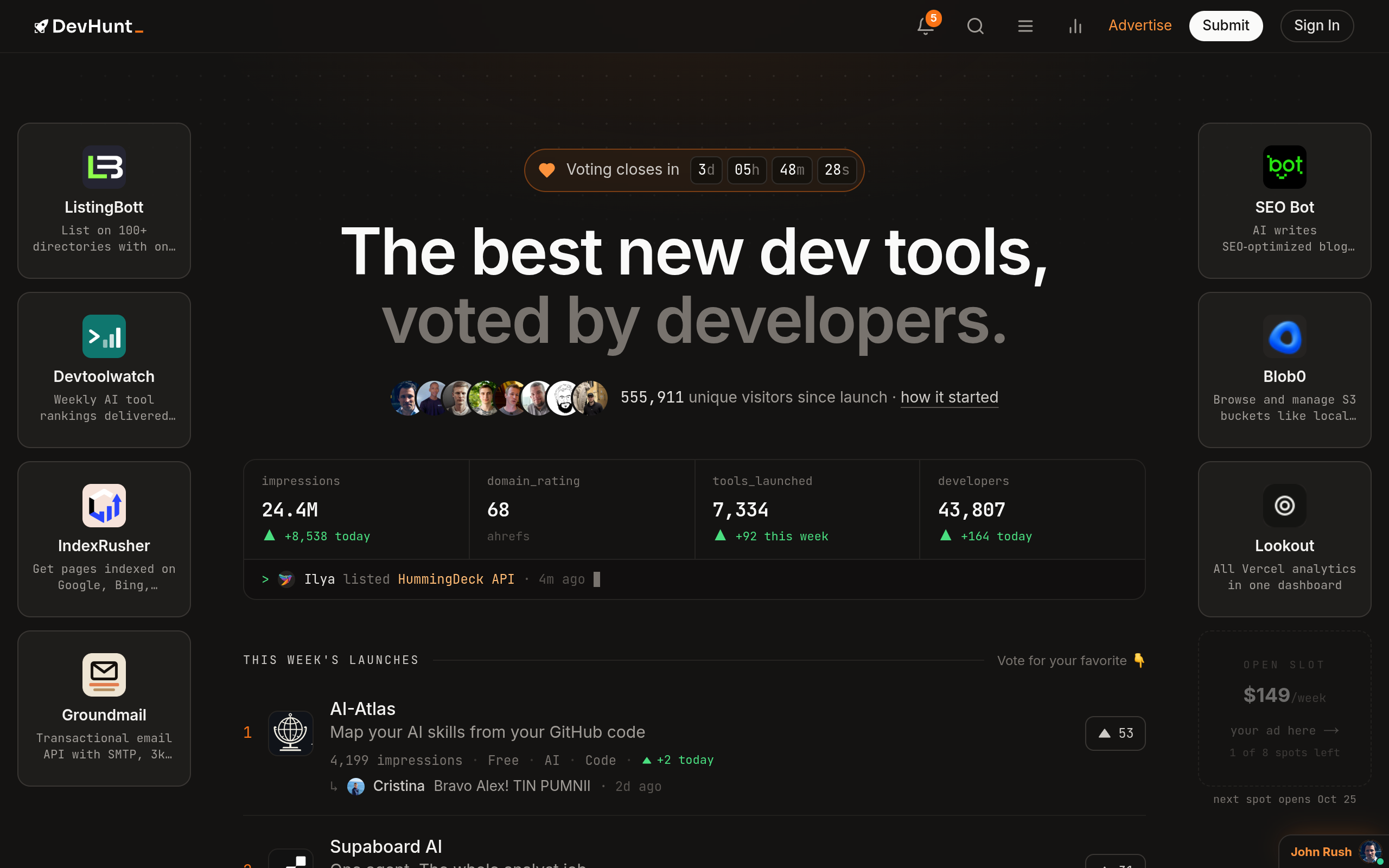
Developer-tool discovery, not a general startup audience
DevHunt is a discovery option to consider when the product is made for developers. Its official site identifies it as a place to discover developer tools, which gives a technical product a more focused context than a general startup directory. That focus matters: an API utility or coding workflow tool can be easier to assess when the browsing audience already understands the problem, while a consumer app may have less natural fit.
Implementation burden: make the technical job legible without assuming every visitor knows your architecture. Explain the problem, the developer workflow it changes, and what someone can try next. Before planning a launch around the platform, inspect its live submission flow and listing requirements; the homepage alone does not establish current review rules, launch cadence, or editorial selection.
Verdict
- Best for: developer tools, APIs, and products with a clear technical user.
- Does not suit: founders targeting a broad consumer or nontechnical buyer.
- Standout: audience specialization can make product relevance easier to judge.
Commercial model: verify current submission and promotion terms directly on DevHunt before budgeting; no fee or paid-placement option is asserted here. The key trade-off is reach versus relevance: a smaller, well-matched audience may be more useful than broad visibility if the product requires technical understanding, but neither audience quality nor conversion is guaranteed by a listing.
3. SaaSHub

Best for software discovery beyond launch day
SaaSHub is a software discovery and alternatives directory rather than a launch-day community first. Its submission page gives software makers a route to propose a product for inclusion. A founder can consider it when the ongoing job is to be discoverable by someone comparing software options, not simply to create a short burst of attention around a launch.
Implementation burden: describe the product in terms a buyer can compare: category, core job, intended user, and meaningful differences. A vague “all-in-one” description gives a directory browser little reason to click or choose you. Check how the current listing is reviewed and maintained; a directory entry is not the same as an endorsement, a comparison ranking, or an active launch campaign.
Verdict
- Best for: SaaS teams that want to be discoverable in a software-selection context.
- Does not suit: founders seeking a launch event or a founder-community feedback loop.
- Standout: the submission workflow is designed around software listings.
Commercial model: check the current submission page for any fees, premium placement, or listing conditions rather than assuming submission is free. SaaSHub may be less useful when the product is too early to explain in comparison terms—for example, if the core workflow is still changing and the team cannot yet state which buyer problem it solves.
4. Launching Next
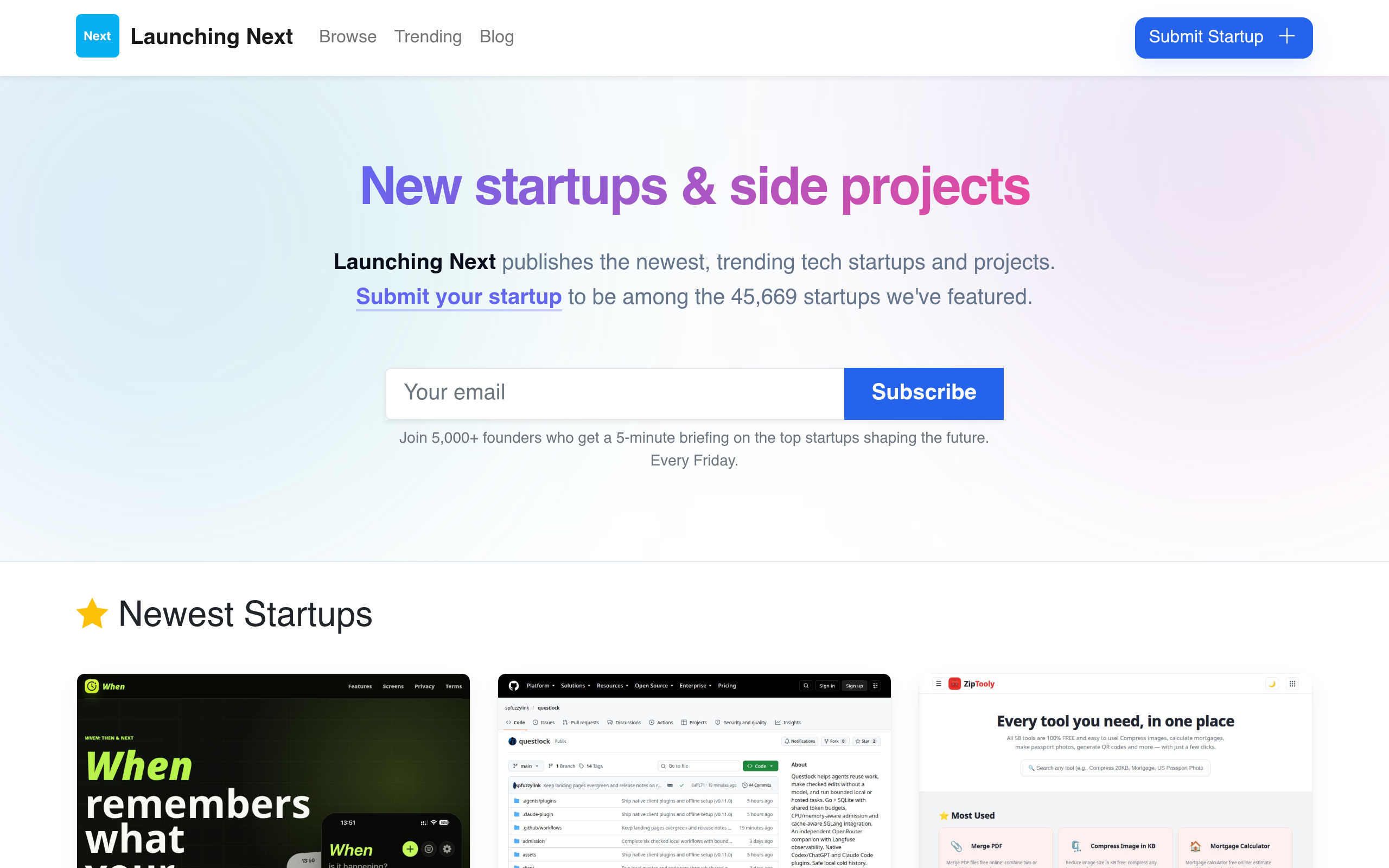
A startup directory for a product introduction
Launching Next is a startup discovery directory that founders can assess when they want a product presented among other startups. Its official site is the appropriate place to check the current catalog and find out whether its submission process still matches your launch plan. Compared with a community-led launch, a directory approach is more about a product record that visitors can browse than an assured period of concentrated discussion.
Implementation burden: prepare a durable summary that explains the target user, the problem, and the product’s current availability. That material should still make sense after launch week. Review the directory’s current categories and recent entries before drafting: if your product’s category is absent or the listings do not resemble your stage, that is evidence to pause and investigate rather than a reason to submit automatically.
Verdict
- Best for: a startup that can be explained clearly in a directory-style profile.
- Does not suit: teams that need a documented audience guarantee or live feedback mechanism.
- Standout: it offers a startup-discovery context rather than a workflow-specific software comparison alone.
Commercial model: its homepage does not establish current submission fees or paid options, so check the live submission terms before investing effort. The main limitation is evidence: a directory presence should not be treated as proof of traffic, editorial approval, or sales. If you cannot verify how a listing is handled today, use the site as a candidate to investigate, not as a committed launch channel.
5. StartupBase
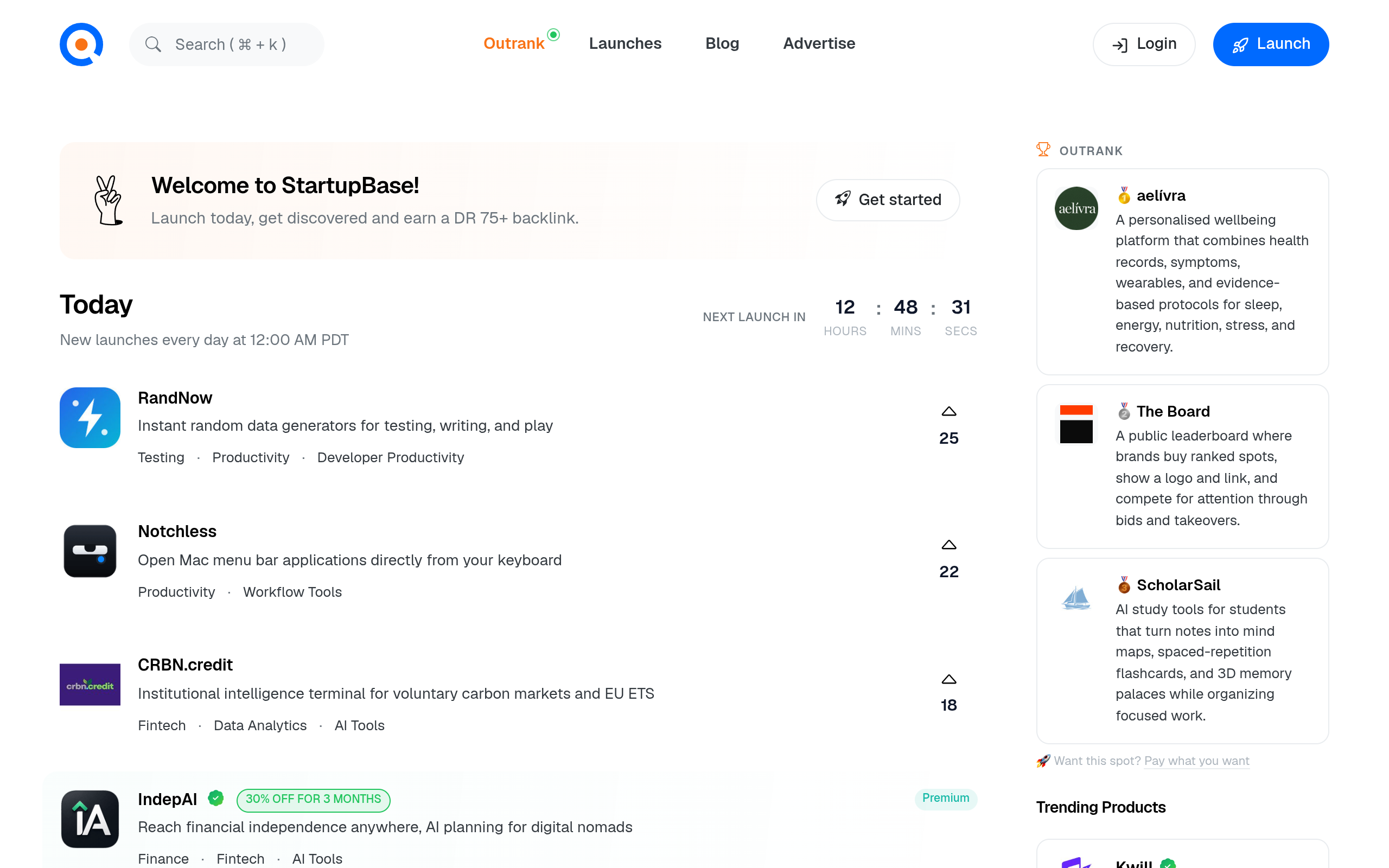
For founders exploring startup-focused discovery
StartupBase is another startup discovery option. Its official site is where to confirm the current product catalog and how founders can add or present a company. Its startup-oriented framing makes it distinct from a software-only alternatives directory, but a broad startup listing may be less useful to a buyer looking for a specific workflow tool.
Implementation burden: check whether the platform currently supports the kind of launch or listing you need, then prepare a profile that makes stage, product purpose, and target customer easy to understand. Compare the active entries with your product before submitting. A directory can help someone browse companies, but that does not by itself establish a repeatable source of qualified users or a launch-day audience.
Verdict
- Best for: teams looking for a startup-oriented discovery environment.
- Does not suit: founders who require a clearly verified, developer-specific or category-specific audience.
- Standout: its startup framing can suit company discovery as well as product discovery.
Commercial model: current submission fees, promotional products, and listing terms are not established by the homepage; verify them through the live site before deciding. StartupBase is a poor fit if you need documented launch mechanics but cannot confirm those mechanics from its current pages. Treat the lack of verified detail as a decision point, not an invitation to assume the workflow.
6. SuperPublic
Indie-only product launch and discovery
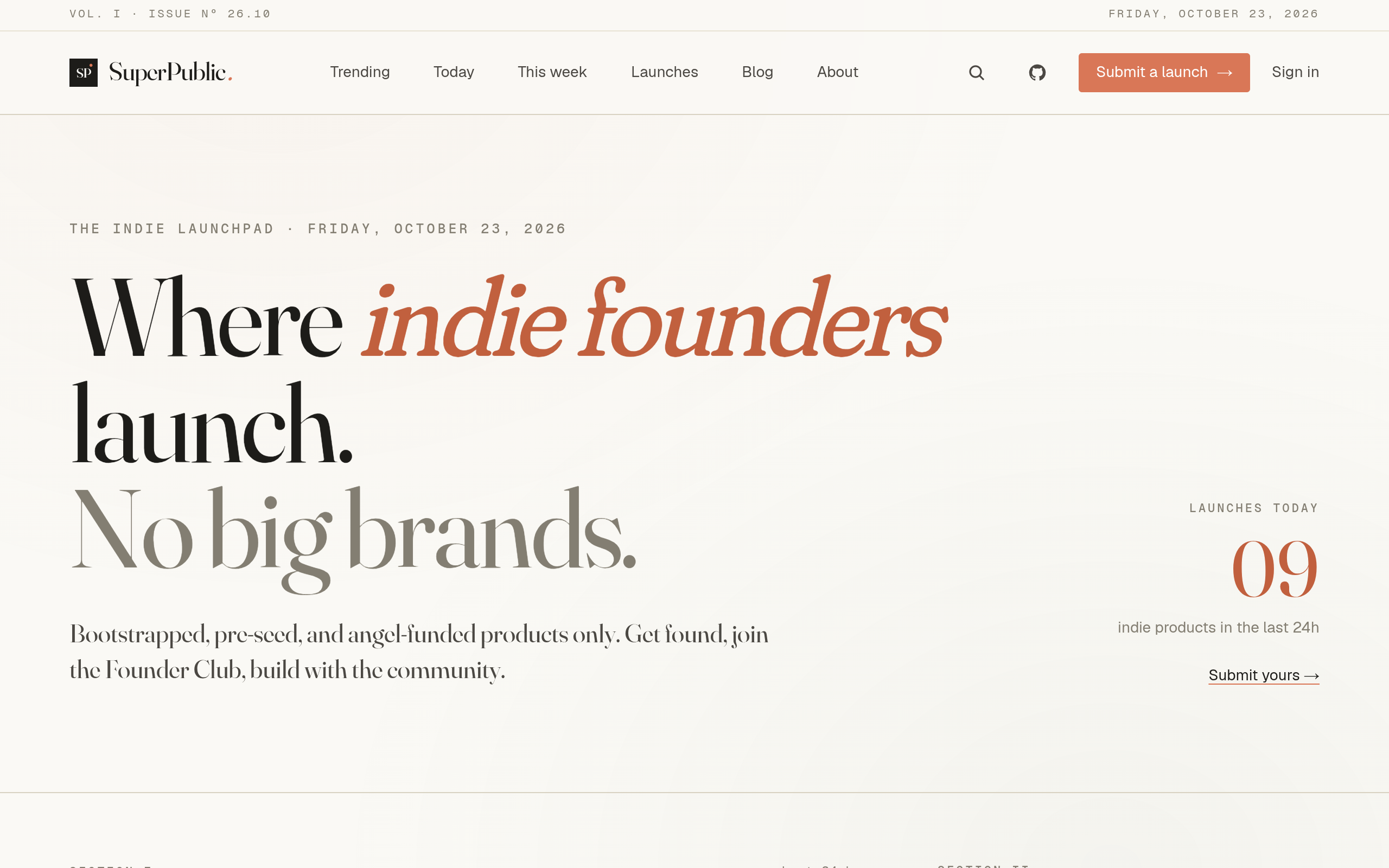
SuperPublic is an indie-only product launch and discovery platform for bootstrapped, pre-seed, and angel-funded founders. Its verified capabilities include launch submissions, launch-page publishing, browsing newly launched indie products, trending rankings, daily and weekly browsing, and founder-community participation. Founders can use the product launch submission page to start the submission workflow.
This makes SuperPublic most relevant when the product is early-stage and the founder wants both a published launch and a setting where early adopters can browse indie products. It is not the same job as a long-lived software alternatives directory: the platform centers on launches and community discovery. Implementation burden: give the product a focused launch description and a destination that explains how a visitor can try, join, or learn more. Then participate in the community rather than treating publication as the entire distribution plan.
Verdict
- Best for: bootstrapped, pre-seed, and angel-funded teams launching an indie product.
- Does not suit: mature companies outside the indie-only scope, or teams that need guaranteed leads.
- Standout: launch browsing and founder-community participation are part of the same discovery environment.
Commercial model: the verified evidence establishes launch submissions and publishing, but not a particular price or paid-promotion policy. Check current terms before submitting. SuperPublic is a poor fit if your business is not an indie startup or if you expect a platform listing to replace customer research, direct outreach, or product onboarding.
Comparison
The table separates the platforms by the job they appear best suited to support. “Verify” means the available official page does not establish the current detail; it is a prompt to check the live workflow, not a claim about a particular price or feature.
| Platform | Primary discovery context | Best-fit founder job | Effort to plan for | Commercial details |
|---|---|---|---|---|
| Peerlist | Professional community and launch discovery | Present a product where professional peers may overlap with users | Prepare a clear profile and launch narrative | Verify current submission and promotion terms |
| DevHunt | Developer-tool discovery | Reach a technically oriented product audience | Explain the developer workflow and use case | Verify current fees and submission terms |
| SaaSHub | Software directory and comparison discovery | Make a SaaS product discoverable during software research | Write a specific, comparable listing | Verify current listing and promotion terms |
| Launching Next | Startup directory | Introduce a startup through a browsable profile | Prepare a durable product summary | Verify current submission terms |
| StartupBase | Startup discovery | Present a company in a startup-oriented catalog | Confirm the live listing workflow and fit | Verify current fees and terms |
| SuperPublic | Indie product launches and founder community | Publish an early-stage indie product launch | Prepare a launch page and engage with the community | Verify current pricing and promotion policy |
How to choose a platform for your launch
Start with the job you need done now, not the platform’s broadest promise. If you need launch-day attention, favor a launch-centered workflow. If your aim is to be found during software research, a directory may be more relevant. If your product has a technical user, a specialist audience could be more valuable than a general startup catalog. A founder seeking investor research exposure has a different job again: company facts and stage need to be legible, and a product launch profile should not be mistaken for investor due diligence.
Use this short pre-submission checklist to decide whether a candidate deserves your time:
- Inspect recent entries: do they match your product type, maturity, and audience?
- Read the live submission rules: check eligibility, required assets, review steps, and any limits on promotion.
- Confirm the commercial terms: look for current fees, paid placement, recurring charges, and cancellation or refund conditions. Do not infer these from a platform’s general description.
- Choose a measurable next step: for example, a signup, trial, waitlist registration, or user interview request. Use a trackable destination if appropriate, and compare visits with meaningful actions rather than treating impressions as success.
- Plan the follow-up: assign someone to respond to questions, capture feedback, and record what visitors struggled to understand.
For an illustrative starting policy, a solo founder might submit to one audience-matched launch platform and one directory only if the directory serves a separate discovery job. That is a planning example, not a universal rule. If two platforms draw the same audience but require separate profile work, the second submission may add administration without a clear new learning opportunity.
Choose Peerlist when professional-community overlap matters; DevHunt when the product is for developers; SaaSHub when ongoing software discovery is the goal; and Launching Next or StartupBase when a startup-directory profile fits the way you want to be found. Consider SuperPublic when the product is an indie launch and the early-stage founder community is relevant. Before you commit, verify the current submission path, commercial terms, and audience fit on the official site—especially for platforms whose public homepage does not spell out those details.
If SuperPublic fits your stage and audience, you can explore the platform and, when ready, SuperPublic.
Authored with NotFair SEO