Founder field note
7 Product Placement Examples for Startup Launches
See 7 product placement examples for startup launches, with real platforms, disclosure notes, effort levels, and a practical way to choose your first test.
Product placement examples for a startup usually fall into three categories: a creator showing the product in context, a newsletter or podcast presenting it to a relevant audience, or a software marketplace listing it where buyers already search. The seven examples below use real services, but the campaign scenarios are reusable patterns, not claims about a particular company’s historical promotion. They are compared for audience intent, implementation burden, commercial model, trust, and how easily a bootstrapped team can measure the result.
This list is for founders launching software, AI tools, APIs, and developer products—not consumer brands arranging film appearances. The buyer job is earning qualified product discovery. Paid search and social retargeting can support that job, but they are advertising placements rather than product placement examples in the usual editorial, creator, marketplace, or sponsorship sense.
1. YouTube

For current product details, see the official YouTube website.
Example pattern: a creator uses the product during a real workflow
A project-management startup might sponsor a video in which a creator plans a product launch using the tool, then links to a trial. The placement works when the audience can see the product solving the creator’s existing problem, rather than watching an unrelated thirty-second sales pitch. A developer tool could appear in a tutorial, code review, or “how I built this” video; a consumer-facing app could be demonstrated inside a repeatable workflow.
This is a hypothetical format example, not a claim that a named startup achieved a particular outcome. Adapt it by giving the creator a narrow brief: the audience problem, the one workflow to demonstrate, the correct landing page, and the claims they must not make. Avoid scripting every sentence. A creator who sounds independent is more credible than one reading a product brochure.
Fit, burden, and commercial model
- Best for: products that become understandable through visual demonstration.
- Does not suit: tools whose value depends on long implementation, private data, or an audience unrelated to the use case.
- Implementation: medium to high; shortlist creators, review audience relevance, provide access, approve factual claims, and attribute sign-ups.
- Commercial model: usually a negotiated sponsorship or creator fee; confirm deliverables, usage rights, exclusivity, and cancellation terms directly.
- Standout: one strong demonstration can answer objections that a landing page leaves unresolved.
Creators must disclose paid relationships clearly. YouTube’s official guidance describes paid product placements and endorsements, including the platform’s paid-promotion disclosure process; review the current requirements before publishing at YouTube’s paid product placement policy. This route is a poor first test if you cannot give the creator a working product and a measurable conversion path.
2. Gumball
Example pattern: a podcast host makes the product part of the show
A founder tool could sponsor a podcast episode for independent operators, with the host explaining how they would use the tool to collect customer feedback or automate a recurring task. The strongest version is a host-read integration: the host connects the product to a problem the audience already hears discussed. A generic pre-recorded audio ad is easier to produce but behaves more like conventional advertising than product placement.
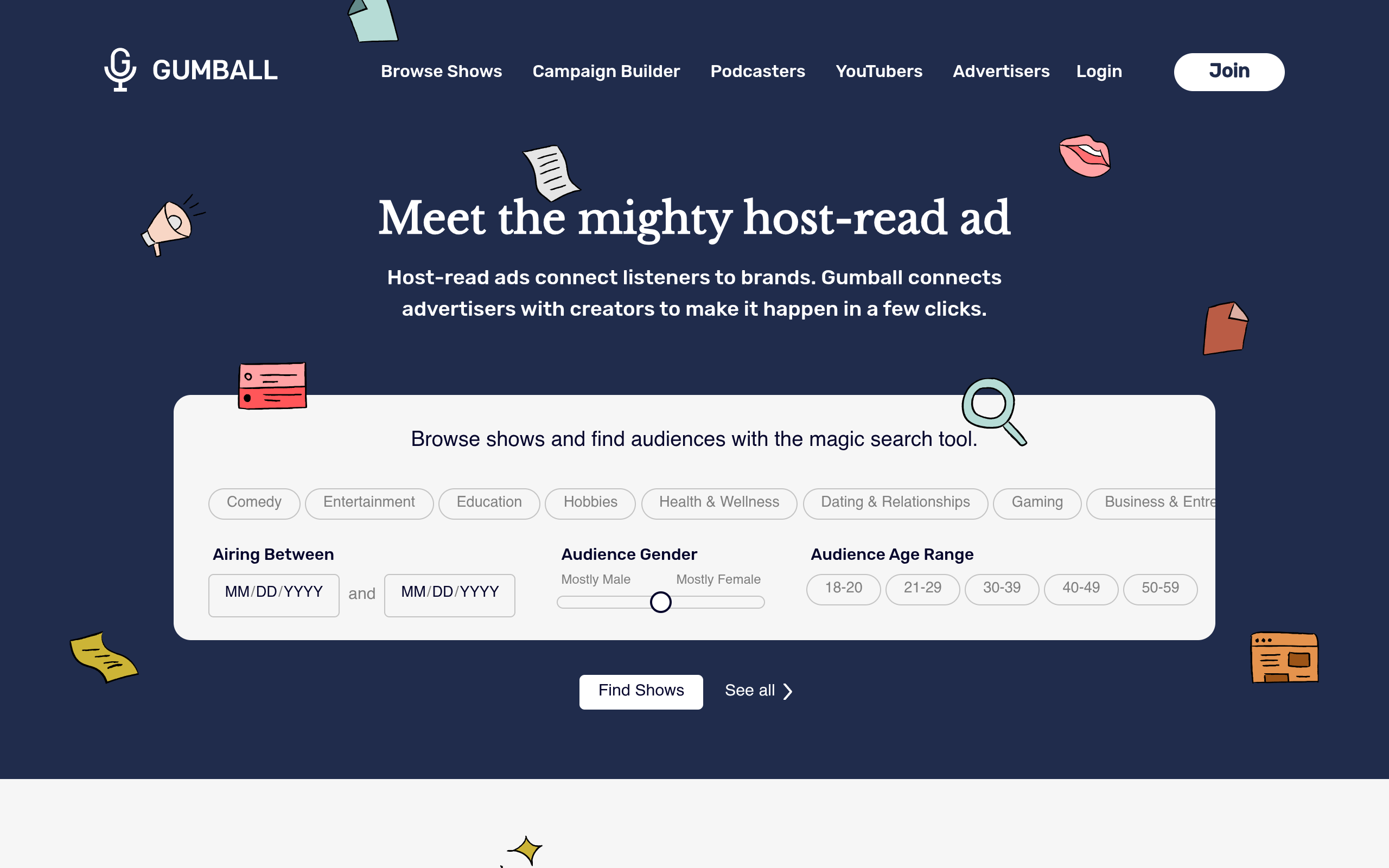
Gumball is a real podcast sponsorship marketplace at gumball.fm. The service can be a practical starting point for finding podcast sponsorship opportunities, but a founder should verify current inventory, audience data, booking terms, and available campaign formats before treating it as a guaranteed distribution channel.
Fit, burden, and commercial model
- Best for: products with a clear story, founder perspective, or use case that can be explained conversationally.
- Does not suit: products that need a screen-heavy demo or several minutes of onboarding before their value is clear.
- Implementation: medium; prepare a concise host brief, a listener-specific offer, tracking links, and answers to likely objections.
- Commercial model: sponsorship inventory and negotiated campaign terms; current rates and guarantees vary by show and should be confirmed before booking.
- Standout: host trust can make an unfamiliar product feel safer to investigate.
Adapt the placement with a listener-only landing page and one action, such as joining a beta or requesting an account. Make the disclosure natural and explicit. The Federal Trade Commission’s Endorsement Guides explain why material connections should be disclosed clearly; that guidance is useful even when the host’s read is informal.
3. Paved
Example pattern: a newsletter places the product beside a relevant insight
Suppose an analytics startup sponsors a newsletter read by growth leads. The placement could introduce one practical lesson—such as how to spot activation drop-off—then offer the product as a way to apply that lesson. The example works when the product is adjacent to the newsletter’s editorial job, not when the sponsor forces an unrelated feature list into the issue.
Paved is a real marketplace associated with newsletter sponsorships and can be reviewed at paved.com. Treat availability, audience data, pricing, and campaign mechanics as changeable. A marketplace profile is a discovery aid, not evidence that a specific newsletter will deliver qualified users.
Fit, burden, and commercial model
- Best for: products with a sharp promise that can be understood in a short paragraph.
- Does not suit: products with no useful first action, unclear positioning, or a landing page that makes visitors do research before signing up.
- Implementation: low to medium; write several subject-line-safe variations, set up attribution, and coordinate copy approval with the publisher.
- Commercial model: sponsorship placements are generally paid; verify whether the arrangement is priced per send, placement, package, or another current model.
- Standout: newsletter readers often have a defined professional interest, making problem-to-product relevance easier to establish.
Use a placement brief that specifies the audience, forbidden claims, call to action, disclosure language, and destination URL. Do not ask the publisher to promise sign-ups they cannot control. Newsletter performance is affected by issue topic, placement position, list quality, and reader intent—not just subscriber count.
4. G2
Example pattern: a buyer discovers the product while comparing categories
A customer-support startup can create a complete profile on G2 so a buyer researching support software can understand its use case, ideal customer, integrations, and limitations. This is a high-intent discovery placement: the visitor is already evaluating solutions, but may also be comparing reviews, trust signals, and alternatives.
G2 is a real software marketplace and review destination at g2.com. Its seller resources are available through G2’s seller site. Review current profile, buyer-intent, advertising, and pricing options there rather than assuming every visibility feature is included with a basic presence.
Fit and operational requirements
G2 suits a product with identifiable software categories, active customers, and a willingness to support an ongoing review process. It does not suit a pre-launch concept with no users who can describe real usage. Implementation is medium at launch and ongoing afterward: create accurate category information, answer reviews professionally, monitor competitor positioning, and keep claims current.
The commercial model can include free discovery elements and paid seller or advertising offerings, depending on the current program. Do not buy visibility before fixing the profile’s fundamentals. A useful brief should cover:
- the exact buyer and company size the product serves;
- the problem it solves better than a spreadsheet, internal process, or incumbent tool;
- the implementation constraints a buyer should know before requesting a demo;
- the one next step that matches the visitor’s stage.
5. Capterra
Example pattern: category research leads to a short list
An early-stage HR tool might appear in a category where buyers compare products by use case, company size, and feature requirements. The placement’s job is not to tell the whole company story. It is to help a buyer decide whether the product belongs on a credible evaluation short list.
Capterra is a real business-software discovery site at capterra.com. Its business programs, listing options, and lead arrangements can change, so verify current terms through the official site. A listing is not a substitute for proof: the profile should state who should not buy, how long setup takes, and what the product does not yet support.
Fit, burden, and commercial model
- Best for: products that fit a recognizable software category and can explain their differences with evidence.
- Does not suit: an experimental product whose category is still unclear or whose positioning changes every week.
- Implementation: medium; prepare category language, screenshots, qualification questions, review requests, and lead-routing ownership.
- Commercial model: may include listings, lead-generation, or advertising programs; confirm whether a current offer charges for clicks, leads, or another action.
- Standout: category context helps a buyer who is comparing several tools rather than casually browsing.
The failure mode is buying traffic before measuring lead quality. Define a qualified lead before launch—for example, a company in your supported segment with a specific use case and a realistic implementation window. That is an illustrative starting policy, not a universal benchmark.
6. AWS Marketplace
Example pattern: a technical buyer finds the product inside an existing cloud workflow
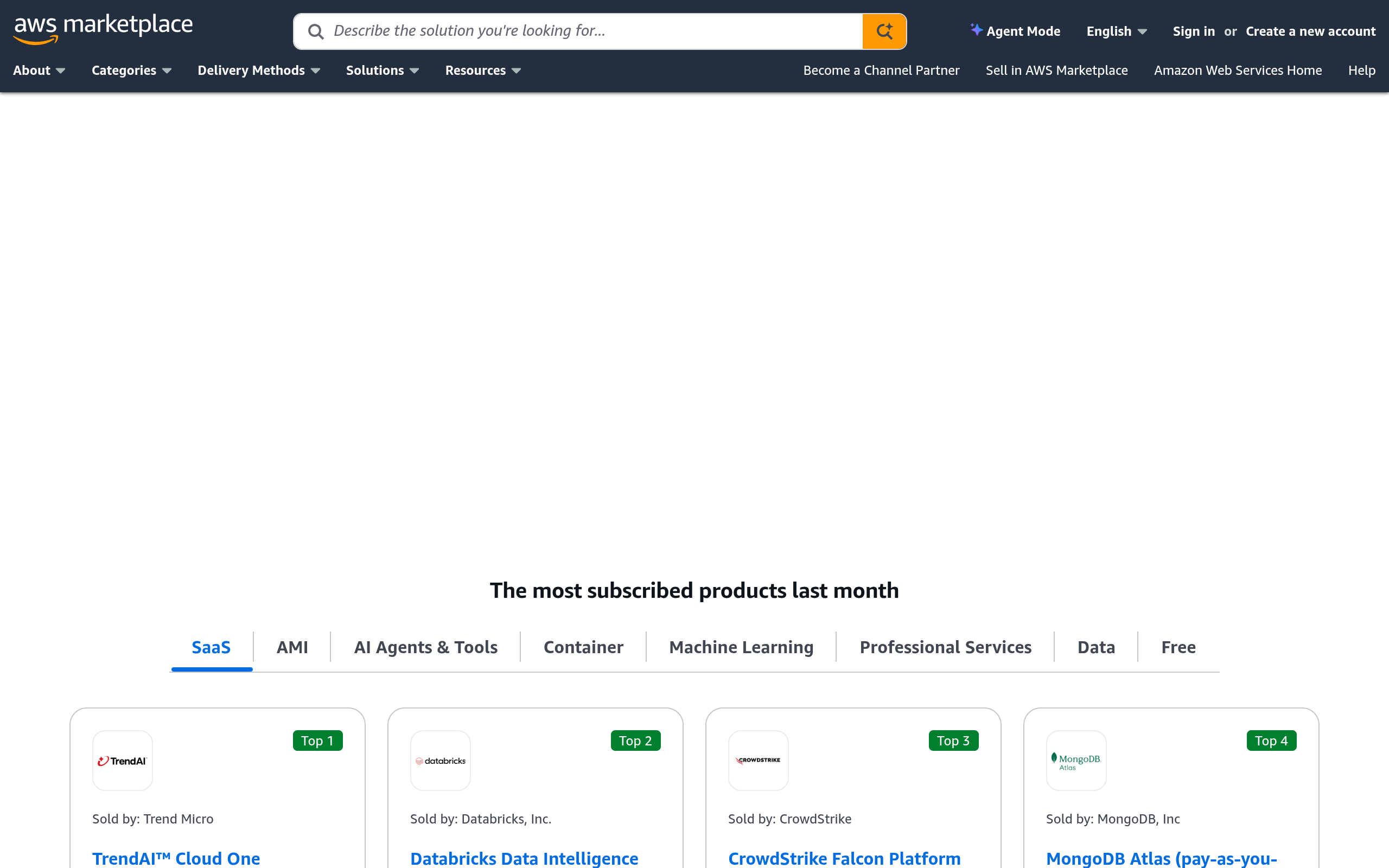
A security, data, infrastructure, or developer product can use AWS Marketplace as a placement where technical buyers already evaluate cloud solutions. The most useful example is not simply “list the product.” It is a listing with clear architecture, deployment requirements, support boundaries, and a path from evaluation to procurement.
AWS Marketplace is an established software and services marketplace. AWS explains its purpose and marketplace model in the official AWS Marketplace documentation. The documentation is the safer source for current seller requirements and operational details; do not infer eligibility or commercial terms from another vendor’s description.
Fit and implementation cost
This route suits products with a strong technical buyer, cloud deployment story, and the operational maturity to support marketplace customers. It does not suit a lightweight consumer app whose audience does not buy through cloud procurement. Implementation is high relative to a directory listing because packaging, technical documentation, support, security review, billing, and internal ownership may all matter.
- Best for: infrastructure, security, data, developer, and enterprise-facing products.
- Does not suit: founders seeking immediate casual sign-ups from a broad consumer audience.
- Commercial model: marketplace transaction and seller terms vary by offer and current AWS policy; verify the applicable fees and requirements directly.
- Standout: procurement context can reduce friction when the target customer already operates in AWS.
Use a placement brief that answers the technical buyer’s first questions: deployment model, required permissions, data flow, support contact, trial limitations, and cancellation path. A polished logo and vague “AI-powered” description will not compensate for missing implementation facts.
7. SuperPublic
Example pattern: launch discovery becomes a conversation with early adopters
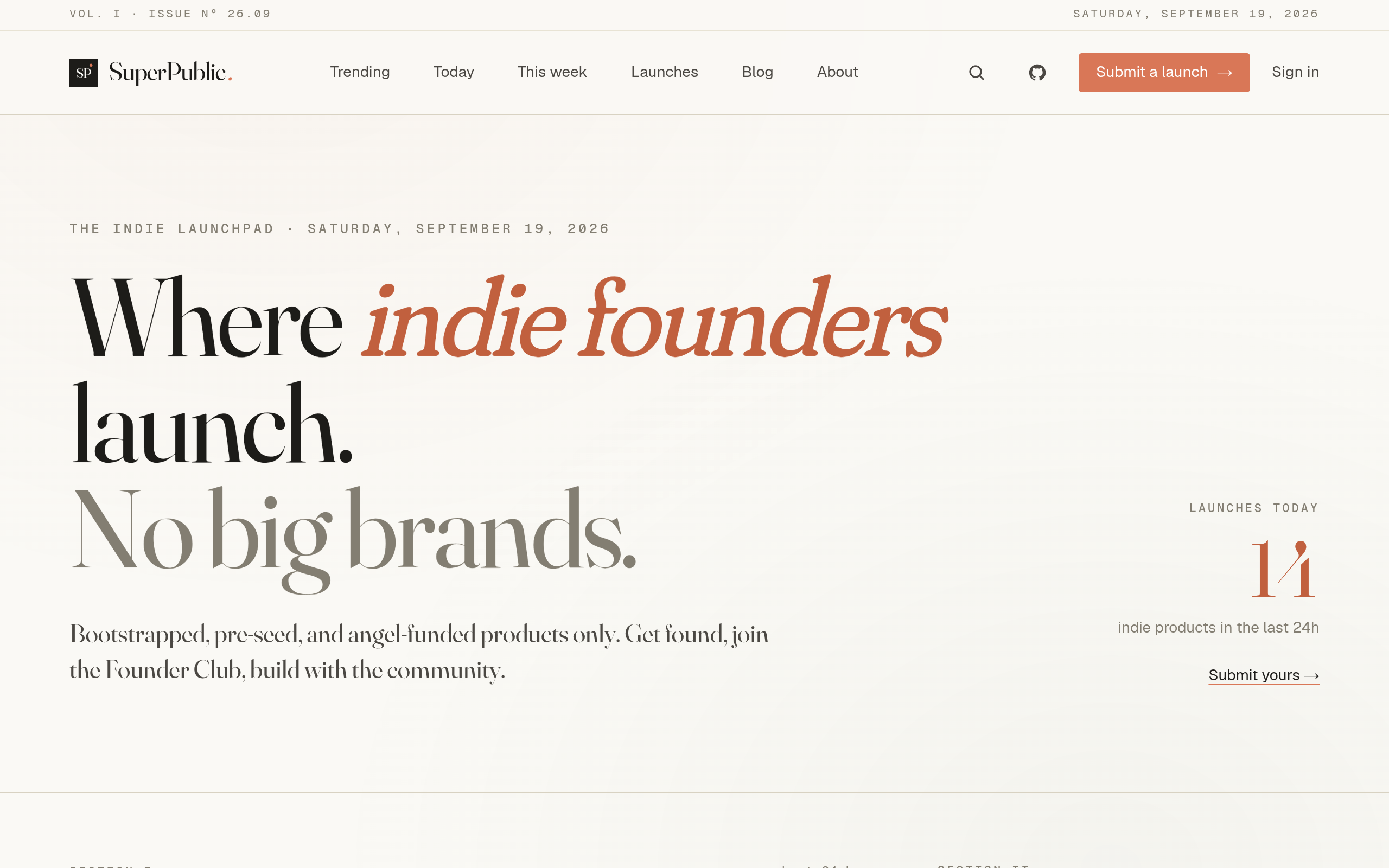
A bootstrapped founder can publish a launch that explains the product, the problem behind it, the current stage, and the feedback they need. The placement is most effective when the founder asks for a specific response—testing a workflow, challenging a positioning claim, or introducing a relevant use case—rather than merely asking people to “check it out.” Founders can submit your product launch when the product is ready for genuine discovery.
SuperPublic is an indie-focused product launch and discovery platform at superpublic.org. It is designed for bootstrapped, pre-seed, and angel-funded products, but it is not a replacement for category marketplaces, creator trust, or enterprise procurement channels.
Fit, burden, and commercial model
- Best for: early-stage founders seeking visibility, feedback, and connections with other builders and early adopters.
- Does not suit: teams that need guaranteed enterprise pipeline, anonymous reach, or a fully managed campaign.
- Implementation: low to medium; prepare a clear launch description, product link, audience statement, screenshots or demo context, and one feedback request.
- Commercial model: review the current submission and platform terms directly; do not assume a launch creates guaranteed traffic or conversions.
- Standout: the audience is closer to startup discovery and founder conversation than to generic paid reach.
The strongest launch page makes limitations visible. State whether the product is in beta, which users are a fit, what is still manual, and what feedback would change the roadmap. That honesty gives early adopters a reason to respond and helps investors distinguish a real learning loop from a polished announcement.
Comparison
The services below are not interchangeable. YouTube, Gumball, and Paved are sponsorship or creator-led placements; G2 and Capterra are software research destinations; AWS Marketplace is a technical procurement channel; SuperPublic is an early-stage launch and discovery community. Compare them by the job they perform, not by raw audience size.
| Service | Placement context | Buyer intent | Implementation burden | Commercial model |
|---|---|---|---|---|
| YouTube | Creator demo, tutorial, or workflow integration | Problem-aware to curious | Medium–high | Negotiated creator sponsorship |
| Gumball | Podcast host-read sponsorship | Interest-based, trust-led | Medium | Podcast sponsorship terms |
| Paved | Newsletter sponsorship beside relevant editorial | Interest-based to problem-aware | Low–medium | Paid newsletter placement |
| G2 | Software profile and review-led category research | High, comparison-oriented | Medium | Free and paid seller programs may vary |
| Capterra | Software category and shortlist research | High, evaluation-oriented | Medium | Listing, lead, or advertising terms may vary |
| AWS Marketplace | Cloud software discovery and procurement | High, technical and commercial | High | Marketplace seller and transaction terms |
| SuperPublic | Indie launch discovery and founder feedback | Early adopter and community-led | Low–medium | Verify current platform terms |
How to choose your first placement
Match the placement to the proof your product needs
Choose based on the unanswered question behind your launch. If prospects need to see the workflow, start with a creator demonstration. If they need reassurance from a trusted voice, test a podcast or newsletter. If they are already comparing software, prioritize a category destination. If the product is infrastructure-heavy, technical marketplace context matters more than broad awareness.
- Need comprehension: choose YouTube or a detailed podcast integration.
- Need credibility: choose a relevant host, editor, or review environment.
- Need active comparison: choose G2 or Capterra.
- Need technical procurement: investigate AWS Marketplace.
- Need early feedback: choose SuperPublic and make the learning request explicit.
Write a placement brief before spending money
Keep the brief to one page. Include the audience, problem, proof point, prohibited claims, required disclosure, destination URL, conversion event, and follow-up owner. For a paid creator or publisher, add the number and format of placements, approval rights, content usage rights, and what happens if the content is late or materially different from the agreement.
Disclosure requirements depend on the format and relationship. A paid host read, sponsored newsletter, and creator integration should be identified as sponsored or paid in language ordinary users can understand. Marketplace listings should distinguish factual product information from paid visibility or promoted placement where the service requires it.
Run a small, falsifiable test
- Pick one audience and one placement context rather than changing both at once.
- Create a dedicated landing page with one call to action and source-specific tracking.
- Set an illustrative starting policy for the test window, such as stopping after the agreed placement has run and the first meaningful cohort has had time to activate; this is not a universal performance benchmark.
- Review qualified visits, activation, retained use, feedback quality, and sales conversations—not clicks alone.
- Keep the route only if it produces the kind of evidence your next launch decision requires.
For most indie software launches, start with the channel that exposes your biggest uncertainty. A product that is hard to understand should earn a demonstration; a product that is easy to understand but hard to trust should earn a credible voice; a product with proven demand but weak discoverability should improve its marketplace presence. SuperPublic can support that early discovery loop through SuperPublic, while founders retain responsibility for choosing the placement that fits their customer and stage.
Authored with NotFair SEO