Founder field note
7 Influencer Discovery Tools for Bootstrapped Startup Launches
Compare 7 influencer discovery tools by search quality, audience data, campaign workflow, implementation burden, and fit for early-stage SaaS teams.
Choosing influencer discovery tools is less about collecting the largest creator database and more about finding a credible person whose audience can understand, try, and recommend your product. This list is for bootstrapped founders, pre-seed teams, indie hackers, and early-stage marketers looking for partners to launch software, AI tools, or niche products without building an enterprise marketing operation first.
The buyer job is specific: identify suitable creators, validate their audience, contact them, and measure resulting interest. These platforms are not interchangeable with ad networks, social scheduling tools, or full-service agencies. I evaluate each on five practical criteria: discovery quality, audience and fraud data, workflow from search to outreach, implementation burden, and commercial model. Because capabilities and prices can change, verify current terms and available networks before committing in 2026.
A useful starting policy is to define the audience you need before opening any database. For example, a developer tool may need a YouTube educator whose viewers actively build side projects, while a consumer AI app may need short-form creators with an audience concentrated in a particular country. A large follower count is not a substitute for that fit.
1. Modash
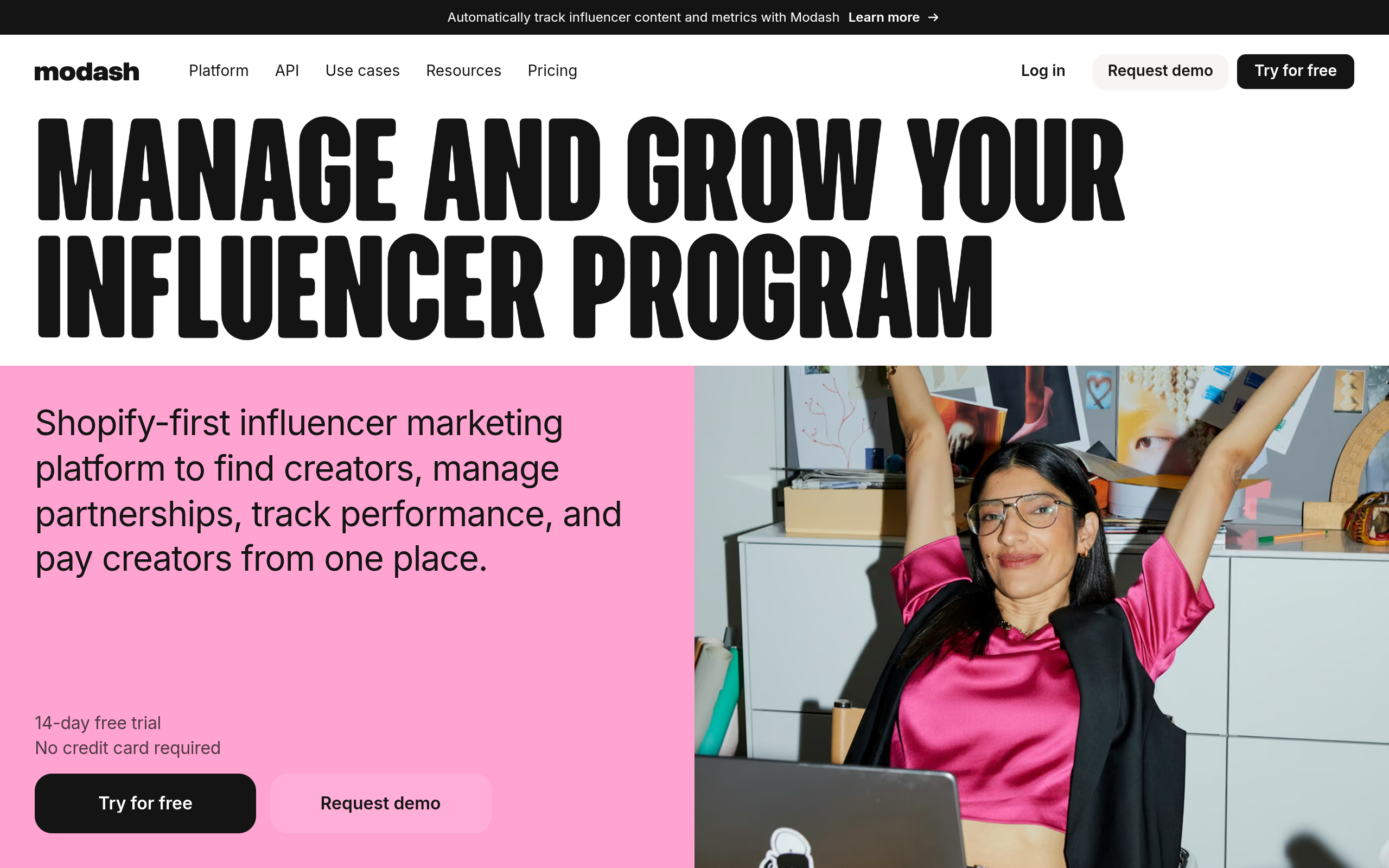
Modash is a strong starting point for a small software company that wants to search creator profiles and inspect audience data before making contact. Its positioning is centered on influencer discovery, audience analytics, and campaign tracking rather than requiring a large managed-services team.
Why it works for an early product
Modash’s official platform pages describe creator discovery using filters such as audience demographics, location, content, and performance, along with profile and audience analysis. Its influencer discovery feature page is the right place to verify which networks and filters are currently supported. That matters when your launch depends on a narrow segment, such as English-speaking cybersecurity practitioners or founders in a particular region.
The practical workflow is straightforward: build a shortlist, open each profile, inspect whether the audience resembles your intended customer, then export or organize the candidates for outreach. Do not treat estimated reach as forecasted signups. A creator’s audience may be relevant while the creator’s call to action is poor for a product that requires a trial, installation, or technical setup.
- Best for: lean teams that need searchable creator data before outreach.
- Standout: a discovery-first workflow that can help reduce manual profile research.
- Does not suit: founders looking for an agency to negotiate every partnership.
Implementation and commercial model
Implementation is moderate. Someone still needs to define filters, review profiles, write personalized outreach, create tracking links, and record outcomes. Modash offers a pricing page, but the current plan structure and included limits should be checked directly in 2026 rather than copied into a launch budget. Expect a software subscription or plan-based commercial relationship, not a guaranteed acquisition package.
It is a poor fit when you have no one available to evaluate creators or follow up with them. A database can shorten research time, but it cannot decide whether a creator can explain your product accurately or whether their audience has enough intent to become users.
2. HypeAuditor
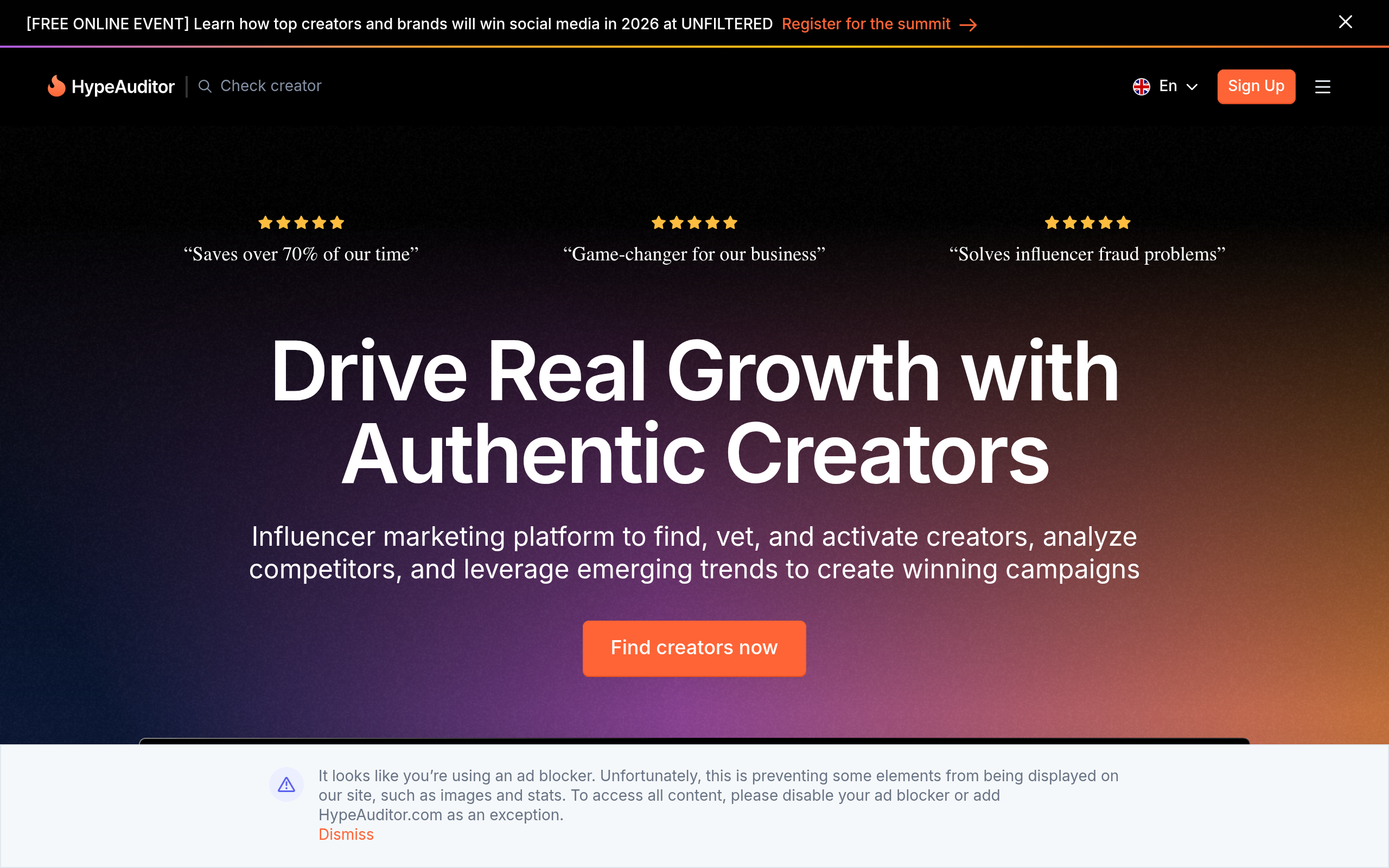
HypeAuditor is oriented toward creator intelligence: finding influencers, assessing audiences, and examining authenticity or performance signals. It is particularly relevant when a founder’s main risk is not discovering candidates but avoiding a superficially attractive account with weak audience quality.
Audience quality before outreach
HypeAuditor’s influencer discovery page describes search and analytics capabilities for identifying creators and evaluating their audiences. Its public materials also emphasize audience quality and fraud-related analysis. Treat those outputs as decision support, not a guarantee that every engagement or follower is genuine; you still need to inspect recent comments, sponsored posts, and the creator’s content context.
For a bootstrapped SaaS launch, a sensible use is to compare ten candidate profiles against the same checklist: audience geography, likely customer role, recent content quality, average engagement context, and whether the creator has previously explained products like yours. The tool is most valuable when it prevents a costly first test with a mismatched or inflated account.
- Best for: teams that put audience credibility and brand safety ahead of speed.
- Standout: deeper creator and audience assessment than a simple follower-count directory.
- Does not suit: a founder who only wants a quick list of people to email today.
Implementation and commercial model
Implementation is moderate to high because the team must decide which quality signals matter and establish an approval process. HypeAuditor’s pricing page should be consulted for current access, plan packaging, and any limits in 2026. The commercial model is paid software or a business plan rather than payment to creators on your behalf.
It does not suit a launch with no tolerance for research. If your product has a tiny addressable audience and you already know the relevant creators personally, an intelligence platform may add more process than value. It also cannot replace legal review of claims, disclosures, or usage rights.
3. Upfluence
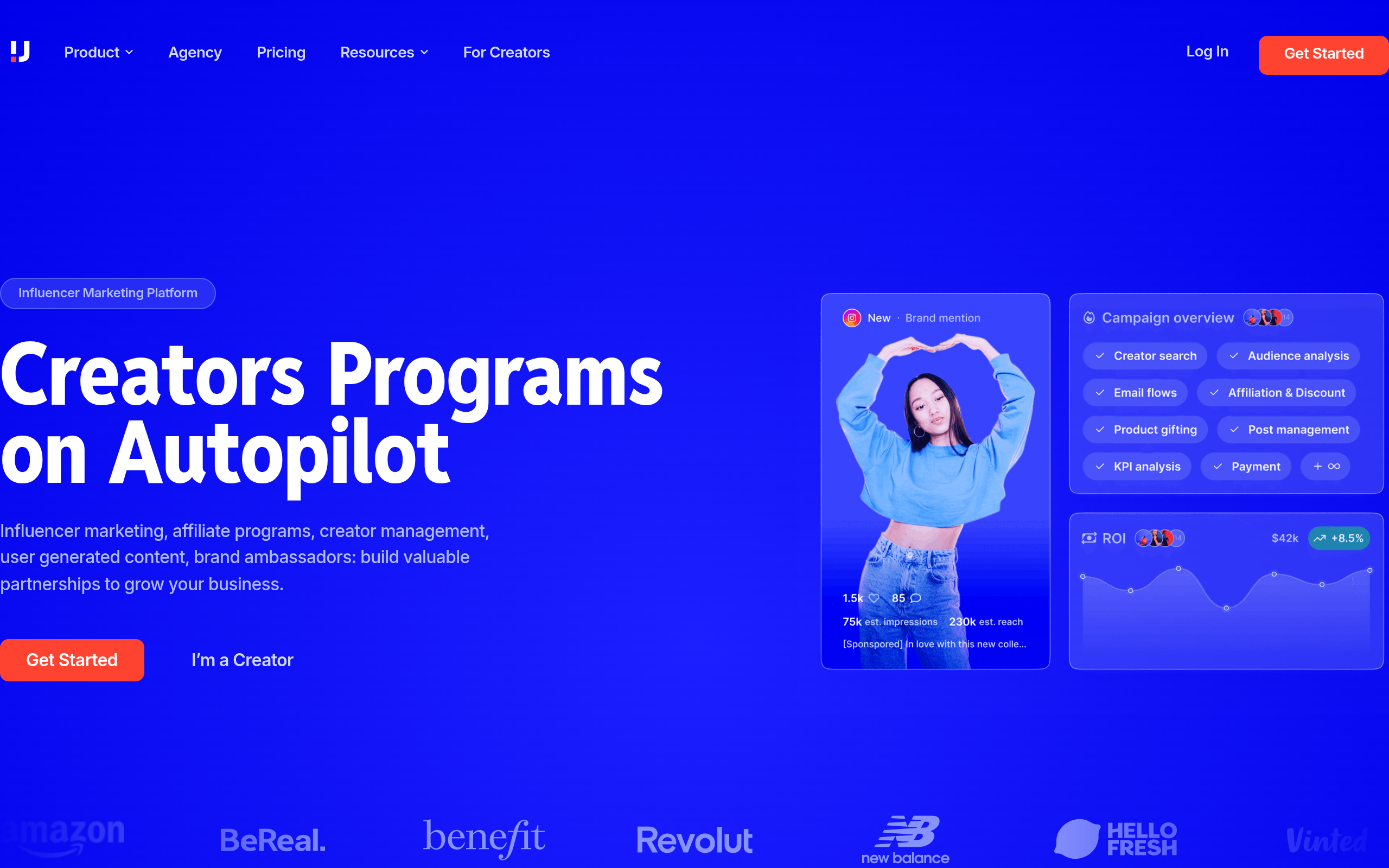
Upfluence combines influencer discovery with campaign and creator relationship workflows. That makes it more relevant once a startup has moved beyond one-off founder outreach and needs a repeatable way to manage multiple conversations, approvals, and deliverables.
From search to relationship management
Upfluence describes creator discovery, campaign management, and influencer relationship functionality on its influencer marketing platform page. Confirm the current social networks, integrations, and workflow permissions before purchase. The important distinction is that discovery is only one part of the product: the platform is intended to help organize what happens after a creator enters your pipeline.
That can be useful for a startup running a structured launch sequence. For example, you might classify creators as “research,” “contacted,” “sample sent,” “content approved,” and “tracked.” This reduces the common failure mode where a founder sends several free accounts or product samples and later cannot remember who received which brief or link.
Implementation and commercial model
- Best for: teams moving from individual outreach to a managed creator pipeline.
- Standout: a broader workflow around discovery, relationships, campaigns, and reporting.
- Does not suit: a solo founder running one small experiment with a spreadsheet.
Implementation is higher than a discovery-only product. You need campaign stages, approval rules, tracking conventions, and an owner for creator communication. Upfluence has a pricing page; check whether the current commercial arrangement is suitable for your team, because enterprise-oriented products may involve sales-led qualification or custom terms. Do not assume that workflow software includes creator fees, paid media, or guaranteed content.
Upfluence is a poor fit if you have not yet proved that influencer partnerships can produce qualified interest. First define what a successful test means—such as activated trials or qualified demo requests, not impressions alone—then decide whether a more formal system is justified.
4. Aspire
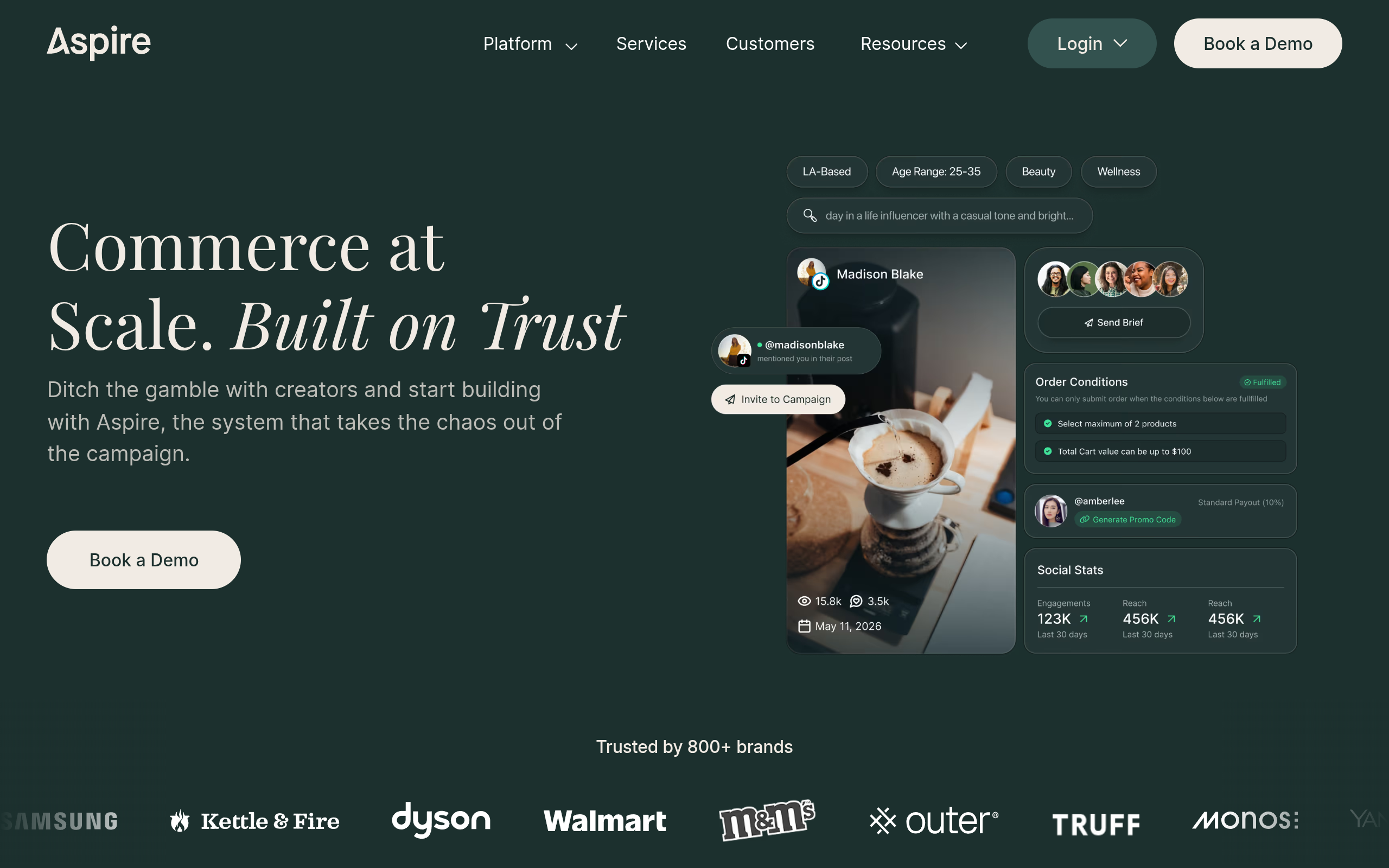
Aspire is a creator marketing platform built around discovering creators and managing collaborations. It is a credible option for a startup that expects to run repeated campaigns and wants creators, briefs, content, and relationships in a more organized operating process.
When campaign operations matter
Aspire’s platform overview describes capabilities spanning creator discovery, relationship management, content, and campaign workflows. Check the current product scope and supported channels on the official site. The key buyer question is not “Can it find creators?” but “Will this replace enough manual campaign administration to justify adopting it?”
For a small product launch, Aspire may be useful when several creators need the same brief but different tracking links, deadlines, or talking points. A founder can separate mandatory product facts from optional creative direction: for example, require an accurate explanation of the free plan while letting the creator choose whether to demonstrate the setup or tell a user story.
Implementation and commercial model
- Best for: teams planning recurring creator programs rather than a single post.
- Standout: campaign structure that can make briefs, approvals, and creator communication more repeatable.
- Does not suit: a pre-launch product with no settled positioning or onboarding flow.
Implementation is high enough to require an operating owner. You will need campaign templates, product access rules, a review policy, and a consistent way to capture content rights. Aspire’s pricing page should be checked for current availability and commercial terms. The model is paid platform access, with creator compensation and other campaign costs handled separately unless the current agreement says otherwise.
Aspire does not suit a founder who is still trying to discover basic customer messaging. If you cannot explain the problem, ideal user, and desired action in a short brief, adding campaign infrastructure will not solve the positioning problem.
5. GRIN
GRIN is a creator management platform aimed at brands that need to organize creator programs, relationships, content, and measurement. It is better considered when influencer marketing has become an ongoing channel rather than a one-time launch tactic.
Repeatability versus simplicity
GRIN’s features page describes creator discovery and broader functions for managing creator marketing programs. Verify the current feature set, integrations, and network coverage before treating it as a fit for a software launch. Its value increases when you have enough creator activity that scattered email threads and spreadsheets become a source of missed deadlines or inconsistent tracking.
One practical scenario is a product with several audience segments: founders, freelancers, and small agencies. You might create distinct creator cohorts, issue different landing pages, and compare activated accounts by cohort. That is more useful than reporting a single blended “influencer campaign” number that hides which audience actually responded.
- Best for: brands building a repeatable creator program with multiple active relationships.
- Standout: operational structure for creator management beyond initial discovery.
- Does not suit: a founder validating whether influencer marketing is worth trying at all.
Implementation and commercial model
Implementation is high. Plan for data setup, campaign taxonomy, tracking links, approvals, and a process for paying or rewarding creators. GRIN’s pricing page is the authoritative place to check current packaging; do not infer a startup-friendly price from older reviews or third-party lists. The commercial model is paid software, often evaluated through a sales process, while creator payments and product costs remain campaign expenses.
GRIN does not suit a tiny team if the platform becomes another system nobody maintains. A lightweight spreadsheet and clear tracking links may be the more honest choice until the number of partnerships creates an administrative bottleneck.
6. CreatorIQ
CreatorIQ is an enterprise-oriented creator marketing platform focused on large-scale discovery, campaign operations, measurement, and governance. It belongs on this list because it is a credible category leader for the buyer job, but its likely operating model is materially heavier than what most bootstrapped founders need.
Where its depth is useful
CreatorIQ’s platform page describes capabilities across creator discovery, campaign management, measurement, and workflow governance. Confirm the current modules and commercial scope directly. Those capabilities become relevant when several stakeholders need consistent approvals, reporting, and creator records across markets or brands.
For an angel-funded company with a substantial marketing team, governance can matter. A campaign may involve legal review, regional owners, brand approvals, usage-rights documentation, and reporting to investors. In that setting, a platform designed for controlled operations may prevent process gaps that a founder-built spreadsheet would not catch.
Implementation and commercial model
- Best for: larger funded teams with formal creator marketing operations.
- Standout: enterprise workflow and governance potential.
- Does not suit: most solo founders or early products still searching for product-market fit.
Implementation is high to very high. Expect stakeholder alignment, data and process configuration, training, and a defined reporting model. CreatorIQ directs prospective customers through its business platform rather than presenting a simple self-serve price on the homepage; request current terms directly in 2026. The commercial model is sales-led enterprise software, not a low-commitment discovery subscription.
CreatorIQ is a poor fit if your near-term question is simply whether five carefully chosen creators can generate qualified trials. Start with a smaller system and move up only when governance, volume, or reporting complexity creates a measurable operational problem.
7. Heepsy
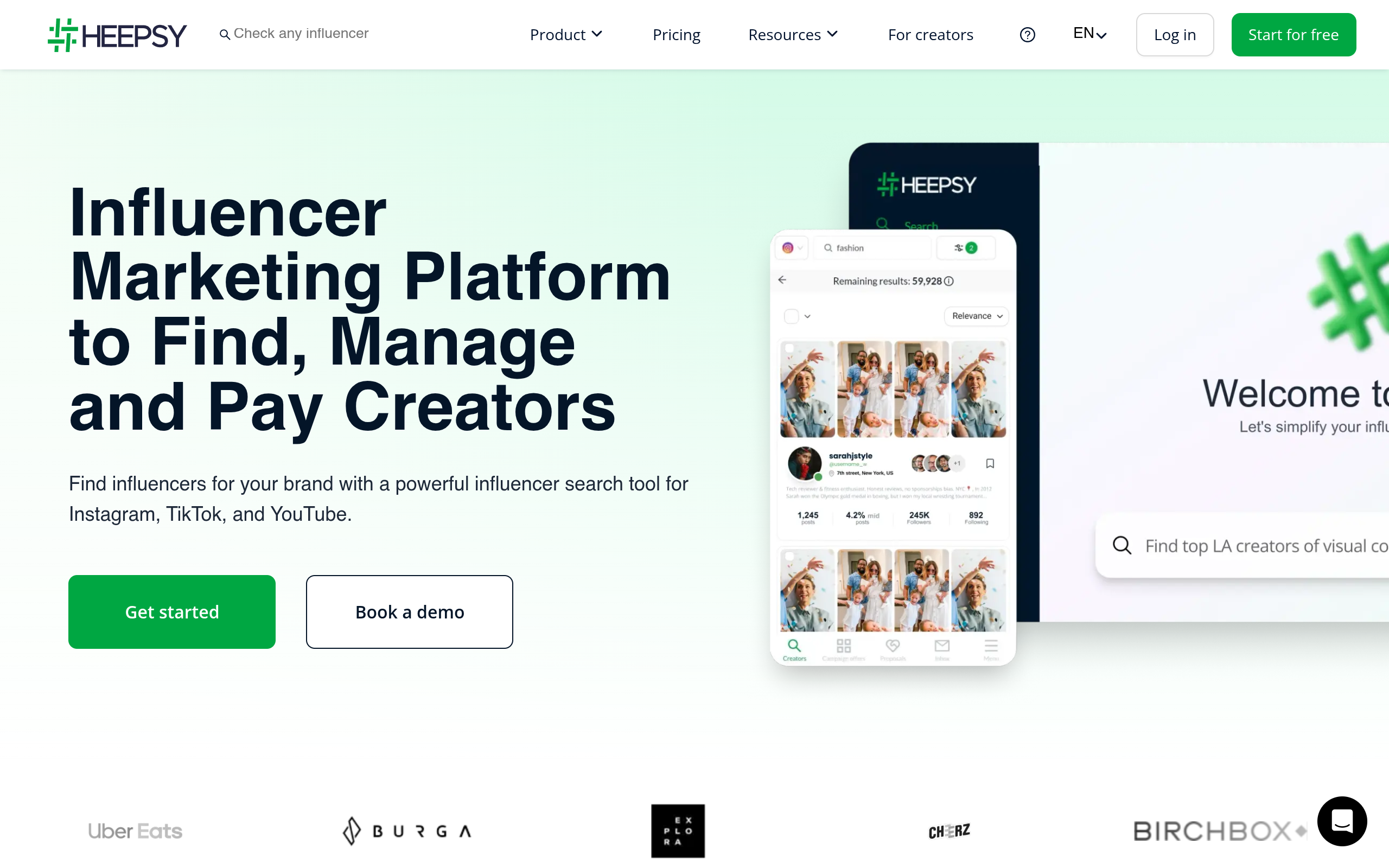
Heepsy is a creator search platform aimed at helping marketers find influencers using profile and audience criteria. It is a reasonable candidate for a founder who wants a relatively direct discovery workflow and does not need a full enterprise campaign-management suite.
A practical shortlist tool
Heepsy’s official influencer search page describes searching creators by criteria such as category and audience characteristics. Check the current supported networks and filters before relying on it for a specific launch. Its likely role is shortlist creation: identifying candidates for manual review, then moving outreach and measurement into your existing tools.
That can be enough for a focused experiment. Suppose you are launching a browser extension for independent designers. Search for creators whose recent content demonstrates design workflows, inspect whether comments show genuine product discussion, and offer a clear test with one tracked landing page. The tool helps with the first step; it does not prove that the creator’s viewers will install or retain the product.
- Best for: smaller teams that want straightforward creator discovery.
- Standout: a simpler path from category and audience filters to a shortlist.
- Does not suit: companies needing complex multi-market governance and advanced program operations.
Implementation and commercial model
Implementation is low to moderate. You will still need a brief, outreach process, disclosure guidance, unique links, and a place to record replies and results. Heepsy provides a pricing page; verify the current plan limits, supported platforms, and export or contact functionality in 2026. The commercial model is paid access to the search product, with creator compensation negotiated separately.
Heepsy does not suit a team that expects robust end-to-end campaign management from the discovery subscription alone. If you need contracts, content approvals, payments, and detailed reporting in one governed system, evaluate a broader platform instead.
Comparison
The table is deliberately practical rather than ranking databases by claimed creator count. Search fit tells you what kind of discovery problem the product addresses; operational depth indicates how much of the campaign can live in the platform; and burden and model flags the likely trade-off for an early-stage team. Confirm current capabilities and pricing with each official vendor before signing.
| Platform | Best discovery use | Operational depth | Implementation burden | Commercial model and early-stage fit |
|---|---|---|---|---|
| Modash | Audience and creator search for focused shortlists | Discovery, analytics, and tracking-oriented workflows | Moderate | Paid platform plans; strong fit for lean teams with an outreach owner |
| HypeAuditor | Audience quality, authenticity, and creator intelligence | Research and analytics with campaign capabilities depending on plan | Moderate to high | Paid platform plans; best when vetting risk matters |
| Upfluence | Discovery connected to creator relationship workflows | High; campaign and relationship management | High | Paid, potentially sales-led plans; fit improves with recurring campaigns |
| Aspire | Creator discovery for structured collaborations | High; briefs, relationships, content, and campaigns | High | Paid platform access; suited to repeatable creator programs |
| GRIN | Discovery within an ongoing creator program | High; creator management and campaign operations | High | Paid, often sales-led software; better after channel validation |
| CreatorIQ | Large-scale creator intelligence and governed programs | Very high; enterprise operations and measurement | Very high | Sales-led enterprise model; generally poor fit for solo founders |
| Heepsy | Direct creator search for focused experiments | Low to moderate; often paired with external workflow tools | Low to moderate | Paid search access; useful when simplicity matters |
How to choose Influencer Discovery Tools for a startup launch
Start with the decision you need the tool to improve. If the problem is “we do not know which creators reach our niche,” begin with a discovery and audience-analysis product such as Modash, HypeAuditor, or Heepsy. If the problem is “we have dozens of active relationships and no reliable campaign process,” consider Upfluence, Aspire, or GRIN. If multiple departments and markets require governance, CreatorIQ becomes more relevant—but that is a different operating problem.
Use a five-part selection test
- Audience fit: Can you filter for the customer role, geography, language, and topic that matter to your product?
- Evidence quality: Can you inspect enough audience and content context to reject vanity metrics?
- Workflow fit: Does the platform support your actual next step—manual outreach, briefs, approvals, payments, or reporting?
- Measurement: Can you use unique links, codes, landing pages, or product events to connect creator activity to qualified outcomes?
- Economic fit: Is the platform cost proportionate to the experiment you can realistically run?
Measurement deserves special attention for SaaS. Use a creator-specific URL or UTM structure, then connect visits to a meaningful event such as account activation, workspace creation, invited teammate, or paid conversion. Google’s Analytics documentation on campaign URL parameters explains how campaign parameters identify traffic sources. That does not prove attribution is perfect, but it is more useful than asking creators for screenshots of impressions.
Set a starting policy, not a universal benchmark. For example, an illustrative early-stage policy could be to run a small number of creator tests, use one landing page per audience angle, and review qualified activation after a defined observation period. The correct number depends on your conversion cycle, product price, and audience size. Do not promise a creator a performance outcome you have not yet established.
Protect the launch from avoidable mistakes
- Write the brief around the user problem: give creators accurate facts and let them choose a credible demonstration style.
- Separate access from endorsement: a free account or product sample does not guarantee positive coverage.
- Agree on rights: clarify whether you may repost, edit, run paid promotion, or use the content on a landing page.
- Require clear disclosure: review the FTC’s current Endorsement Guides for disclosure principles rather than relying on informal assumptions.
- Check the platform rules: branded-content requirements can vary by network, so consult the relevant official policies before publishing.
For a bootstrapped launch, my default recommendation is to begin with the lightest tool that solves the immediate bottleneck. Choose Heepsy or Modash for a focused shortlist, HypeAuditor when audience-quality risk is central, and move to Upfluence, Aspire, or GRIN only when relationship volume creates real administrative cost. Reserve CreatorIQ for teams whose governance requirements justify enterprise implementation.
Before you start outreach, you can submit your product launch to put the product in front of early adopters and other founders while you build your creator shortlist. SuperPublic is also useful for discovering early-stage products and founder-led launches when your goal is community feedback rather than a paid influencer campaign.
If your product is ready for founder and early-adopter discovery, SuperPublic offers a focused place to launch it and connect with the indie startup community.
Authored with NotFair SEO