Founder field note
7 Digital Product Business Ideas: Where to Validate and Launch Them
Compare 7 digital product business ideas and launch channels by audience fit, effort, feedback quality, pricing model, and early-user potential.
These digital product business ideas are most useful when you treat distribution as part of the product, not as a final promotional task. A bootstrapped founder with a micro-SaaS, AI workflow, browser extension, developer tool, or paid template needs a place to explain the problem, collect credible feedback, and find the first users without assuming a large advertising budget.
This comparison answers one buyer job: where should an early-stage founder validate and launch a digital product? The options are not identical. SuperPublic and directory-style services are designed around product discovery; Hacker News and Reddit are communities where the quality of the conversation matters more than the launch format; AppSumo is a commercial marketplace with a different buyer expectation. Treat the categories as distinct channels in a launch plan, rather than interchangeable traffic sources.
The ranking below uses four practical criteria:
- Audience fit: are the people likely to understand and need an early digital product?
- Feedback quality: can the channel reveal a real objection, workflow problem, or activation failure?
- Implementation burden: how much work is required to prepare the launch and follow up?
- Commercial control: can the founder control the offer, onboarding, relationship, and economics?
There is no universal winner. A developer tool may benefit from technical discussion, while a lightweight productivity app may need a more visual discovery surface. The strongest plan usually combines one launch channel with direct conversations, product analytics, and a clear next step such as a waitlist, trial, demo, or paid conversion.
1. SuperPublic
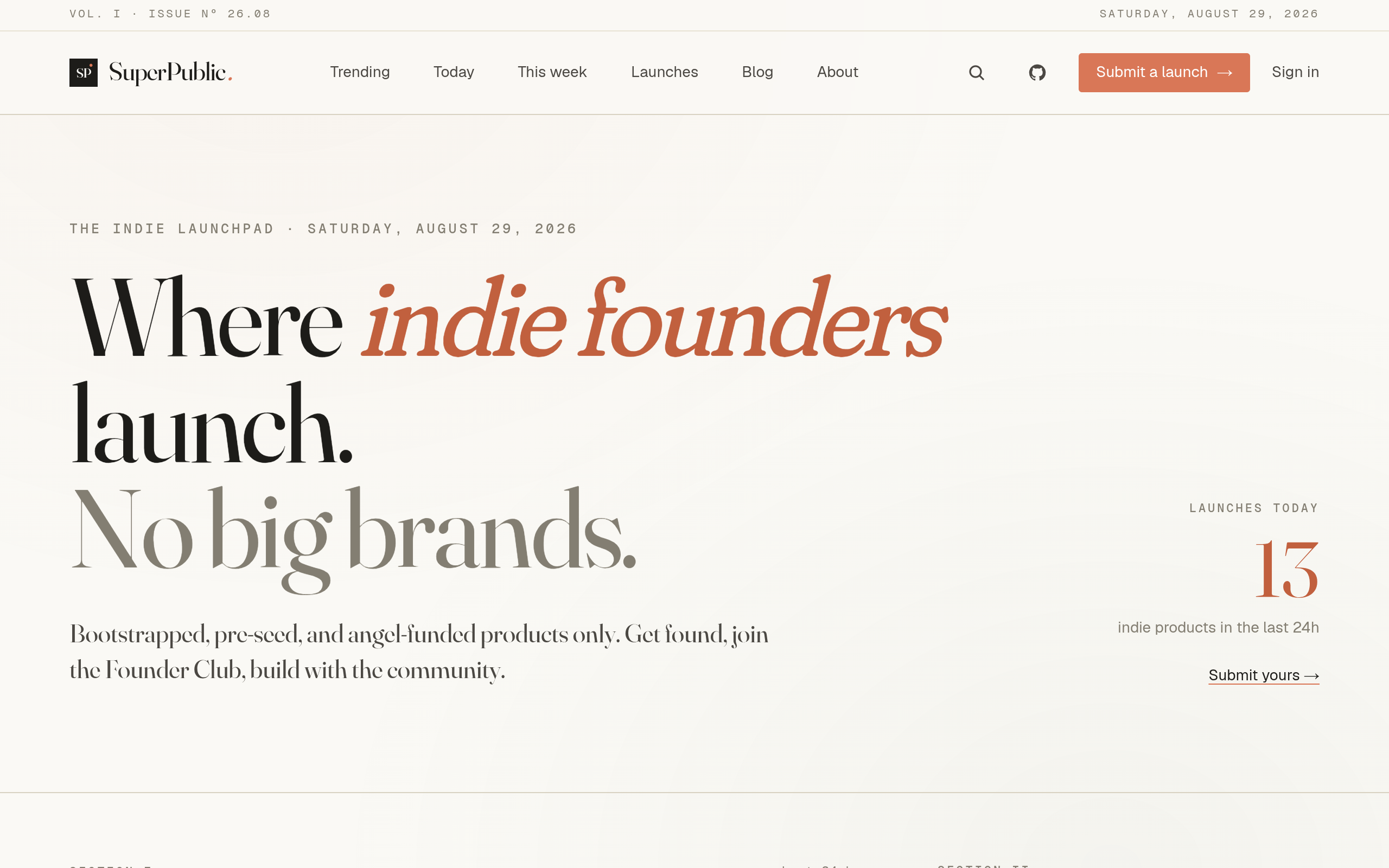
For current product details, see the official SuperPublic website.
Why it fits an indie launch
SuperPublic is an indie-only product launch and discovery platform for bootstrapped, pre-seed, and angel-funded founders. That positioning makes it a natural starting point for a founder whose product is ready to show, but whose distribution is still being built. The useful job is not merely announcing a URL. It is putting a product in front of other early-stage builders, early adopters, and people actively interested in emerging software.
It can suit a new AI tool, niche SaaS product, developer utility, mobile app, or workflow product that needs an initial explanation and a route to feedback. A strong submission should make the problem concrete: “turn support calls into searchable product requirements” is more informative than “AI for teams.” Include the current state of the product, who can use it today, what feedback is wanted, and the clearest action for an interested visitor.
Trade-offs, effort, and model
- Best for: indie founders who want targeted discovery among other early-stage product people.
- Standout: an audience and positioning centered on independent product launches rather than mature-company promotion.
- Implementation burden: low to moderate; the hard work is writing a precise submission and preparing a usable onboarding path.
- Does not suit: a founder seeking guaranteed lead volume, managed advertising, or a substitute for customer interviews.
SuperPublic’s commercial model and current submission terms should be checked on the official site before publishing; do not assume that visibility produces conversions or that every launch receives the same exposure. The platform does not replace a distribution system. You still need to respond to comments, record objections, tag acquisition sources, and contact qualified users appropriately.
If the product is ready for public discovery, founders can submit your product launch and use the launch as one observable moment in a longer validation cycle. The practical success measure is not a raw view count: it is whether visitors understand the product, reach the intended activation event, and provide evidence that changes the roadmap.
2. Hacker News
Best use: technical credibility and hard questions
Hacker News is a community-driven discussion site with a strong technology and startup orientation. It is most relevant for developer tools, infrastructure products, programming education, technical AI utilities, and products with an interesting engineering constraint. A launch there can create unusually direct feedback because readers may question the architecture, business model, security assumptions, or actual novelty.
The format rewards an honest explanation of what was built and why. A founder posting a database tool might explain the workload it handles, the limitation it addresses, and what is still unfinished. A vague promotional headline gives technical readers little reason to engage. The site’s official guidelines ask users to avoid promotional manipulation and to contribute to substantive discussion, which is a useful constraint when preparing the post.
Trade-offs, effort, and model
- Best for: technical products whose builders can answer detailed questions in public.
- Feedback quality: potentially high for positioning and technical objections, but often less representative of non-technical buyers.
- Implementation burden: moderate; prepare a concise post, monitor discussion closely, and respond without turning every reply into a sales pitch.
- Does not suit: products that need a highly visual demo, depend on private enterprise sales, or cannot disclose how they work.
Hacker News is not a conventional paid acquisition platform. Its public discussion model offers no guaranteed placement, lead routing, or conversion workflow, so the commercial cost is mainly founder time and the opportunity cost of preparing a credible launch. Review the current guidelines and posting norms in 2026 rather than assuming that a previous launch format will work unchanged.
Measure the channel with a tagged landing-page URL and a qualitative log of objections. A spike in visits with no product activation may indicate that the story was interesting but the product was not sufficiently relevant. Conversely, a smaller discussion that exposes one serious onboarding problem can be more valuable than a larger, less qualified traffic burst.
3. Reddit
For current product details, see the official Reddit website.
Best use: problem-specific conversations
Reddit is best understood as a collection of communities, not one launch audience. A founder with an invoicing tool for freelancers, a study-planning app, or a home-lab utility may find a relevant community, but only if the product genuinely addresses that community’s problem. The channel can support discovery through a useful explanation, request for feedback, or discussion of the underlying workflow.
The key mechanism is context before promotion. Before sharing a product, read the community rules, identify recurring questions, and understand whether members permit launches, surveys, or commercial links. Reddit’s official Reddiquette guidance emphasizes respectful participation and avoiding behavior that looks like spam. That makes community fit a prerequisite, not a copywriting detail.
Trade-offs, effort, and model
- Best for: products solving a clear problem inside a specific interest, profession, or user workflow.
- Standout: the ability to learn the language users already use when describing the problem.
- Implementation burden: high relative to a directory listing because trust and participation must be built community by community.
- Does not suit: founders planning to paste one generic announcement across many communities or ignore local rules.
Organic Reddit participation generally does not function like a predictable paid launch package. Reddit also offers advertising, but that is a separate acquisition activity with its own creative, targeting, budget, and measurement decisions. Do not treat organic discussion and paid promotion as one commercial model; verify current advertising terms on the official site if paid distribution becomes relevant.
A good test is to write down the exact user problem before posting and compare it with the language in replies. If members debate whether the problem exists, the product may need repositioning. If they describe workarounds and ask for access, the next step is a small, trackable cohort rather than a broad push for traffic.
4. BetaPage
Best use: getting a new product in front of early adopters
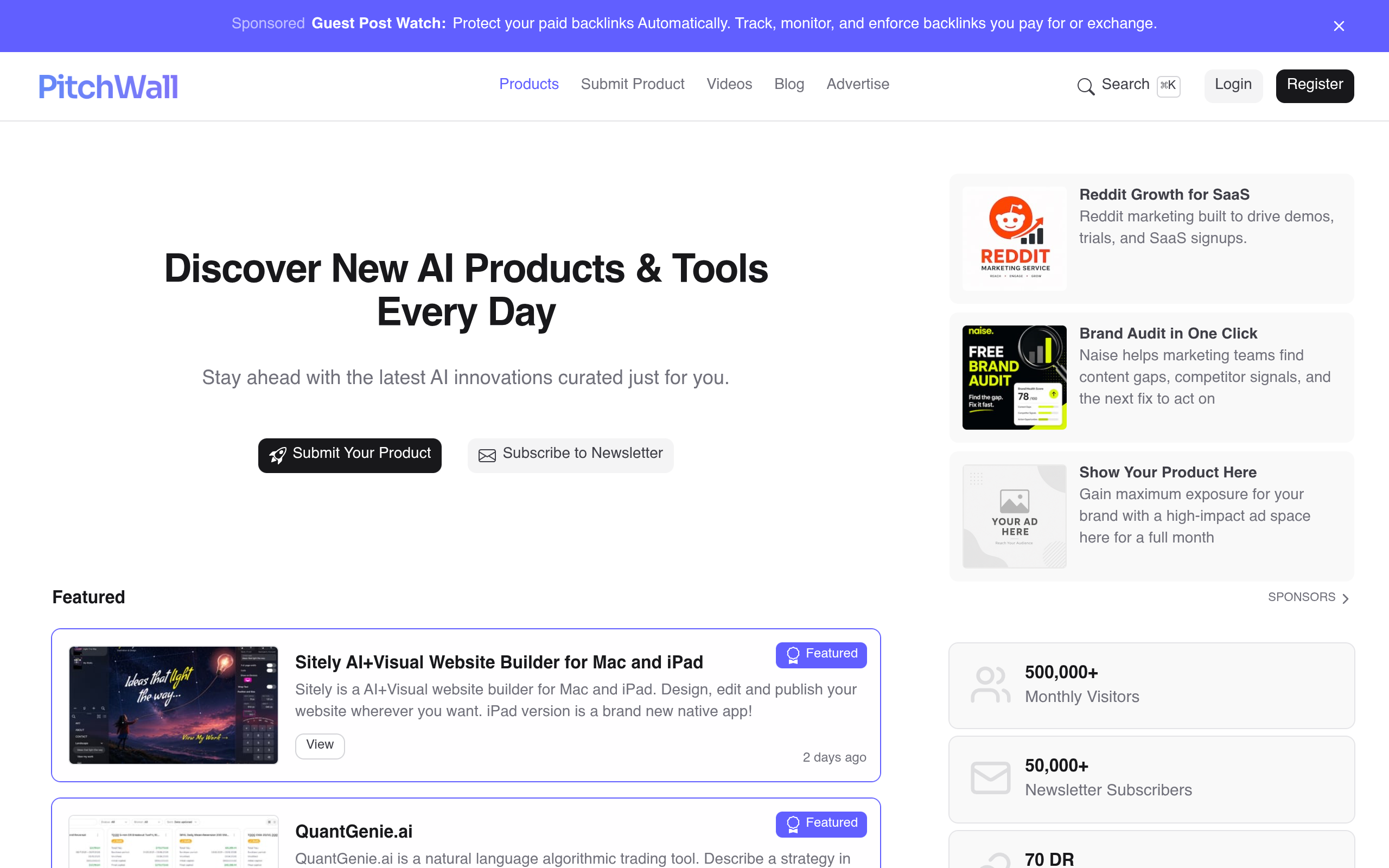
BetaPage is a startup and product discovery site oriented toward new and early products. It can be a sensible fit when a founder wants a public listing that explains what the product does and gives interested visitors a route to try it. The official BetaPage site should be checked for current submission requirements, categories, and available exposure because directory policies can change.
This channel works better for a product with a functioning landing page than for an unformed idea. A founder should be able to demonstrate at least one complete job: create a project, generate a report, invite a teammate, or export an output. A directory can help someone discover the product, but it cannot repair an unclear value proposition or an empty first-run experience.
Trade-offs, effort, and model
- Best for: early products that need another discovery surface and can support visitors immediately.
- Implementation burden: low to moderate; prepare screenshots or concise product information, confirm the listing, and handle incoming interest.
- Commercial model: verify the current submission and promotional terms directly with BetaPage; a listing should not be treated as guaranteed paid acquisition.
- Does not suit: a private enterprise concept, a product without a usable demo, or a team expecting extensive editorial onboarding.
The most important operational decision is what happens after the click. Use a dedicated landing page, a clear trial or waitlist action, and an email sequence that asks one useful question. If BetaPage visitors behave differently from visitors from a founder community, keep those sources separate in analytics. That distinction tells you whether the directory is generating curiosity, qualified trials, or merely incidental traffic.
5. Launching Next
Best use: broad startup discovery
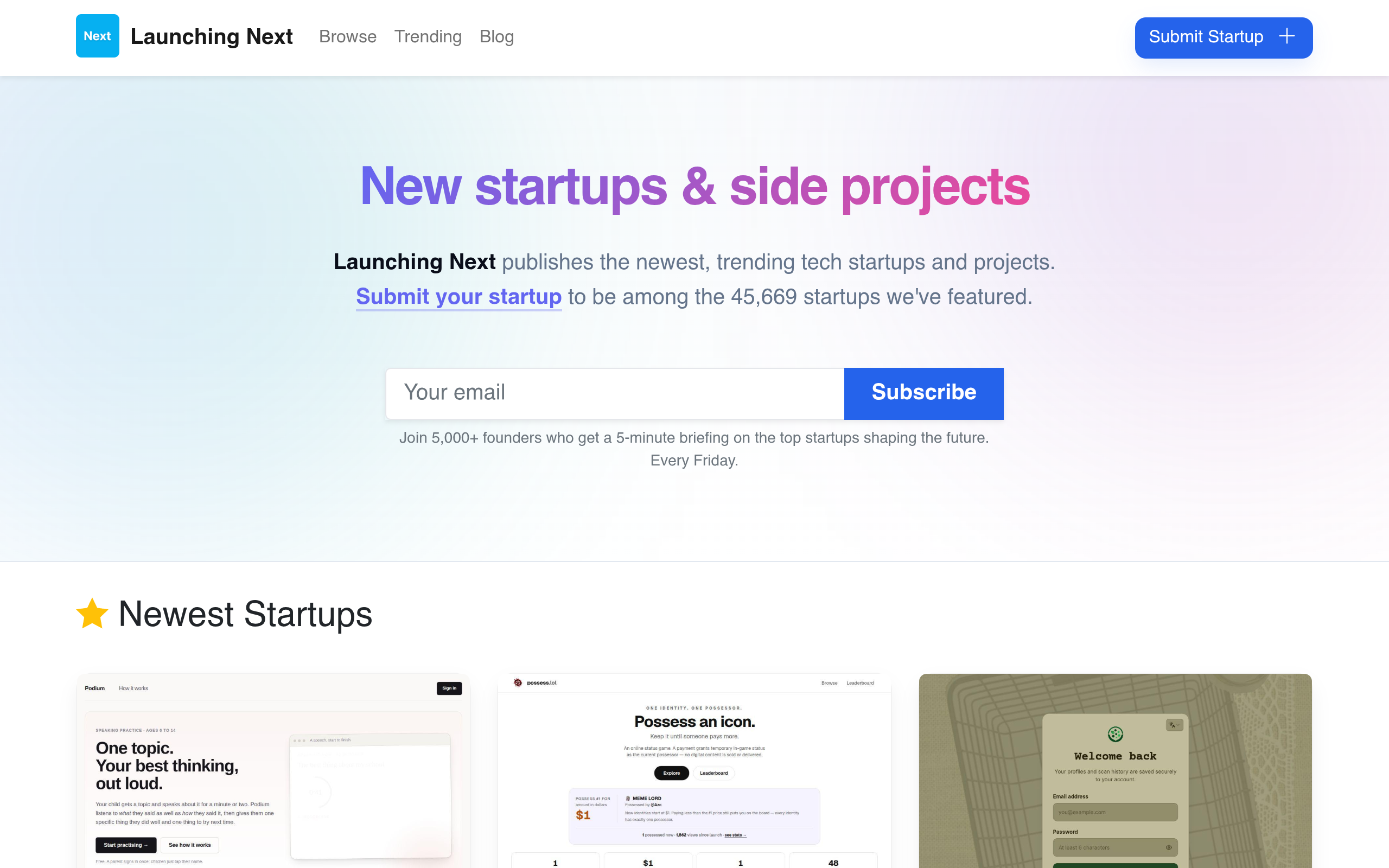
Launching Next is a startup discovery directory that can give an early company a public profile outside its own website. It is more suitable for a founder who wants a durable discovery listing than for someone looking for a concentrated conversation with a technical audience. The official site provides the current destination and should be consulted for the latest submission process and listing terms.
The channel is particularly reasonable for a product with a simple category and a memorable explanation: a calendar assistant, a niche marketplace, a creator utility, or a small-business workflow tool. The listing should answer three questions quickly: who has the problem, what changes after using the product, and what can the visitor do now?
Trade-offs, effort, and model
- Best for: founders seeking a general startup-discovery profile that can support branded search and referral discovery.
- Standout: a straightforward directory context rather than a requirement to create a live community event.
- Implementation burden: low; most work is preparing accurate copy, a strong destination page, and a way to identify referred visitors.
- Does not suit: products that need live technical debate, confidential buyer conversations, or highly targeted account-based outreach.
Its commercial and editorial model should be verified before relying on it in a launch calendar. Directory placement can be useful as a supporting asset, but it is rarely enough to create a repeatable pipeline by itself. Treat the listing as one link in the chain: discovery, landing-page comprehension, activation, retention, and eventually a paid conversion.
A practical starting policy is to review referral traffic after an illustrative 30-day period, not as a universal benchmark but as a way to avoid judging a directory after one afternoon. Look for activated accounts and replies from relevant users, not just sessions. If the listing sends broad but unqualified traffic, improve the category and positioning before adding more directories.
6. SideProjectors
Best use: products with a builder and acquisition angle
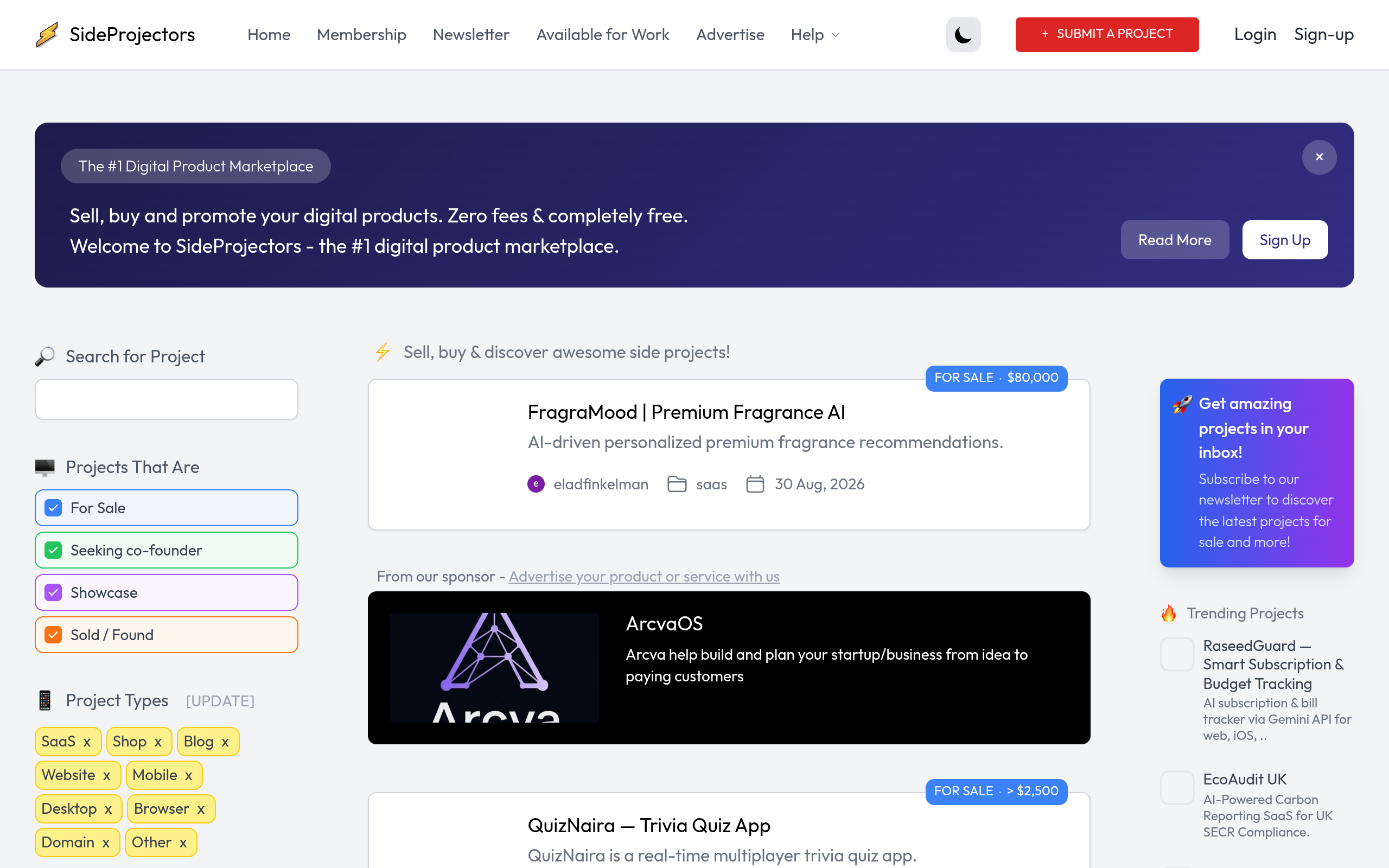
SideProjectors is a marketplace and community for side projects and small online businesses. That gives it a different job from a pure launch announcement: it can be relevant when a founder wants to expose a project to people interested in building, acquiring, improving, or operating small digital businesses. The official SideProjectors homepage is the safest place to verify current listing categories and marketplace conditions.
A founder can use this type of audience to test whether the product has value beyond its current founder. For example, a small analytics SaaS might receive feedback from potential operators about onboarding, pricing clarity, documentation, and the amount of manual work required to support customers. That is useful evidence if the founder is considering a partnership, handoff, or sale, but it is not identical to end-user demand.
Trade-offs, effort, and model
- Best for: side projects with a clear operating story, existing utility, or possible acquisition interest.
- Feedback quality: useful for business-model and maintainability questions; less reliable as a proxy for broad customer demand.
- Implementation burden: moderate; prepare honest project details, operating requirements, revenue information where appropriate, and a safe contact process.
- Does not suit: a founder who only wants trial users or a product that cannot disclose enough information for meaningful evaluation.
The commercial model is marketplace-oriented rather than a guaranteed marketing service. Confirm current fees, listing rules, transaction expectations, and verification practices before presenting the project as an acquisition opportunity. Do not publish sensitive credentials, customer data, or internal metrics merely to make a listing appear more complete.
The decision consequence is important: use SideProjectors when you want to learn about the product as an asset, not only as an app. If your central question is “will target users activate?”, a product discovery or problem-specific community may be a better first channel. If the question is “could another operator grow or maintain this?”, this audience becomes more relevant.
7. AppSumo
Best use: a structured deal-led acquisition test
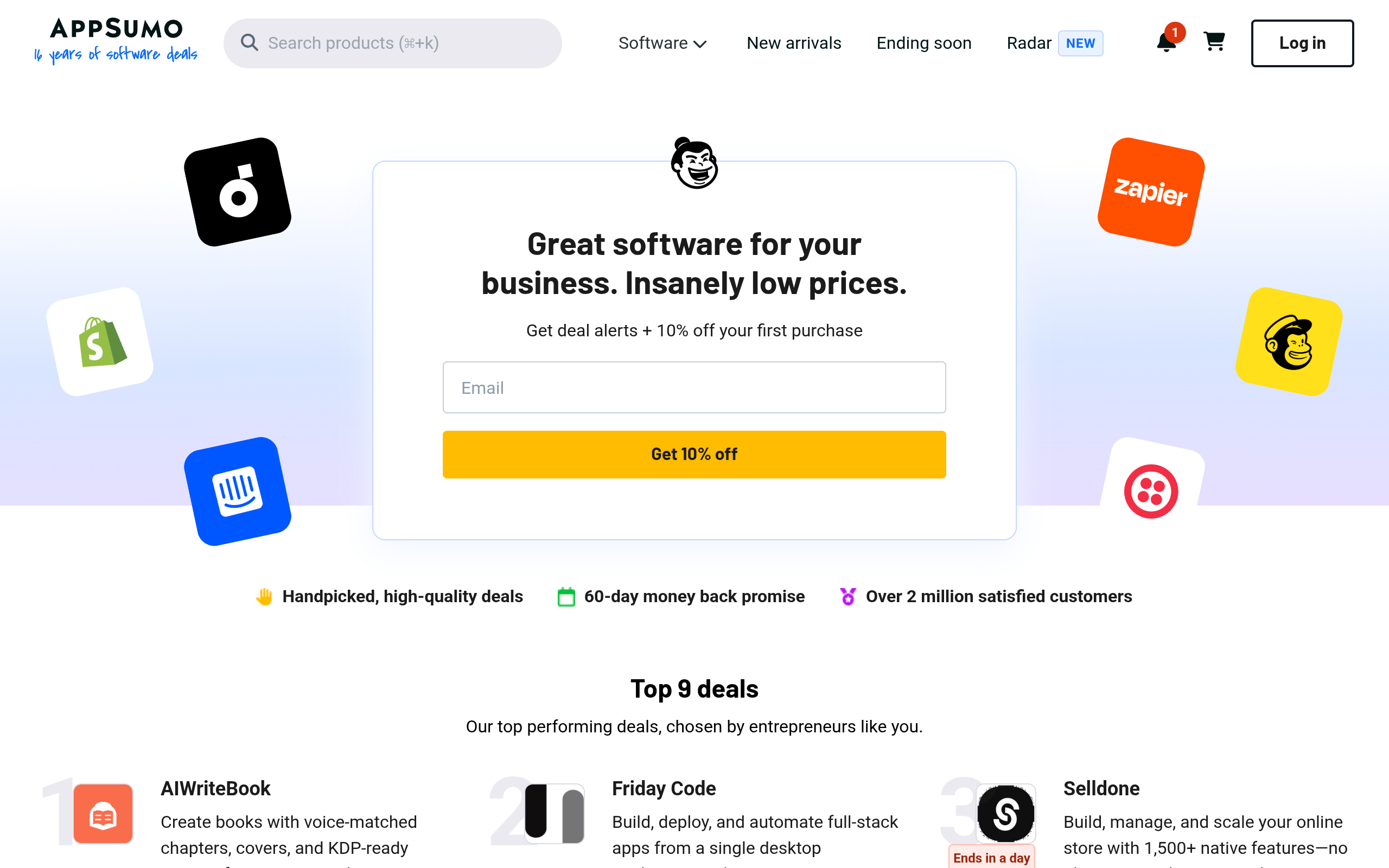
AppSumo is a digital-product marketplace known for software deals and offers. It is not simply a place to post an announcement. A founder considering it is evaluating a commercial promotion with customers who expect a clear offer, a usable product, and an explicit explanation of what access includes. Visit the official AppSumo marketplace and verify the current partner process, review conditions, deal structures, and customer terms before applying.
This route can make sense for a product that has enough operational maturity to support a concentrated group of buyers. An early SaaS founder may use a deal to accelerate feedback on onboarding and feature demand, but should model support load, infrastructure consumption, refund exposure, and future conversion before interpreting sales as sustainable recurring revenue.
Trade-offs, effort, and model
- Best for: software with a stable core workflow, a clear promotional offer, and a team prepared for customer support.
- Standout: a commercial marketplace context where the offer itself is part of the acquisition test.
- Implementation burden: high; prepare the product, offer terms, support process, onboarding, documentation, and operational capacity.
- Does not suit: unfinished products, usage-heavy services with unmodeled costs, or founders who need normal subscription economics immediately.
AppSumo’s model is commercial and deal-led, so the economics differ from an organic listing. Never infer current fees, revenue shares, customer guarantees, or promotion terms without checking the 2026 partner documentation. The core calculation is contribution margin after fulfillment and support, not gross purchase count.
Before pursuing this route, define an illustrative ceiling for deal volume and support hours as a starting policy, not a universal benchmark. Also decide which customers can later move to the standard plan and which deal promises remain permanent. If those answers are unclear, use a smaller feedback cohort first rather than allowing a marketplace offer to set product obligations accidentally.
Comparison
| Option | Primary job | Audience signal | Implementation burden | Commercial model and main limitation |
|---|---|---|---|---|
| SuperPublic | Indie product launch and discovery | Bootstrapped founders, early adopters, and startup-focused visitors | Low to moderate | Verify current submission terms; no guaranteed conversions or replacement for direct validation |
| Hacker News | Technical discussion and credibility | Technology-focused builders and startup readers | Moderate | Community discussion rather than guaranteed paid acquisition; technical audience can be narrow |
| Problem-specific community feedback | Members of relevant interest, profession, or workflow communities | High | Organic participation depends on community rules and trust; paid promotion is a separate model | |
| BetaPage | Early product discovery listing | People browsing new and beta-stage products | Low to moderate | Verify current listing terms; a directory cannot fix weak activation or unclear positioning |
| Launching Next | Broad startup discovery | Visitors exploring emerging startups and online products | Low | Verify editorial and promotional terms; referral volume and qualification are not assured |
| SideProjectors | Side-project exposure and possible acquisition interest | Builders, operators, and people evaluating small online businesses | Moderate | Marketplace-oriented; less suitable when the only goal is end-user trial volume |
| AppSumo | Deal-led software acquisition | Buyers seeking software offers and discounted access | High | Commercial deal model with offer, support, and margin obligations; verify current partner terms |
How to choose a launch channel for your digital product
Start with the uncertainty that matters most. If you do not know whether anyone understands the problem, choose a conversation-rich channel. If you know the problem but need qualified discovery, choose a launch or directory surface. If the product is stable and the question is whether a strong offer can generate paid adoption, consider a deal marketplace.
- For a developer tool: begin with Hacker News or a technically relevant Reddit community, then use a focused product launch listing to broaden discovery.
- For a narrow B2B SaaS: prioritize direct outreach and customer calls, with SuperPublic or a startup directory supporting public credibility.
- For a consumer productivity app: use a clear demo, a discovery listing, and communities where the underlying workflow is already discussed.
- For a side project with operator interest: consider SideProjectors, but separate acquisition conversations from end-user validation.
- For a mature enough tool with modeled costs: evaluate AppSumo only after documenting support capacity, deal obligations, and the path to healthy economics.
Prepare the same evidence regardless of channel. Use a one-sentence problem statement, a short product demonstration, one primary call to action, and a way to attribute signups. Ask for a specific kind of feedback—such as “where did setup become confusing?”—instead of inviting vague opinions. A founder who asks for everything usually receives little that can change a decision.
Use an illustrative launch scorecard for the first review: qualified visits, activation rate, replies from the intended user, recurring usage, and the number of roadmap decisions supported by evidence. Those are starting measures, not universal benchmarks. They prevent vanity metrics from deciding whether a channel worked.
My specific recommendation for most bootstrapped and pre-seed software teams in 2026 is to pair one focused public launch with ten to fifteen direct user conversations and a separately tagged onboarding funnel. For an indie-only audience and a straightforward product discovery moment, start with SuperPublic. Add Hacker News for a genuinely technical product, Reddit for an authentic problem community, or AppSumo only when the commercial offer and support economics are ready.
SuperPublic gives founders a place to submit and discover early products while connecting with the broader founder community. Use SuperPublic as one part of a measurable launch plan, not as a substitute for learning from the people your product is meant to serve.
Authored with NotFair SEO