Founder field note
6 Trending Digital Products Launch Platforms for Early Visibility in 2026
Compare 6 trending digital products launch platforms for founder visibility, feedback, early users, implementation effort, pricing models, and fit.
Searching for trending digital products is useful when you are an early adopter, but founders have a different job: choosing a credible place to present a new software product, earn qualified attention, and collect feedback without wasting a launch week. This comparison is for bootstrapped founders, pre-seed teams, angel-funded startups, and indie hackers deciding where to put limited launch effort in 2026.
The buyer job is specific: get early visibility and useful first users for a digital product. These platforms are not interchangeable. Some are conversation-driven communities, some are software directories, and one is primarily a deal marketplace. A directory can create a durable discovery page; a community can create discussion and criticism; a marketplace can create a commercial offer but may force a different pricing strategy.
I evaluate each option on four practical criteria:
- Audience intent: Are visitors looking for new products, discussing technical problems, or shopping for software?
- Launch mechanics: Can a founder submit directly, start a discussion, create a listing, or negotiate a marketplace offer?
- Implementation burden: How much preparation, moderation, customer support, and follow-up does a credible launch require?
- Commercial model and fit: What does the platform appear designed to monetize, and which kinds of founders or products should avoid it?
Use the list as a portfolio decision rather than a hunt for one universal winner. For example, a developer tool may need technical discussion first, while a small-business invoicing product may benefit more from durable category discovery. If you want to add a launch to the founder-facing discovery layer in this article, you can submit your product launch after deciding what evidence and positioning your page should contain.
1. SuperPublic
Best use: a founder-focused launch and discovery page
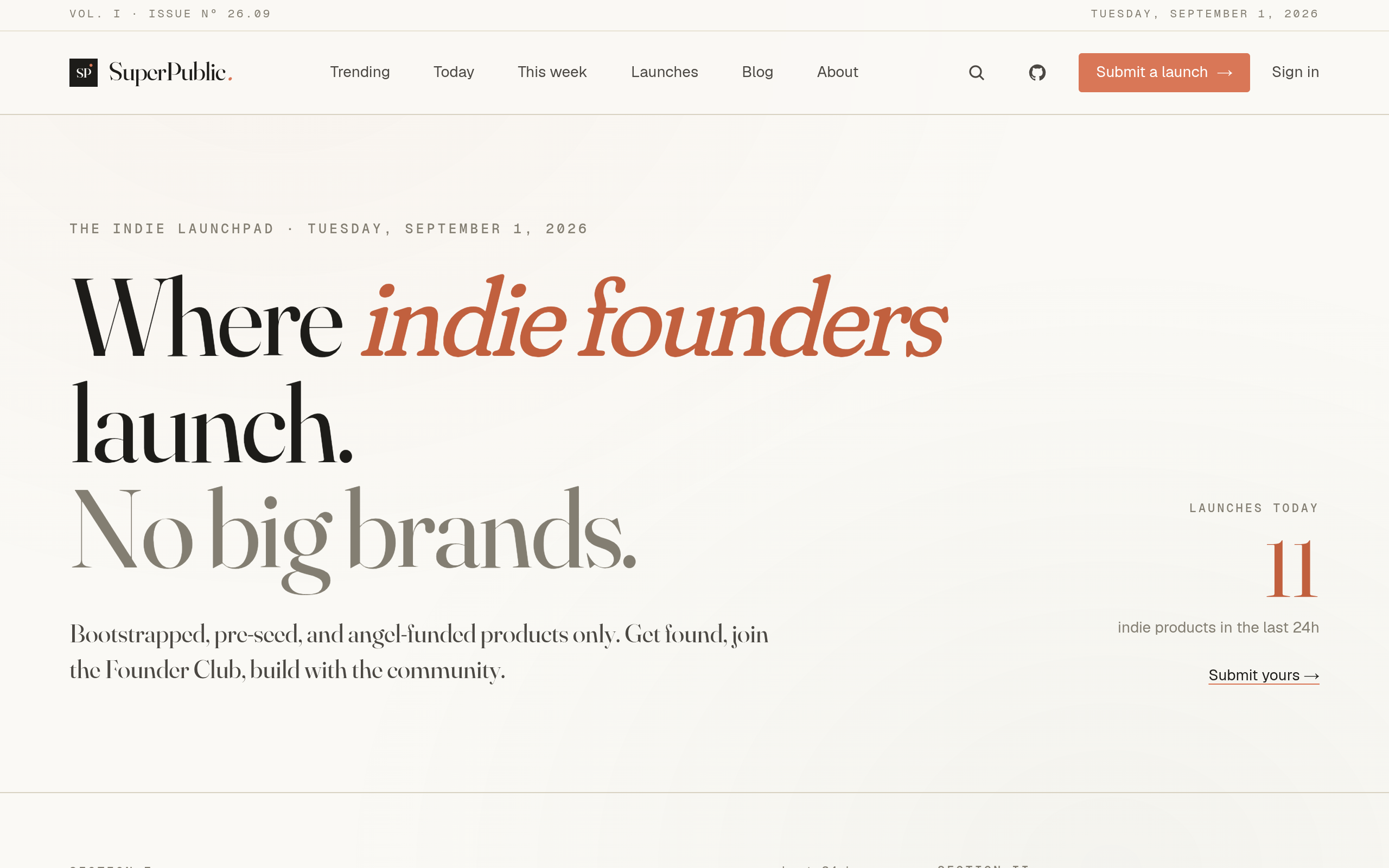
SuperPublic is designed for bootstrapped, pre-seed, and angel-funded founders submitting products for visibility and connecting with an early-stage founder community. Its strongest use is a structured launch home where a product can be explained clearly instead of being reduced to a single promotional post.
That distinction matters for products with a narrow audience. A founder can frame the problem, show who the product is for, describe the current stage, and invite feedback from people who understand early product trade-offs. This is especially useful when the objective is not merely traffic, but qualified conversations with builders and early adopters.
Implementation, commercial model, and poor fits
- Best for: Indie SaaS, developer tools, AI utilities, and small business software with a clear early-adopter profile.
- Does not suit: Teams expecting a listing alone to replace onboarding, customer research, or a distribution plan.
- Standout: Founder-community context can make feedback more relevant than a generic traffic spike.
Implementation burden is moderate. Prepare a concise product description, a useful visual or demo, a specific launch goal, and a way to respond to questions. The quality of the page and the founder’s follow-up will influence the outcome more than simply appearing in a feed. A practical starting policy is to reserve one day for launch preparation and several short follow-up sessions; that is an illustrative workflow, not a performance benchmark.
SuperPublic’s commercial model and current submission terms should be verified on the official submission page before publishing. The important buying question is whether the platform’s founder audience matches your product and whether you can participate in the conversation. It is a poor fit for a mature company seeking enterprise procurement leads, a consumer brand looking for mass reach, or a team unwilling to explain what it has built.
2. Hacker News
Best use: technical products that can withstand public scrutiny
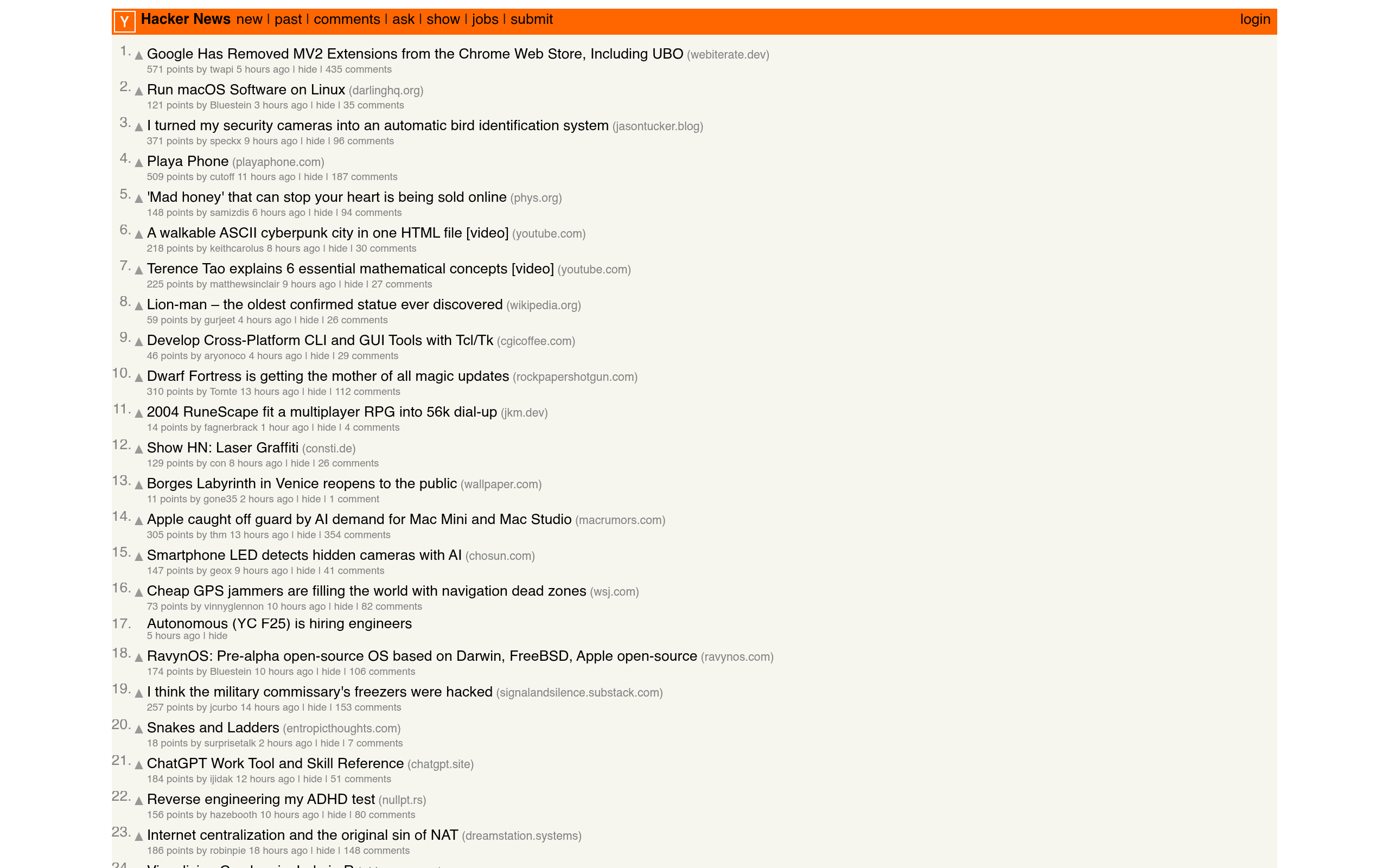
Hacker News is a discussion community centered on technology and startup-related content. Its “Show HN” format can be relevant to founders launching developer tools, infrastructure, technical workflows, or products where the engineering choices are part of the story. The submission guidelines explain the purpose and expectations of Show HN posts, including that the author should be able to engage with comments; see the official Show HN guidance.
The mechanism is conversation, not a polished product directory. A strong post gives readers enough information to understand what exists, why it was built, and how they can try it. A weak post reads like an advertisement and gives technically sophisticated readers no reason to comment. The likely value is high-signal product criticism, not guaranteed conversion volume.
Launch mechanics and preparation
- Best for: Technical founders with a working demo and a clear answer to “what did you build?”
- Does not suit: Thin landing pages, vague AI wrappers, or products whose value cannot be demonstrated without a sales call.
- Standout: Direct comments can expose technical objections, confusing onboarding, and missing use cases quickly.
Implementation burden is high relative to a directory listing. Before posting, test the signup path, prepare to answer architecture and pricing questions, and decide which criticism will change the roadmap. Keep the title factual and avoid manufacturing engagement. A founder who posts during a busy launch period but cannot respond may lose the feedback opportunity even if the initial visibility is strong.
Hacker News does not function like a conventional paid listing catalog, so the commercial model is not a simple “buy placement” decision. Confirm the current community rules and posting expectations in 2026 rather than relying on old launch playbooks. It does not suit founders who need guaranteed placement, private lead handling, or a predictable campaign calendar. It is also a weak choice if the product is not ready for public technical questions.
3. Reddit
For current product details, see the official Reddit website.
Best use: finding an existing problem community
Reddit can help a founder reach people already discussing a specific pain, but it is a collection of communities rather than one launch audience. The decision is therefore not “Should I launch on Reddit?” but “Which community has a legitimate connection to this problem, and what contribution can I make before mentioning the product?” Reddit’s published Reddiquette guidance is a useful reminder that community norms and self-promotion expectations matter.
For example, a founder of a privacy-focused note-taking tool might learn from discussions about research workflows, while a founder of retail software might learn from conversations among independent shop owners. In both cases, the useful asset is problem-language discovery: the exact words people use when describing the job, workaround, or failure.
Community fit and launch risk
- Best for: Founders willing to answer questions, share lessons, and participate without making every interaction a pitch.
- Does not suit: A one-post campaign with no history, no useful explanation, and no plan for community moderation.
- Standout: Different subcommunities can reveal distinct use cases before a founder commits to one positioning statement.
Implementation burden is variable but often high. Research community rules, read recent discussions, identify recurring questions, and disclose your relationship to the product when relevant. A launch post should stand on its own even if links are removed. If comments reveal that users want a different workflow than the one you built, document the insight rather than defending the roadmap reflexively.
Reddit’s commercial model spans community participation and separate advertising products, so organic discussion should not be treated as paid media. Verify each community’s current rules and any advertising requirements in 2026. Reddit does not suit founders who cannot tolerate public disagreement, products that depend on confidential customer information, or teams seeking a single centralized launch page they control.
4. SaaSHub

Best use: software category and alternative discovery
SaaSHub is a software discovery site where products can be evaluated alongside related tools and alternatives. That makes it useful for a founder whose buyer already has a category in mind—for example, project management, CRM, analytics, or email marketing—but has not chosen a provider. The homepage confirms its software discovery positioning at SaaSHub; verify the current submission process, listing fields, and commercial terms before treating it as a launch channel.
The mechanism is category-level intent. A visitor may not care about your launch story, but may care deeply about finding a replacement for an existing workflow. Your listing therefore needs sharper information architecture than a social announcement: target user, core job, integrations that genuinely exist, migration friction, and the reason to switch.
Listing quality and operating cost
- Best for: Products that fit an established software category and can explain their difference in one or two concrete sentences.
- Does not suit: Undifferentiated pre-launch concepts with no usable product or unclear category placement.
- Standout: Alternative-oriented discovery can capture buyers already comparing solutions.
Implementation burden is low to moderate if your product page is ready, but the preparation is strategic. Create consistent screenshots, a concise category description, and a comparison statement that does not overclaim. Review the listing after major product changes so outdated capabilities do not create disappointed signups. Also track whether visits produce account creation, demo requests, or only low-intent browsing.
The commercial model and available promotion options can change, so inspect the official site and any current terms before budgeting. Do not assume that a listing guarantees ranking or review volume. SaaSHub is a poor fit for a product with no stable category, a service business that is mainly delivered by people, or a founder who cannot maintain accurate product information. It is better viewed as a durable discovery asset than as a dramatic launch-day event.
5. AlternativeTo
Best use: winning users who are replacing another tool
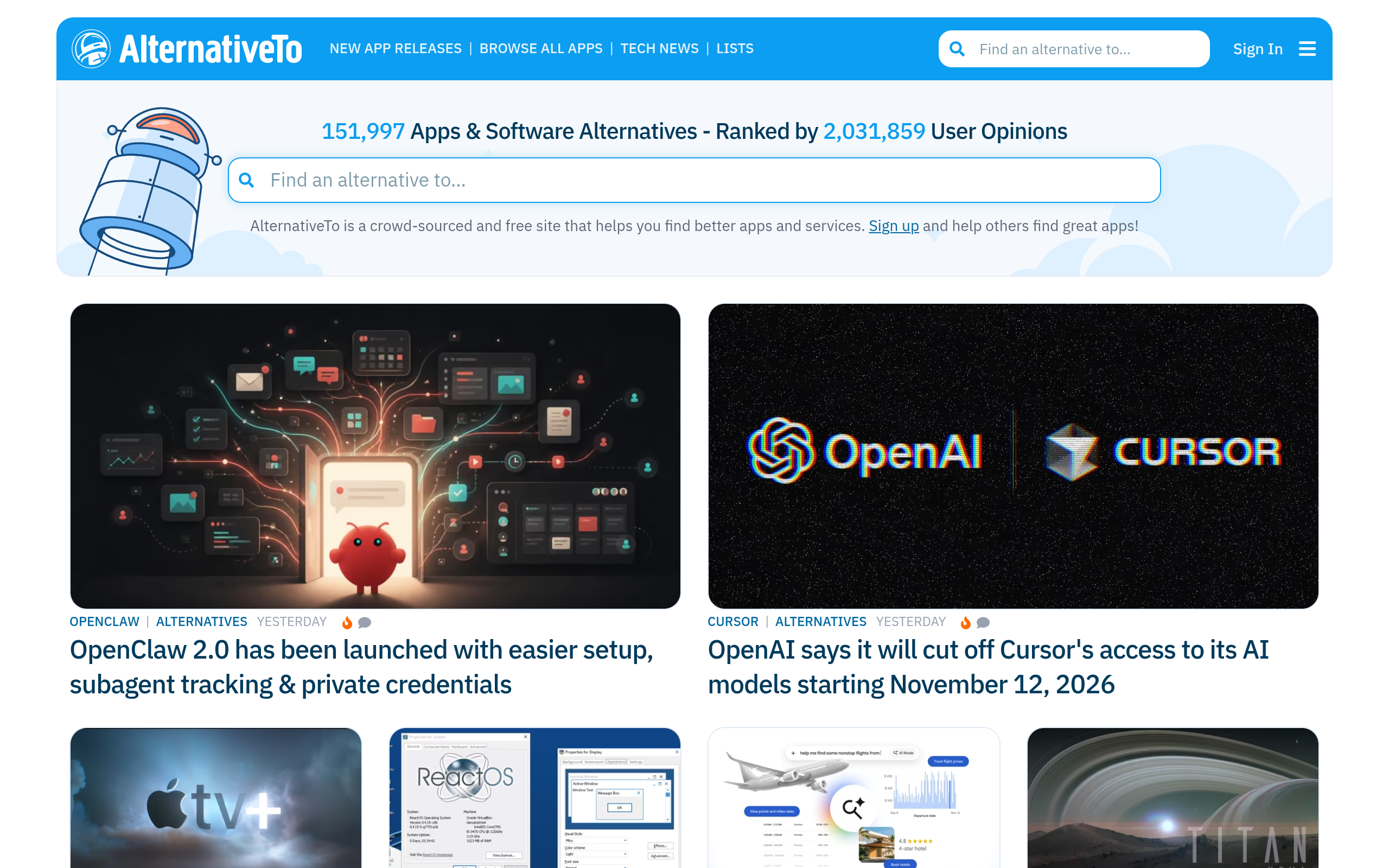
AlternativeTo is built around finding alternatives to software and online services. This gives it a different job from a founder community: it helps a buyer who already knows the incumbent or current tool and is actively looking for something else. A founder can review the current listing and submission route through the official add-product page, then verify the latest requirements before submitting.
This channel is strongest when your product has a clear substitution story. “A simpler alternative for small teams” is directionally useful; “a browser-based inventory and invoicing tool for independent retailers moving away from spreadsheets” is much more actionable. The key is to identify the switching trigger: price, complexity, privacy, missing workflow, platform change, or a niche use case.
Fit, maintenance, and credibility
- Best for: Products that replace a recognizable tool and can state the differences honestly.
- Does not suit: Products with no comparable alternative, no public product information, or a positioning strategy based on vague superiority claims.
- Standout: Alternative intent can be closer to a buying decision than general startup browsing.
Implementation burden is moderate because the initial submission is only the beginning. Check the category, description, supported platforms, and alternative relationships. Ask existing users which incumbent they would replace; their answer can improve the listing more than a founder’s preferred positioning. Keep the page current when features, availability, or target customers change.
AlternativeTo’s commercial and promotion rules should be confirmed on its official site in 2026; do not infer pricing or placement from third-party summaries. The platform does not suit a brand-new concept still searching for a problem, an internal enterprise tool that cannot be described publicly, or a product whose main advantage depends on custom implementation. It can create useful discovery, but it will not solve weak onboarding after the click.
6. AppSumo
Best use: a carefully bounded software deal
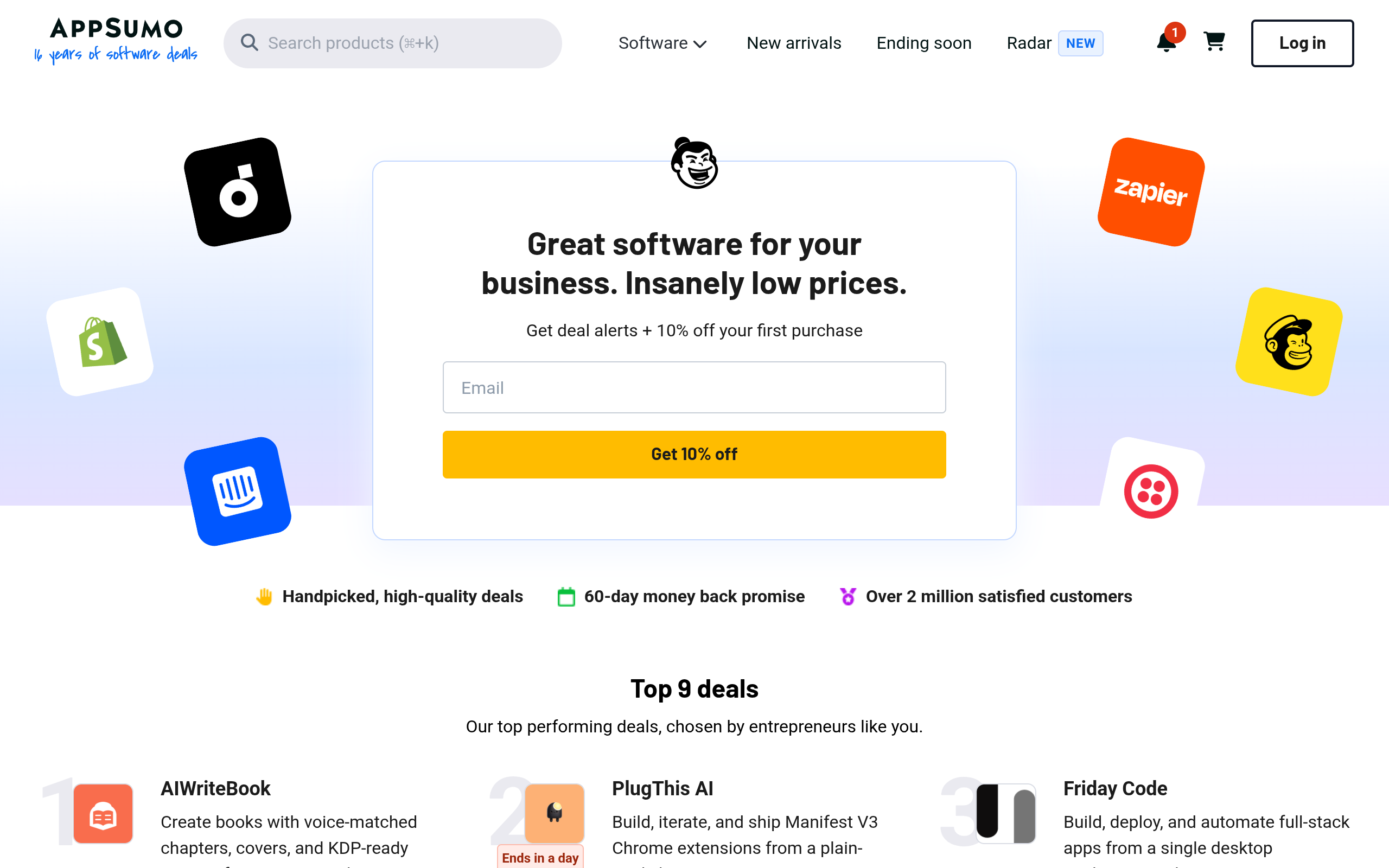
AppSumo is a marketplace associated with software deals, so it belongs in this list only for founders willing to design a commercial offer around a marketplace audience. It is not simply another launch directory. The official AppSumo marketplace shows the buyer-facing context; founders should use the current seller information and agreement terms to verify eligibility, review, revenue arrangements, support expectations, and offer mechanics before proceeding.
The mechanism is transaction-led exposure. A deal can reduce the buyer’s perceived risk and create urgency, but it also attracts customers who expect a clear value exchange. Before applying, calculate support cost, infrastructure cost, refund exposure, and the amount of functionality included in the offer. A lifetime-style promotion, if available under current terms, can create a long support tail that is inappropriate for usage-heavy products.
Commercial readiness and constraints
- Best for: SaaS founders with a stable product, defined usage limits, responsive support, and a deliberately modeled offer.
- Does not suit: Products with high variable costs, unfinished onboarding, confidential enterprise sales cycles, or pricing that depends on expansion revenue.
- Standout: The marketplace context can turn awareness into a concrete purchase decision.
Implementation burden is high. Prepare a reliable demo, support documentation, usage boundaries, cancellation and refund handling, and a plan for customers who arrive with different expectations from your normal buyer. Commercial modeling should use your own costs rather than a generic “launch discount.” For an illustrative example, a founder might model support hours per customer and storage cost at several usage levels before proposing any offer; those inputs are business-specific, not universal benchmarks.
AppSumo is a poor fit when the product’s long-term economics require every customer to expand into paid seats, when the team cannot support a sudden cohort, or when the company is still changing its core workflow. Verify current seller economics and obligations directly in 2026. Treat it as a distribution-plus-pricing decision, not as free awareness.
Comparison
The table uses the same four decision columns for every entity. “Model” describes the principal mechanism a founder is evaluating, not a promise of current reach, ranking, or conversion. Capabilities, terms, and community rules can change, so confirm them on each official domain before committing launch resources.
| Platform | Primary audience intent | Launch mechanism | Implementation burden | Commercial model and poor fit |
|---|---|---|---|---|
| SuperPublic | Founders and early adopters discovering early-stage products | Founder-focused product submission and community discussion | Moderate: prepare a clear page and follow up with participants | Verify current submission terms; poor fit for mature enterprise campaigns or passive teams |
| Hacker News | Technology-focused readers interested in what was built | Show HN discussion and public technical feedback | High: working demo, factual post, and active comment response | Community-led rather than predictable paid placement; poor fit for non-technical or unfinished products |
| Members of problem-specific communities and interest groups | Community participation, relevant posts, and optional advertising | Variable to high: research norms, contribute, disclose, and moderate replies | Community and advertising models differ; poor fit for one-off promotion or rule-insensitive teams | |
| SaaSHub | Buyers browsing software categories and related tools | Product listing and alternative/category discovery | Low to moderate: accurate copy, visuals, category, and maintenance | Verify current listing and promotion terms; poor fit for uncategorized concepts |
| AlternativeTo | People actively seeking a replacement for known software | Alternative listing and substitution-oriented discovery | Moderate: establish a credible comparison and keep data current | Verify current submission and promotion terms; poor fit without a clear incumbent or substitute |
| AppSumo | Software buyers evaluating a deal | Marketplace offer, review process, and transaction | High: offer economics, support, onboarding, and usage limits | Marketplace transaction model; poor fit for high-variable-cost or expansion-dependent products |
How to choose the right launch platform
Start with the buyer’s next action
Do not begin with the platform that has the largest apparent audience. Begin with the action you need after discovery:
- If you need technical objections and product feedback, prioritize a discussion environment and make the demo testable.
- If you need category discovery, prioritize a durable listing with accurate alternatives, use cases, and screenshots.
- If you need replacement demand, choose an alternative-oriented directory and describe the switching trigger.
- If you need transactions, model the offer and support burden before applying to a marketplace.
- If you need founder-to-founder context, use a launch community where the product’s stage is part of the conversation.
A useful worked example is a bootstrapped inventory and invoicing product for independent retailers. Hacker News may be valuable if the technical architecture or developer workflow is central. Reddit may help the founder learn how shop owners describe cash-flow problems. AlternativeTo or SaaSHub may capture someone comparing business software. SuperPublic may provide a focused launch page and founder feedback. AppSumo becomes relevant only if the economics and support obligations work under a deal structure.
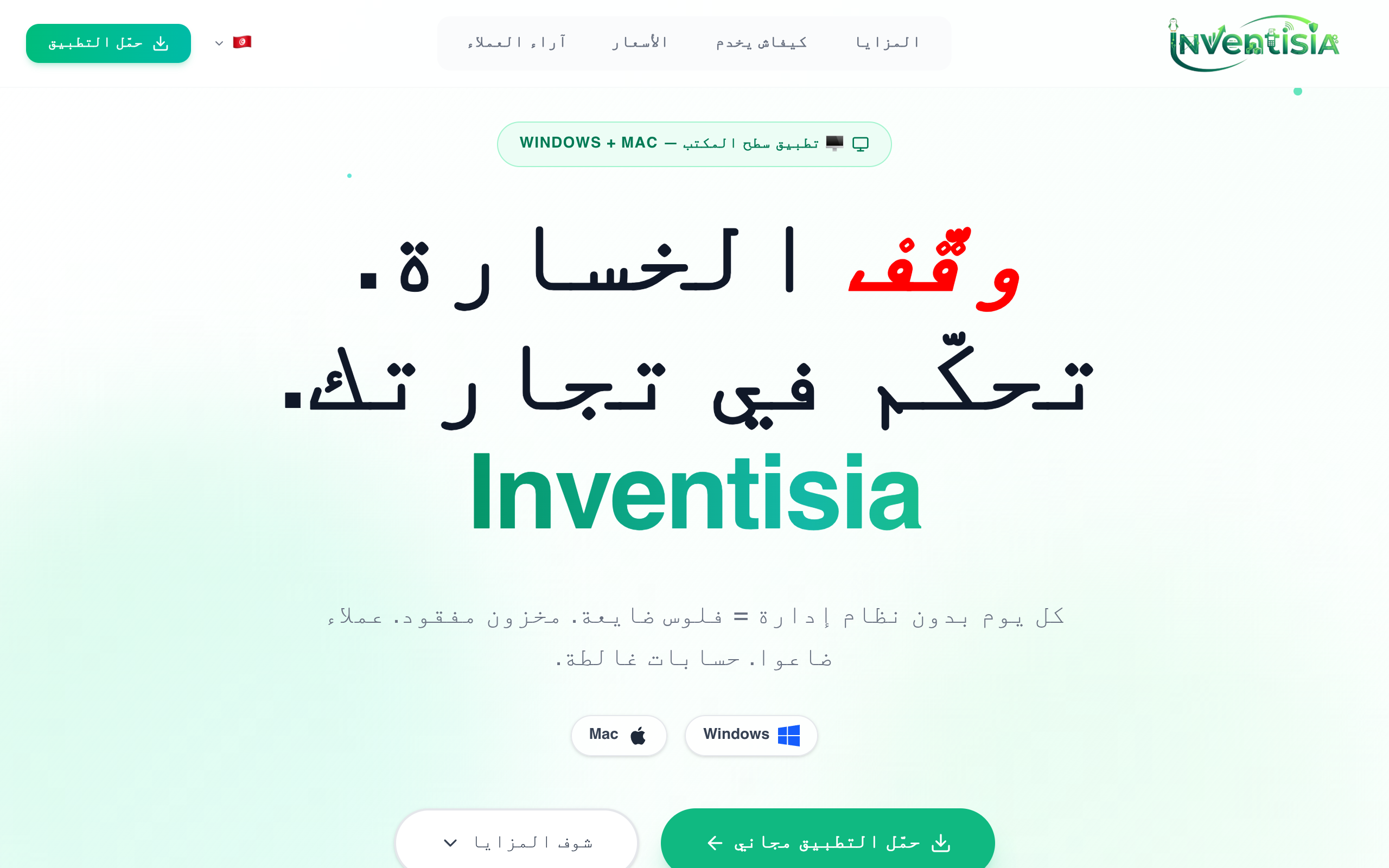
That same example shows why adjacent products should not be confused with launch channels. A business-management product such as Inventisia can help the reader choose software for managing inventory, electronic invoicing, sales, and cash flow; that is a product-selection task, not evidence that a startup has chosen its launch distribution.
Match readiness to exposure
Use a simple readiness gate before submitting anywhere:
- Working path: A new visitor can understand the promise, sign up, and reach the core action without founder assistance.
- Proof of audience: You can name the user, trigger, and problem in concrete language.
- Response capacity: Someone owns comments, support questions, and bug reports during the launch window.
- Measurement: Analytics distinguish visits, signups, activated users, replies, and paying customers.
- Follow-through: You have a next step for interested people who are not ready to buy today.
For an illustrative starting policy, a solo founder could select one discussion channel and one durable directory rather than submitting everywhere in the same week. That creates fewer variables: the founder can compare message quality, activation, and feedback themes without pretending that raw visits equal traction. A pre-seed team with dedicated support may add a marketplace experiment later, after pricing and onboarding have survived smaller tests.
Use a practical scoring rule
Score each candidate from one to five for audience fit, evidence quality, effort, and economic risk. The numbers are a planning device, not an industry benchmark. Weight audience fit and economic risk more heavily than vanity reach. A platform that produces 20 relevant conversations may be more useful than one that produces a larger but unqualified traffic spike, especially when the product still needs positioning evidence.
Also separate discovery metrics from business metrics. Discovery metrics include listing views, post replies, profile visits, and referral sessions. Business metrics include activated accounts, retained users, qualified demos, paid conversion, support hours, and revenue after refunds or marketplace deductions. Each platform should earn its place by improving a decision or outcome you can actually observe.
Founders working on document workflows should make the same distinction. An AI writing product such as AI学术润色工具 can help someone choose an AI writing tool for improving academic or professional documents, including translation, paraphrasing, and grammar work; it is a software choice for the end user, not automatically a suitable launch venue for every AI startup.
A specific recommendation for 2026
For most early-stage software teams, start with one platform that matches the product’s natural conversation and one that matches the buyer’s search intent. Choose SuperPublic when founder context and early feedback are central. Add Hacker News only when the product is genuinely technical and ready for public questions. Choose Reddit when a real problem community exists and the team can participate without spamming. Add SaaSHub or AlternativeTo when the product has a stable category or replacement story. Consider AppSumo only after the commercial model, support capacity, and offer boundaries are explicit.
The strongest launch is rarely the one with the most submissions. It is the one where audience, message, product readiness, and follow-up mechanism agree. For a founder-ready place to present an early product and connect with other builders, explore SuperPublic and decide whether SuperPublic belongs in that focused launch portfolio.
Authored with NotFair SEO