Founder field note
6 Platforms for a Successful Product Launch in 2026
Plan a successful product launch with six platforms compared for reach, feedback, effort, pricing, and fit for indie and early-stage founders in 2026.
A successful product launch is not the same thing as a busy launch day. For a bootstrapped founder, the useful outcome is usually a defensible combination of qualified early users, specific product feedback, and enough attention to create a second acquisition channel. This comparison covers six platforms where software founders can present a new product, reach early adopters, and learn what happens after the announcement.
The list is for founders launching a SaaS product, AI tool, developer utility, mobile app, or other software product in 2026. It is not a comparison of ad networks, launch agencies, or conversion-optimization tools. Each platform is assessed against the same buyer job: getting an early-stage product in front of relevant people and turning attention into useful next steps.
The evaluation uses four practical criteria:
- Audience quality: Are visitors likely to be founders, makers, technology buyers, or early adopters?
- Launch mechanics: Can you explain the product, collect reactions, and create a clear path to try it?
- Implementation burden: How much preparation, coordination, and follow-up does a small team need?
- Commercial model: Is the core path free, paid, community-led, or subject to optional promotional costs?
No platform guarantees users, rankings, or revenue. A launch page is a distribution asset, not a substitute for a sharp promise, working onboarding, and a follow-up plan. For measurement, use campaign links consistently: Google Analytics documents how UTM parameters identify the source, medium, and campaign associated with incoming traffic in its campaign URL guidance. That makes it possible to compare a platform’s visits with activated accounts rather than celebrating referral traffic alone.
1. Product Hunt
Where it fits
Product Hunt is the most recognizable option in this group for a founder who wants a concentrated technology launch. Its audience includes makers, startup operators, investors, and people who actively browse new products. The platform’s official launch guide is a useful starting point for understanding the expected preparation and launch flow.
Product Hunt works best when the product has a concise reason to exist and a launch asset that can survive fast scanning. A strong submission normally makes the category, target user, and immediate benefit obvious before asking the visitor to click through. For example, “automated meeting notes” is a category; “turn every customer call into a searchable follow-up plan in two minutes” gives a buyer a reason to investigate.
Trade-offs for a small team
- Best for: A polished software product with a clear visual demo and a founder willing to participate publicly.
- Standout: Concentrated launch-day discovery among people already looking for new technology.
- Does not suit: A product that is difficult to explain, requires a long sales process, or has no usable demo.
- Watch closely: Upvotes and comments are attention signals; activation, retained use, and qualified conversations are stronger business signals.
Implementation burden is medium to high. You need a stable landing page, screenshots or a video, a launch description, a response plan for comments, and people prepared to share the launch without resorting to empty vote requests. Coordinate support and analytics before launch because a spike in visits can expose slow onboarding or unclear pricing.
The commercial model should be checked directly before scheduling. The platform provides a launch path, but its current promotional products, eligibility rules, and any paid options can change. Do not budget for paid visibility as a requirement; first decide whether your product can earn attention from its positioning and community participation.
2. BetaList
Where it fits
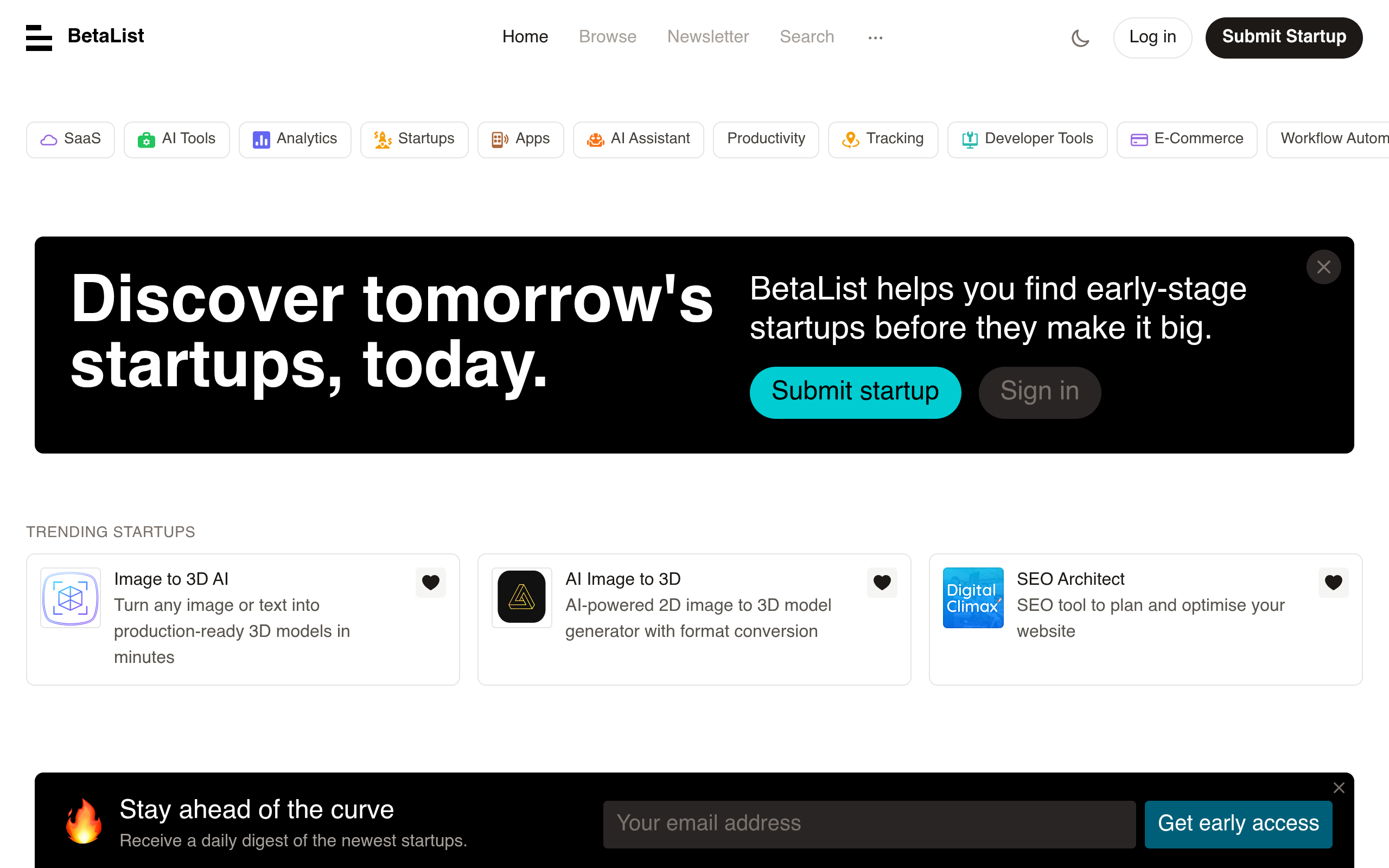
BetaList is designed around discovering early-stage startups and new products, making it a natural fit for a founder whose product is ready for initial users but still developing its market proof. Its official submission page explains the route for putting a startup forward and should be checked for current requirements before you prepare assets.
BetaList is particularly useful when your launch story is “we are early, here is what we are building, and we want the right people to try it.” That positioning can be more credible than pretending a pre-seed product is already a finished category leader. A founder can use the listing to test whether the name, one-line description, and first screenshot attract the intended audience.
Trade-offs for a small team
- Best for: Pre-launch or early-launch products seeking initial discovery and feedback.
- Standout: A context that accepts the unfinished but usable nature of startup products.
- Does not suit: A mature company looking mainly for enterprise procurement leads or a high-volume sales pipeline.
- Prepare: A concise explanation of the problem, a direct product URL, and a reason for an early adopter to act now.
Implementation burden is low to medium, but acceptance and timing should not be treated as automatic. Prepare a product page that works without a founder narrating every step. If access is invite-only or the product is still private, explain the request process clearly rather than sending visitors into a dead end.
The commercial model can include different submission or promotional conditions, so verify the current terms on BetaList before treating it as a free channel. Separate listing cost from acquisition cost: even a low-cost submission still requires founder time, onboarding fixes, and follow-up with people who tried the product.
3. Indie Hackers
Where it fits
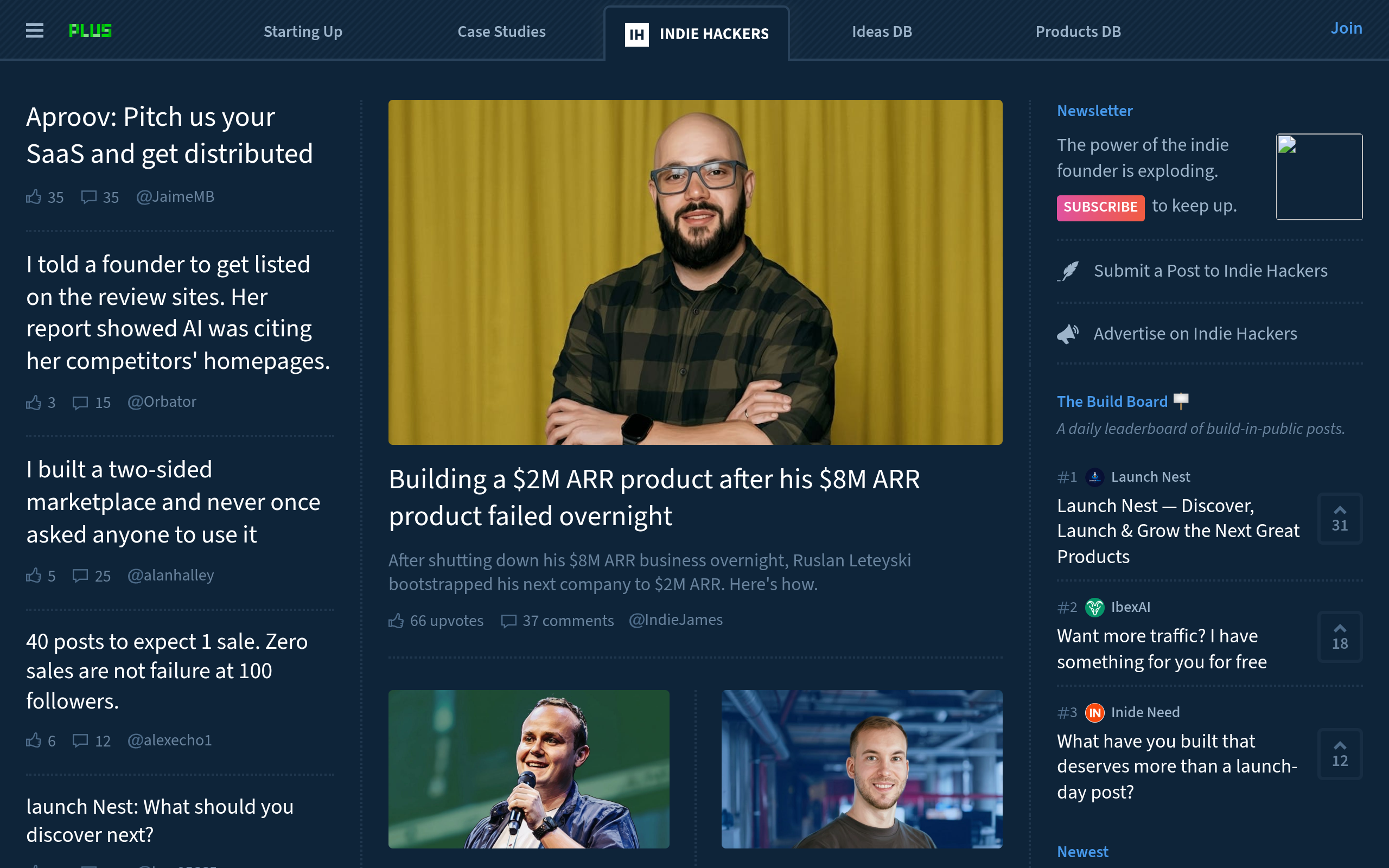
Indie Hackers is a community-led option for founders who want discussion and peer context alongside product discovery. Its Products area provides a relevant place to inspect how products are presented, while the wider community supports conversations about building, distribution, and business models.
This is less of a single dramatic launch moment and more of a relationship-driven channel. A founder can explain the problem, share a build decision, ask for feedback on onboarding, or report what happened after releasing. That makes the platform valuable when the main uncertainty is not “can anyone see this?” but “which user and business model should we pursue?”
Trade-offs for a small team
- Best for: Bootstrapped founders who can contribute useful context and hold an honest conversation about the product.
- Standout: Feedback that can include positioning, pricing, acquisition, and founder-operating questions.
- Does not suit: A team expecting a one-post promotion blast with no community participation.
- Use carefully: Ask a narrow question, such as “where did this onboarding step lose you?” instead of “what do you think?”
Implementation burden is medium because the work is conversational rather than purely technical. Write a useful post, respond to replies, return with updates, and avoid copying the same announcement into every discussion. A worked example: instead of announcing “our AI writing app is live,” describe the user, the workflow it replaces, what remains unreliable, and the one behavior you want to observe.
The commercial model is primarily community participation and product discovery rather than a conventional media buy. Confirm current product-listing and promotional options on the site. The cost is mostly attention and credibility: low-effort self-promotion may produce less trust than a smaller post that teaches other builders something useful.
4. Uneed
Where it fits
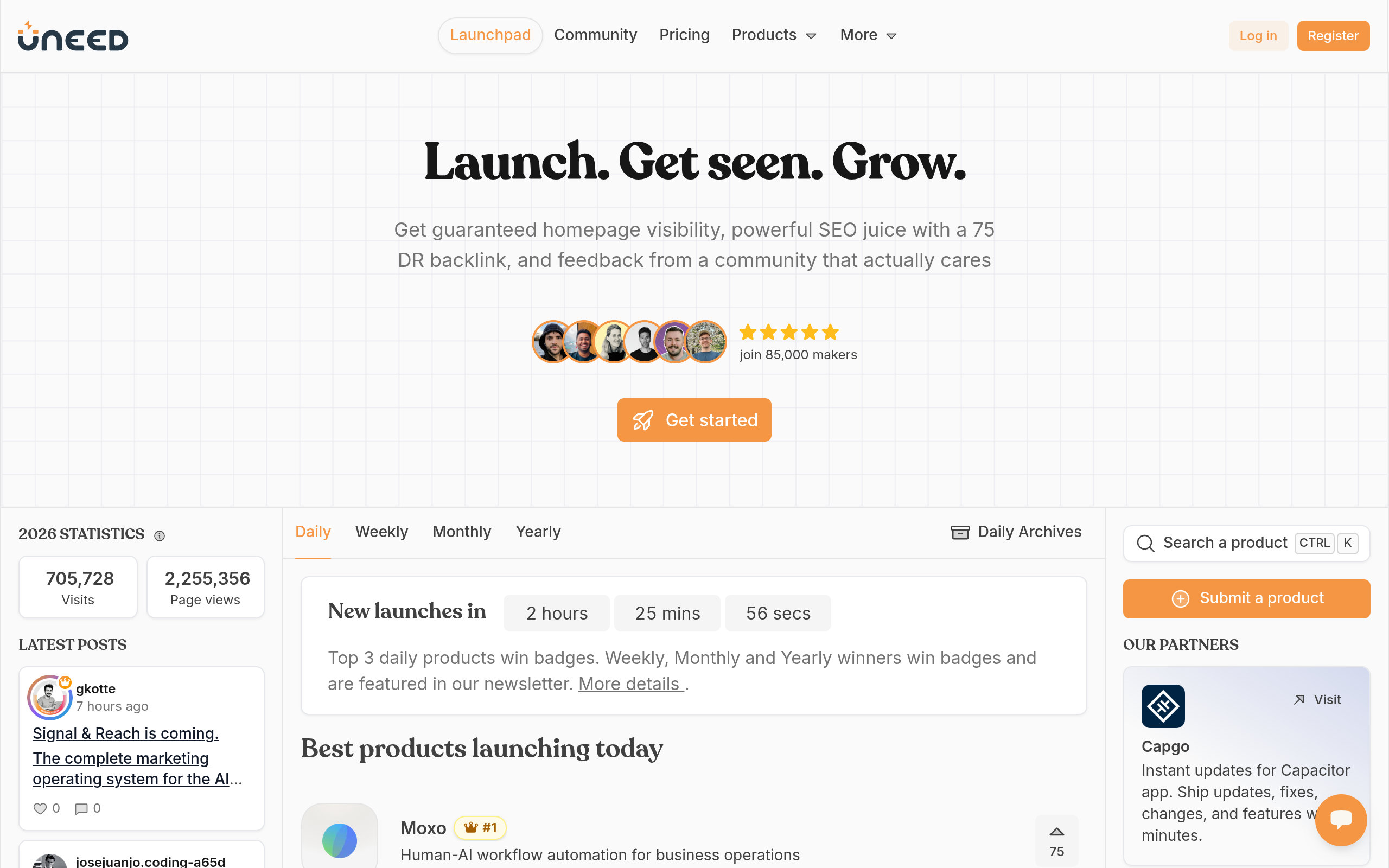
Uneed is a product-discovery and launch directory aimed at people browsing tools and new software. It can suit a founder who wants an additional listing surface beyond the largest launch communities, especially when the product has a clear category such as productivity, design, developer tooling, marketing, or AI.
The value of a directory is cumulative rather than necessarily concentrated in one day. A listing can give a potential user another route to discover the product, while the category and description create a small positioning test. If visitors click but do not sign up, the issue may be the landing page or product promise rather than the directory itself.
Trade-offs for a small team
- Best for: A finished or usable product that can be understood from a short listing and a direct link.
- Standout: A lightweight way to add product discovery in a relevant software category.
- Does not suit: A product with no public explanation, no trial or demo path, or a customer journey that requires a lengthy sales call.
- Measure: Category-page visits, sign-up completion, and first-use actions separately.
Implementation burden is low. Prepare a durable description, a recognizable product name, a working URL, and a screenshot or visual asset if the current submission flow requests one. The important operational step is keeping the destination page current. A directory listing that promises a feature removed six months earlier is a small but avoidable trust failure.
Uneed’s current submission and promotional terms should be verified on its official site before purchase or scheduling. Do not assume directory traffic is high-intent; treat it as discovery until analytics show meaningful activation. This option is most sensible when the marginal effort to create and maintain a listing is small.
5. Microlaunch
Where it fits
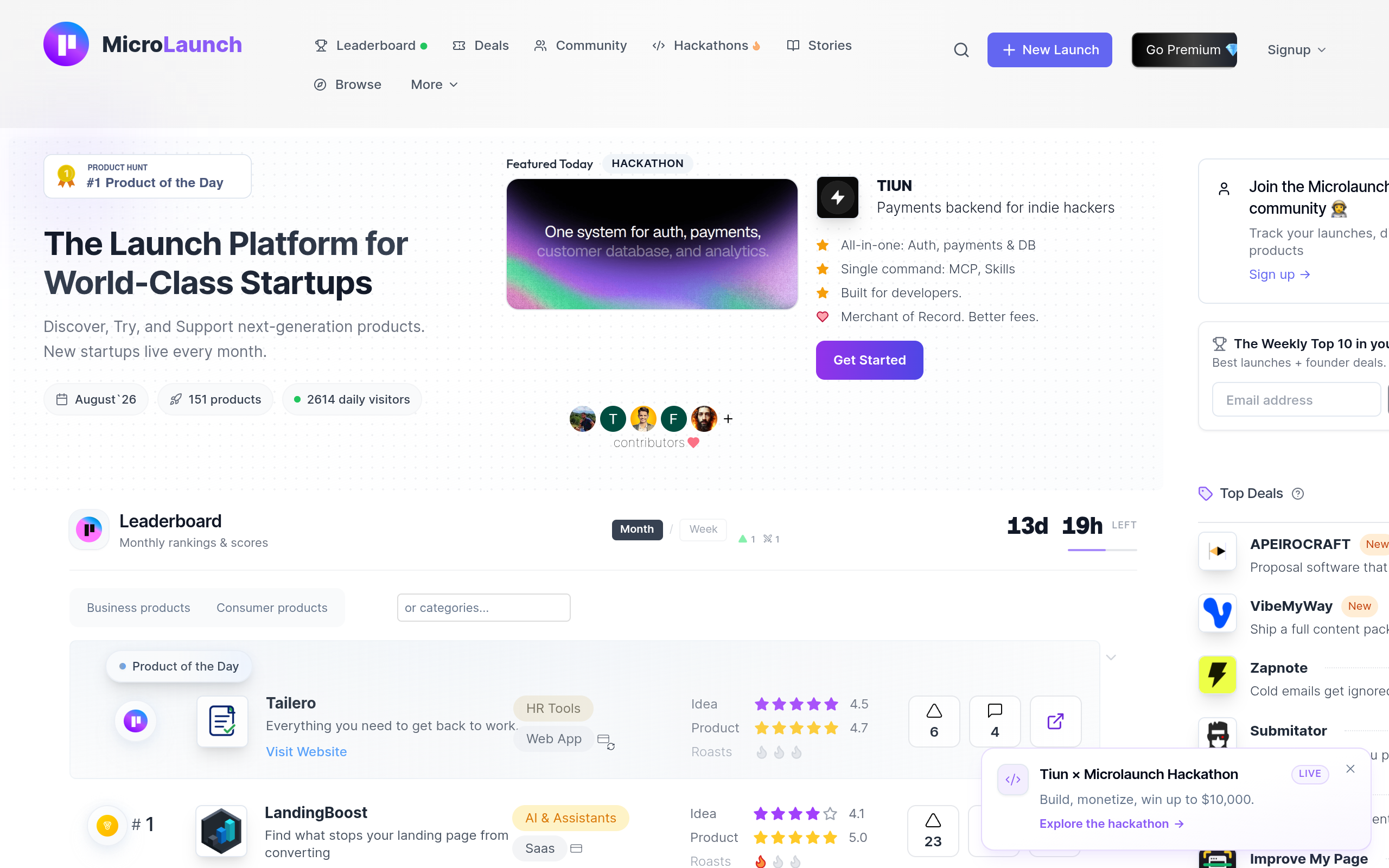
Microlaunch is built around launching and discovering small, early-stage products. Its narrower orientation can appeal to indie hackers and bootstrapped teams that do not need to present themselves as a heavily funded startup. The platform is a candidate for founders who want a launch event with other makers rather than a broad mainstream campaign.
Its best use is as one part of a coordinated launch sequence. For instance, release a focused version to a small group, publish a useful build story in a founder community, then use Microlaunch to create a public discovery moment. The sequence matters because launch visitors are more useful when the product already has a known problem, a working path, and a mechanism for collecting objections.
Trade-offs for a small team
- Best for: Indie products with a concrete use case, an accessible demo, and a founder-led launch story.
- Standout: Positioning that feels compatible with small teams and narrow product experiments.
- Does not suit: A confidential enterprise product, a service sold entirely through private introductions, or a product still at the idea stage.
- Plan for: A launch date, clear assets, comment responses, and a post-launch update rather than a single announcement.
Implementation burden is medium. You still need the ordinary launch foundations: a page that loads, a clear call to action, analytics, support contact, and a way to record feedback. The additional work is coordination: decide what the launch is meant to validate and what evidence would change your roadmap.
Review Microlaunch’s current submission and pricing information directly because terms and promotional formats can change. Use paid exposure only after message fit is clear; paying to amplify an unclear promise usually buys more confused visitors, not better learning. If the product is free, track activation rather than revenue. If it is paid, track checkout starts and completed purchases separately.
6. SuperPublic
Where it fits
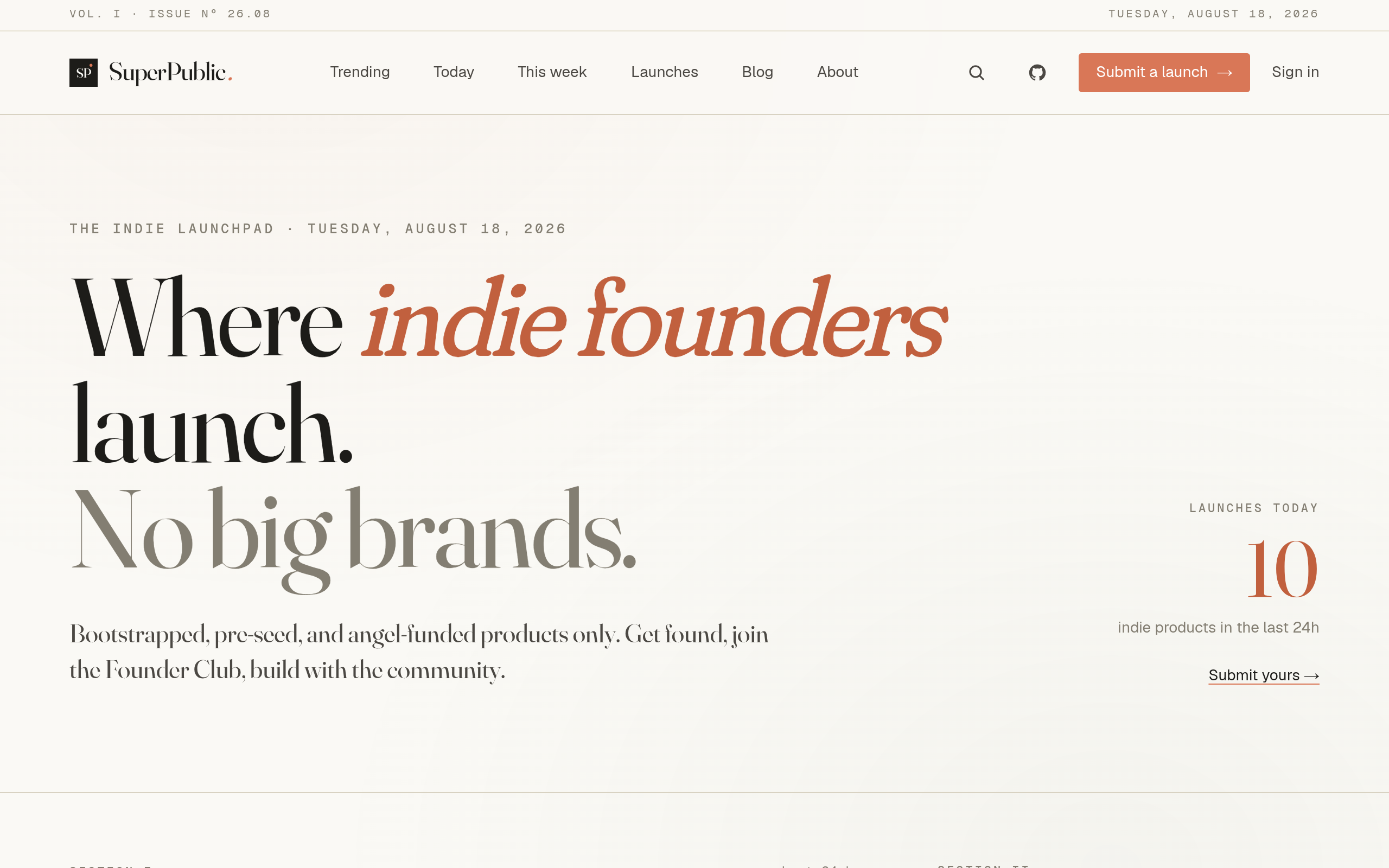
SuperPublic is an indie-only product launch and discovery platform for bootstrapped, pre-seed, and angel-funded founders. It is suited to a founder who wants to put a product in front of other early-stage builders, early adopters, and people interested in emerging software without presenting the launch as a large-company campaign.
The platform’s audience fit is the central reason to consider it. A maker launching a focused SaaS product can explain the workflow, ask for founder feedback, and discover adjacent products from teams operating at a similar stage. Founders can submit their product launch through the platform’s submission route.
Trade-offs for a small team
- Best for: Bootstrapped, pre-seed, and angel-funded software founders seeking relevant early visibility.
- Standout: An explicitly indie-focused context rather than a general startup audience.
- Does not suit: A company looking for mass consumer reach, procurement-ready enterprise leads, or a replacement for paid demand generation.
- Make it useful: State the product stage and ask for one specific kind of feedback.
Implementation burden is low to medium. A founder should prepare the product URL, a plain-language description, the launch objective, and a follow-up destination for interested users. The best submission is not necessarily the most polished one; it is the one that lets another founder understand the problem, try the product, and respond without unnecessary friction.
SuperPublic’s commercial and submission terms should be checked on the official site before planning a campaign. Audience relevance is not a guarantee of conversion: a founder-focused platform may generate valuable conversations even when it produces fewer clicks than a broad channel. That makes qualitative feedback, replies, and qualified connections important alongside analytics.
Comparison
The table uses the same decision frame for every option. “Reach pattern” describes the likely shape of discovery, not a promise of traffic. “Cost model” is intentionally cautious: confirm current terms before committing money or a launch date.
| Platform | Reach pattern | Feedback potential | Implementation burden | Cost model to verify | Best fit |
|---|---|---|---|---|---|
| Product Hunt | Concentrated technology launch | Comments, reactions, and product discussion | Medium-high | Core launch path and optional promotions may vary | Polished software with a sharp launch story |
| BetaList | Early-stage startup discovery | Early adopter interest and product-page response | Low-medium | Submission and promotional terms may vary | Pre-launch or newly launched products |
| Indie Hackers | Ongoing founder-community discovery | High context if the founder participates | Medium | Community-led; verify current listing options | Bootstrappers seeking business and product discussion |
| Uneed | Directory and category discovery | Lightweight product feedback | Low | Submission and promotion terms may vary | Usable tools with a clear software category |
| Microlaunch | Maker-focused launch event | Launch reactions and peer feedback | Medium | Verify current submission and paid options | Indie products with a coordinated launch plan |
| SuperPublic | Indie-only founder and product discovery | Founder feedback and early adopter conversations | Low-medium | Verify current submission and commercial terms | Bootstrapped, pre-seed, and angel-funded software |
How to choose a launch platform in 2026
Start with the uncertainty, not the size of the audience
Choose the platform that can answer the most expensive unanswered question. If nobody understands the category, a conversation-heavy community may be more useful than a large launch directory. If the message is clear but discovery is weak, a launch platform or directory may be the better next experiment. If activation is poor, more traffic is likely to make the diagnosis noisier.
- Need positioning feedback? Prefer Indie Hackers, SuperPublic, or another context where people can discuss the problem.
- Need an initial discovery spike? Consider Product Hunt or Microlaunch, provided the product and assets are ready.
- Need an early-stage listing? Consider BetaList or Uneed and maintain the destination page.
- Need enterprise leads? None of these should be treated as a complete enterprise pipeline.
Match the launch surface to the product’s readiness
An idea-stage product usually cannot satisfy visitors who expect to click and try something. A private beta can work if the sign-up path explains who is accepted, when access arrives, and what the founder wants to learn. A public SaaS product should remove avoidable friction before launch: broken authentication, an empty dashboard, unclear limits, or a missing way to contact support.
Use an illustrative starting policy rather than a universal benchmark: prepare one primary launch platform, one founder-community conversation, and one owned follow-up channel. Give each source a distinct campaign URL. Define “success” before publishing, such as ten activated accounts, five qualified feedback calls, or three teams reaching a particular workflow. Those are planning examples, not industry benchmarks.
Build the follow-up loop before launch day
A launch visitor who signs up but receives no guidance is not a retained user. Write the first-run email, in-product prompt, or short onboarding checklist before the announcement. Ask one behavioral question after the user reaches the core action: what were they trying to accomplish, what blocked them, and what alternative did they use?
For search visibility, do not rely on a launch listing to explain the whole business. Google’s SEO Starter Guide covers fundamentals such as helping search engines understand page content and making pages useful for people. Apply that thinking to the product page: describe the job the product performs, the audience, the limitations, and the next step in language a potential buyer would actually search.
Use a channel stack, not a platform lottery
The strongest choice may be two complementary platforms rather than one winner. Product Hunt can create a concentrated technology moment; Indie Hackers can support a longer discussion; BetaList or Uneed can add directory discovery; SuperPublic can put the product in front of an explicitly indie audience. Do not publish the same vague announcement everywhere. Change the question and the call to action for each context.
- Pick the platform whose audience matches the next user you need.
- Write a one-sentence promise and test it against the product’s actual first experience.
- Prepare analytics, onboarding, support, and a feedback question before submission.
- Use the launch to collect evidence, not merely social proof.
- Review activated users and meaningful replies after the attention fades.
For most bootstrapped and pre-seed founders, start with one high-fit community or discovery platform, not six simultaneous submissions. Product Hunt is the stronger candidate for a polished, highly explainable technology launch. Indie Hackers is the stronger candidate when the business model and product direction need discussion. BetaList and Uneed are sensible listing layers, while Microlaunch and SuperPublic fit maker-oriented launch programs and discovery.
If your product is bootstrapped, pre-seed, or angel-funded and you want an indie-focused place to present it, SuperPublic offers product submission, discovery, and founder-community context. Use SuperPublic when that audience and feedback loop match your next launch objective.
Authored with NotFair SEO